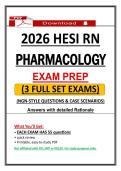
2026 HESI RN
PHARMACOLOGY
EXAM PREP
(3 FULL SET EXAMS)
(NGN-STYLE QUESTIONS & CASE SCENARIOS)
Answers with detailed Rationale
What You’ll Get:
• EACH EXAM HAS 55 questions
• quick review
• Printable, easy-to-study PDF
Not affiliated with ATI, VATI or NCLEX. For study purposes only.
,COMPLETE
SET 1
EXAM
,---
1. A female client with multiple sclerosis reports having less fatigue and improved
memory since she began using the herbal supplement, ginkgo biloba. Which
information is most important for the nurse to include in the teaching plans for
this client?
A. Aspirin and nonsteroidal anti-inflammatory drugs interact with ginkgo
B. nausea and diarrhea can occur when using this supplement
C. anxiety and headaches increased with use of ginkgo
D. ginkgo biloba use should be limited and not taken during pregnancy
Correct Answer: D. ginkgo biloba use should be limited and not taken during
pregnancy
Expert Rationale:
Providing safety information on the limitations of ginkgo biloba, especially regarding
pregnancy, is essential due to potential teratogenic effects and bleeding risks. While
interactions with NSAIDs and aspirin are important, the priority teaching addresses
when use is contraindicated. Educating the client about adverse effects should
complement but not overshadow safety warnings.
## Question 2:
Patient Scenario:
A patient is receiving digoxin therapy for chronic heart failure. The nurse notes
the following vital signs and laboratory results:
- Heart rate: 56 bpm
- Serum digoxin level: 2.8 ng/mL (therapeutic range 0.8–2.0 ng/mL)
- Serum potassium: 3.2 mEq/L (normal 3.5–5.0 mEq/L)
What is the nurse’s priority action?
A) Administer digoxin as ordered and observe the patient.
B) Hold the next dose of digoxin and notify the provider.
C) Administer potassium supplements and digoxin.
D) Prepare for immediate cardioversion.
Correct Answer: B) Hold the next dose of digoxin and notify the provider.
Expert Rationale:
, The patient has signs of digoxin toxicity: bradycardia, elevated digoxin level, and
hypokalemia (which increases digoxin toxicity risk). The nurse should withhold digoxin,
notify the provider, and monitor closely. Immediate cardioversion is not indicated unless
arrhythmias develop.
---
3. In explaining the benefits of the combination anti-infective drug TMP-SMZ
(Bactrim) to a client receiving the medication for a urinary tract infection, what
rationale should the nurse provide?
A. Each drug could cause damage to the kidneys if taken separately
B. One drug reduces the risk of side effects caused by the drug
C. while one drug provide relief, the other fights the infection
D. the two drugs work together to reduce resistance of the bacterial infection of
symptoms
Correct Answer: D. the two drugs work together to reduce resistance of the bacterial
infection of symptoms
Expert Rationale:
TMP-SMZ combines two antibiotics with different mechanisms of action to
synergistically kill bacteria, which decreases the chance of resistance development. The
combined effect also broadens the antimicrobial spectrum. Explaining synergy and
resistance prevention helps client understanding of multi-agent therapy advantages.
---
4. Client being treated with Haldol for schizophrenia is complaining of jaw
tightness and a stiff neck. Which interventions should the nurse implement?
A. give PRN dose of diphenhydramine Benadryl
B. assess client other sensory hallucinations
C. massage neck until muscles begin to relax
D. obtain a 12 lead EKG
Correct Answer: A. give PRN dose of diphenhydramine Benadryl
Expert Rationale:
Jaw tightness and stiff neck can indicate extrapyramidal side effects (EPS), specifically
acute dystonia, a common adverse effect of Haldol (haloperidol). Diphenhydramine
(Benadryl) is an anticholinergic effective in resolving acute dystonic reactions.
PHARMACOLOGY
EXAM PREP
(3 FULL SET EXAMS)
(NGN-STYLE QUESTIONS & CASE SCENARIOS)
Answers with detailed Rationale
What You’ll Get:
• EACH EXAM HAS 55 questions
• quick review
• Printable, easy-to-study PDF
Not affiliated with ATI, VATI or NCLEX. For study purposes only.
,COMPLETE
SET 1
EXAM
,---
1. A female client with multiple sclerosis reports having less fatigue and improved
memory since she began using the herbal supplement, ginkgo biloba. Which
information is most important for the nurse to include in the teaching plans for
this client?
A. Aspirin and nonsteroidal anti-inflammatory drugs interact with ginkgo
B. nausea and diarrhea can occur when using this supplement
C. anxiety and headaches increased with use of ginkgo
D. ginkgo biloba use should be limited and not taken during pregnancy
Correct Answer: D. ginkgo biloba use should be limited and not taken during
pregnancy
Expert Rationale:
Providing safety information on the limitations of ginkgo biloba, especially regarding
pregnancy, is essential due to potential teratogenic effects and bleeding risks. While
interactions with NSAIDs and aspirin are important, the priority teaching addresses
when use is contraindicated. Educating the client about adverse effects should
complement but not overshadow safety warnings.
## Question 2:
Patient Scenario:
A patient is receiving digoxin therapy for chronic heart failure. The nurse notes
the following vital signs and laboratory results:
- Heart rate: 56 bpm
- Serum digoxin level: 2.8 ng/mL (therapeutic range 0.8–2.0 ng/mL)
- Serum potassium: 3.2 mEq/L (normal 3.5–5.0 mEq/L)
What is the nurse’s priority action?
A) Administer digoxin as ordered and observe the patient.
B) Hold the next dose of digoxin and notify the provider.
C) Administer potassium supplements and digoxin.
D) Prepare for immediate cardioversion.
Correct Answer: B) Hold the next dose of digoxin and notify the provider.
Expert Rationale:
, The patient has signs of digoxin toxicity: bradycardia, elevated digoxin level, and
hypokalemia (which increases digoxin toxicity risk). The nurse should withhold digoxin,
notify the provider, and monitor closely. Immediate cardioversion is not indicated unless
arrhythmias develop.
---
3. In explaining the benefits of the combination anti-infective drug TMP-SMZ
(Bactrim) to a client receiving the medication for a urinary tract infection, what
rationale should the nurse provide?
A. Each drug could cause damage to the kidneys if taken separately
B. One drug reduces the risk of side effects caused by the drug
C. while one drug provide relief, the other fights the infection
D. the two drugs work together to reduce resistance of the bacterial infection of
symptoms
Correct Answer: D. the two drugs work together to reduce resistance of the bacterial
infection of symptoms
Expert Rationale:
TMP-SMZ combines two antibiotics with different mechanisms of action to
synergistically kill bacteria, which decreases the chance of resistance development. The
combined effect also broadens the antimicrobial spectrum. Explaining synergy and
resistance prevention helps client understanding of multi-agent therapy advantages.
---
4. Client being treated with Haldol for schizophrenia is complaining of jaw
tightness and a stiff neck. Which interventions should the nurse implement?
A. give PRN dose of diphenhydramine Benadryl
B. assess client other sensory hallucinations
C. massage neck until muscles begin to relax
D. obtain a 12 lead EKG
Correct Answer: A. give PRN dose of diphenhydramine Benadryl
Expert Rationale:
Jaw tightness and stiff neck can indicate extrapyramidal side effects (EPS), specifically
acute dystonia, a common adverse effect of Haldol (haloperidol). Diphenhydramine
(Benadryl) is an anticholinergic effective in resolving acute dystonic reactions.