Academiejaar 2025 -2026
Global energy politics
Professor Thijs Van De Graaf
I. General introduction global energy policy
Lesson 1 – 19/02 Introduction
Global Energy Politics
- What?
Politics = not only activity of states, who gets what, when and how?
Global = energy sector is international (20% of world trade),
dependencies (even producing countries rely on others, so no country is
autarky) (≠ sorts of oil)
E.g. even US with the shale revolution needs other types of oil (e.g.,
link with military interventions in Venezuela)
Broad conception of energy: the socio-technical system to transport and
convert energy sources and carriers into energy services. (See also
chapter 1)
Layer 1: energy sources and carriers: primary energy sources
(available in nature e.g. wind, crude oil, uranium, … = needed to
produce energy carriers) - Energy carriers = secondary energy
sources: converted primary energy sources (e.g. electricity,
kerosine, biodiesel, hydrogen, …)
Layer 2: energy service: there is no energy demand, but demand
for energy services: lighting, mobility, heating, … - importance of
prime movers (end-use technologies: cars, lamps, electric
appliances, …
Layer 3: social infrastructure: GDP growth, laws and regulations
effecting energy (e.g. ETS), norms/culture/habits and values
- Other concepts
Energy security = uninterrupted availability of energy sources at an
affordable price
linked to energy sources and carriers
Focus on supply security: extraction (e.g. oil fields, mines, solar
farms,…), conversion (e.g. power plants, refineries, …) and storage
and transport (e.g. pipelines, electric grid, tankers,…)
Energy transition: switch to other energy resources (the transition
where in is not the first energy transition!)
In the socio-technical system it’s not only change in
sources/carriers/technologies but also in social practices.
Current transition: from fossil fuels to renewables: fossil fuel demand
is slowing down, but not the use + one of the fastest transitions:
broad policy support, cheaper, less energy insecurity (less
dependencies), climate change,…
Some say there is no energy transition, only energy addition:
renewables growth to slow to overtake fossil fuels: so renewables or
added, but fossil fuel keeps on growing
Sankey diagram: shows which resources are used for which set of
applications = energy flows: 3lessons showed
1) Also shows rejected energy (see first law of thermodynamics) =
energy losses because of conversion (mostly heath loss while
burning fossil fuels + renewables are more efficient = less to none
, losses , also because they are free) – losses: important to take in
account when thinking about efficiency.
2) Limited substitutability between ≠ sources: all have their own
end-use (and will unlikely change role) = ≠ politics/policies for ≠
sources.
3) end-user sectors are very important in the energy transition: in
the transition also industry, commercial buildings, habits, … must
change.
Interaction of energy system and our society: security, economy,
environment and justice
Trilemma: reaching all goals together is not possible
Justice mostly overlooked (not in this course)
Chapter 1: Introduction: systems, frames and transitions (Handbook)
1. Introduction
Energy = single largest source of greenhouse gas (GHG) emissions
- Energy affects: personal life, climate (natural ecosystem), societies (and
shapes them), economies and politics
- Energy = strategic good + main driver of wealth and power in politics (=
distributional consequences)
Study of global energy politics (in this course): studying the struggles of: who
gets what, when and how in energy use and production from an international
perspective.
- = providing overview of main concepts and approaches
- Via socio-technical system and contested frames
Socio technical system= infrastructures that deliver energy in broad
sense: technical, resources, user practices, cultural meaning,
institutions and supply network. More than only energy security + more
than only oil and natural gas (e.g. renewable energy)
Contested frames: ≠ stakeholder views over ≠ energy systems (=
own ideology, world views, interests, …): e.g. liberal market,
egalitarianism, …
2. A critical juncture in energy politics
Some ‘history’
- Transitions: traditional biomass -> coal -> oil -> natural gas -> nuclear ->
renewables
Loss of market share ≠ growth in absolute terms
- Fossil era: wealth ↗, population ↗, global production ↗ over last 200 years
Exploiting fossil fuel = transformed human society, cultural values ;
making them more democratic and less violent BUT today we see the
growing imprints of this acceleration; planetary boundaries.
Fossil fuel today = 80% of worldwide primary energy consumption (oil
= supreme)
Advantages: high energy densities (oil), easy transport/store (coal
and oil), versatile in application, relatively cheap (cheap:
environmental and health cost/impact not well calculated in price)
Disadvantages: pollution, geographically concentrated (impact on
energy security for importing countries)
- Renewables = among fastest-growing
,Today: Four big transformations (that will change production/consummation,
but also societies, economies and political systems)
- (1) Climate change
Burning of fossil fuel as the main culprit (80% of carbon dioxide
emission) = climate change is a energy problem
Fossil fuel also key source for other greenhouse gas e.g. methane
- (2) Rise of China
China: biggest energy consumer, biggest greenhouse gas emitter and
biggest producer of renewables.
They set the shape of the market (not only in energy)
Emerging powers like India, Brazil are becoming important engines in
energy demand growth (and China provides?) = world economy is
shifting from West to East
- (3) Renewable energy
Special in this shift: renewable sources are not geographically
concentrated (almost every country has something) and it cannot be
exhausted
Lend them self-better to decentralized forms of production and
consummation
Advantages: zero marginal cost, and some enjoy cost reduction
Demands deep transformation of the energy system including trade
patterns, political authority and decentralisation.
- (4) Eradication of energy poverty
Some places still don’t have access to electricity or clean cooking
facilities = mostly overlooked in standard global energy security
accounts
3. The scope and approach of this book
The analytical approach in this book:
- Looking at energy politics in a 3 way relationship: (1) the word system
(including the 4 transitions), (2) relations between countries and (3)
domestic energy politics and governance.
- Focus on supply and demand infrastructure, social context, primary
resources (oil and gas) and prime movers (e.g. households, cars,..) , built
environment and political and culture elements.
≠ standard IR approaches (realist and neo-realist thinking) = oil and
gas as power and vulnerabilities
- Energy system seen through 4 archetypical frames: (1) neo-mercantilism,
(2) market liberalism, (3) environmentalism and (4) social justice (see
further on)
Archetypical frames = guiding worldviews with own problem
definition, ideology, remedy,…
4. The science of energy
Energy
- In general
Energeia = activity in word (Aristoteles) = process of producing change
(e.g. temperature) in a effected system (e.g. a machine, the globe).
Energy comes in many forms = heat, motion, light and chemical
energy of fuels and food.
- Energy can be converted from one into another = two laws of
thermodynamics
, 1) law of conservation = total amount of energy stays constant = no
energy is lost or disappears (it can only be converted)
2) law of entropy = energy is converted, but it becomes less useful =
all processes of conversion are irreversible = there will always be
inefficiency losses in energy exchanges/conversion (e.g. heat loss)
Loss = cannot be used for intended purpose
- Energy and the metric system (! see book page 10-11)
≠ basic units of energy (e.g Joule, Kilowatt-hour, ..)
Electricity industry = own vocabulary, distinction between power and
energy
Power (Watt W): definition of power uses time, about the rate with
which we use to produce power
- Distinction between primary resources (= nature e.g. crude oil + can be
renewable e.g. wind or non-renewable e.g. hard coal) and energy carriers
(have to be produced e.g. electricity, hydrogen, ..)
5. Analytical framework:
Analytical framework = making sense of global energy politics because: ≠ actors,
≠sectors, ≠ sources an intertwined with ≠ issues.
Pillar 1 (analytic framework : A systems perspective on energy
Energy system = socio-technical system to transport and convert energy
sources and carriers info energy services
- Energy sources (primary) and carriers: energy sources must be
transported and conversed to energy carriers
In the conversion process energy is lost (= rejected energy) e.g. heath
loss when fossil fuels are burned
- Energy services: there is no demand for energy, people want the
services that energy can deliver = this shifts attention to the demand side
and prime movers
Services: e.g. cooking, lighting, mobility, ….
Prime movers = conversed energy sources and carriers into useful
energy services. E.g. cars, fridge, laptop, gas boilers, …
- Social technical system: there is more than the technical side (demand
and supply) = policies and regulation (e.g. subsidies, standards? ETS,…),
economic structures (e.g. globalisation, export les-growth, living standards,
…), production (e.g. oil companies, OPEC,…), infrastructure (e.g. petrol
stations, boilers, …), culture, habits, norms,.. .
Systeme thinking = identifying the interactions between elements of a whole
system
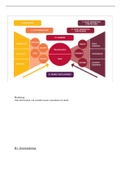
Energy system = 3 layered system
- (1) supply infrastructure = primary and secondary energy resources,
conversion system, transportation, mining and material inputs,
infrastructure that convert primary resources (e.g. petroleum stations and
gas refineries) and distribution lines.
- (2) demand infrastructure: end-use prime movers (e.g. cars), built
environment (e.g. design of a car)and energy consumption use or practice
(e.g. consumption patterns).
Prime movers = technology that convert primary and secondary fuels
into usable energy services.
Important to take demand infrastructure in account: energy transition
change the whole supply chain but also on the demand side
Global energy politics
Professor Thijs Van De Graaf
I. General introduction global energy policy
Lesson 1 – 19/02 Introduction
Global Energy Politics
- What?
Politics = not only activity of states, who gets what, when and how?
Global = energy sector is international (20% of world trade),
dependencies (even producing countries rely on others, so no country is
autarky) (≠ sorts of oil)
E.g. even US with the shale revolution needs other types of oil (e.g.,
link with military interventions in Venezuela)
Broad conception of energy: the socio-technical system to transport and
convert energy sources and carriers into energy services. (See also
chapter 1)
Layer 1: energy sources and carriers: primary energy sources
(available in nature e.g. wind, crude oil, uranium, … = needed to
produce energy carriers) - Energy carriers = secondary energy
sources: converted primary energy sources (e.g. electricity,
kerosine, biodiesel, hydrogen, …)
Layer 2: energy service: there is no energy demand, but demand
for energy services: lighting, mobility, heating, … - importance of
prime movers (end-use technologies: cars, lamps, electric
appliances, …
Layer 3: social infrastructure: GDP growth, laws and regulations
effecting energy (e.g. ETS), norms/culture/habits and values
- Other concepts
Energy security = uninterrupted availability of energy sources at an
affordable price
linked to energy sources and carriers
Focus on supply security: extraction (e.g. oil fields, mines, solar
farms,…), conversion (e.g. power plants, refineries, …) and storage
and transport (e.g. pipelines, electric grid, tankers,…)
Energy transition: switch to other energy resources (the transition
where in is not the first energy transition!)
In the socio-technical system it’s not only change in
sources/carriers/technologies but also in social practices.
Current transition: from fossil fuels to renewables: fossil fuel demand
is slowing down, but not the use + one of the fastest transitions:
broad policy support, cheaper, less energy insecurity (less
dependencies), climate change,…
Some say there is no energy transition, only energy addition:
renewables growth to slow to overtake fossil fuels: so renewables or
added, but fossil fuel keeps on growing
Sankey diagram: shows which resources are used for which set of
applications = energy flows: 3lessons showed
1) Also shows rejected energy (see first law of thermodynamics) =
energy losses because of conversion (mostly heath loss while
burning fossil fuels + renewables are more efficient = less to none
, losses , also because they are free) – losses: important to take in
account when thinking about efficiency.
2) Limited substitutability between ≠ sources: all have their own
end-use (and will unlikely change role) = ≠ politics/policies for ≠
sources.
3) end-user sectors are very important in the energy transition: in
the transition also industry, commercial buildings, habits, … must
change.
Interaction of energy system and our society: security, economy,
environment and justice
Trilemma: reaching all goals together is not possible
Justice mostly overlooked (not in this course)
Chapter 1: Introduction: systems, frames and transitions (Handbook)
1. Introduction
Energy = single largest source of greenhouse gas (GHG) emissions
- Energy affects: personal life, climate (natural ecosystem), societies (and
shapes them), economies and politics
- Energy = strategic good + main driver of wealth and power in politics (=
distributional consequences)
Study of global energy politics (in this course): studying the struggles of: who
gets what, when and how in energy use and production from an international
perspective.
- = providing overview of main concepts and approaches
- Via socio-technical system and contested frames
Socio technical system= infrastructures that deliver energy in broad
sense: technical, resources, user practices, cultural meaning,
institutions and supply network. More than only energy security + more
than only oil and natural gas (e.g. renewable energy)
Contested frames: ≠ stakeholder views over ≠ energy systems (=
own ideology, world views, interests, …): e.g. liberal market,
egalitarianism, …
2. A critical juncture in energy politics
Some ‘history’
- Transitions: traditional biomass -> coal -> oil -> natural gas -> nuclear ->
renewables
Loss of market share ≠ growth in absolute terms
- Fossil era: wealth ↗, population ↗, global production ↗ over last 200 years
Exploiting fossil fuel = transformed human society, cultural values ;
making them more democratic and less violent BUT today we see the
growing imprints of this acceleration; planetary boundaries.
Fossil fuel today = 80% of worldwide primary energy consumption (oil
= supreme)
Advantages: high energy densities (oil), easy transport/store (coal
and oil), versatile in application, relatively cheap (cheap:
environmental and health cost/impact not well calculated in price)
Disadvantages: pollution, geographically concentrated (impact on
energy security for importing countries)
- Renewables = among fastest-growing
,Today: Four big transformations (that will change production/consummation,
but also societies, economies and political systems)
- (1) Climate change
Burning of fossil fuel as the main culprit (80% of carbon dioxide
emission) = climate change is a energy problem
Fossil fuel also key source for other greenhouse gas e.g. methane
- (2) Rise of China
China: biggest energy consumer, biggest greenhouse gas emitter and
biggest producer of renewables.
They set the shape of the market (not only in energy)
Emerging powers like India, Brazil are becoming important engines in
energy demand growth (and China provides?) = world economy is
shifting from West to East
- (3) Renewable energy
Special in this shift: renewable sources are not geographically
concentrated (almost every country has something) and it cannot be
exhausted
Lend them self-better to decentralized forms of production and
consummation
Advantages: zero marginal cost, and some enjoy cost reduction
Demands deep transformation of the energy system including trade
patterns, political authority and decentralisation.
- (4) Eradication of energy poverty
Some places still don’t have access to electricity or clean cooking
facilities = mostly overlooked in standard global energy security
accounts
3. The scope and approach of this book
The analytical approach in this book:
- Looking at energy politics in a 3 way relationship: (1) the word system
(including the 4 transitions), (2) relations between countries and (3)
domestic energy politics and governance.
- Focus on supply and demand infrastructure, social context, primary
resources (oil and gas) and prime movers (e.g. households, cars,..) , built
environment and political and culture elements.
≠ standard IR approaches (realist and neo-realist thinking) = oil and
gas as power and vulnerabilities
- Energy system seen through 4 archetypical frames: (1) neo-mercantilism,
(2) market liberalism, (3) environmentalism and (4) social justice (see
further on)
Archetypical frames = guiding worldviews with own problem
definition, ideology, remedy,…
4. The science of energy
Energy
- In general
Energeia = activity in word (Aristoteles) = process of producing change
(e.g. temperature) in a effected system (e.g. a machine, the globe).
Energy comes in many forms = heat, motion, light and chemical
energy of fuels and food.
- Energy can be converted from one into another = two laws of
thermodynamics
, 1) law of conservation = total amount of energy stays constant = no
energy is lost or disappears (it can only be converted)
2) law of entropy = energy is converted, but it becomes less useful =
all processes of conversion are irreversible = there will always be
inefficiency losses in energy exchanges/conversion (e.g. heat loss)
Loss = cannot be used for intended purpose
- Energy and the metric system (! see book page 10-11)
≠ basic units of energy (e.g Joule, Kilowatt-hour, ..)
Electricity industry = own vocabulary, distinction between power and
energy
Power (Watt W): definition of power uses time, about the rate with
which we use to produce power
- Distinction between primary resources (= nature e.g. crude oil + can be
renewable e.g. wind or non-renewable e.g. hard coal) and energy carriers
(have to be produced e.g. electricity, hydrogen, ..)
5. Analytical framework:
Analytical framework = making sense of global energy politics because: ≠ actors,
≠sectors, ≠ sources an intertwined with ≠ issues.
Pillar 1 (analytic framework : A systems perspective on energy
Energy system = socio-technical system to transport and convert energy
sources and carriers info energy services
- Energy sources (primary) and carriers: energy sources must be
transported and conversed to energy carriers
In the conversion process energy is lost (= rejected energy) e.g. heath
loss when fossil fuels are burned
- Energy services: there is no demand for energy, people want the
services that energy can deliver = this shifts attention to the demand side
and prime movers
Services: e.g. cooking, lighting, mobility, ….
Prime movers = conversed energy sources and carriers into useful
energy services. E.g. cars, fridge, laptop, gas boilers, …
- Social technical system: there is more than the technical side (demand
and supply) = policies and regulation (e.g. subsidies, standards? ETS,…),
economic structures (e.g. globalisation, export les-growth, living standards,
…), production (e.g. oil companies, OPEC,…), infrastructure (e.g. petrol
stations, boilers, …), culture, habits, norms,.. .
Systeme thinking = identifying the interactions between elements of a whole
system
Energy system = 3 layered system
- (1) supply infrastructure = primary and secondary energy resources,
conversion system, transportation, mining and material inputs,
infrastructure that convert primary resources (e.g. petroleum stations and
gas refineries) and distribution lines.
- (2) demand infrastructure: end-use prime movers (e.g. cars), built
environment (e.g. design of a car)and energy consumption use or practice
(e.g. consumption patterns).
Prime movers = technology that convert primary and secondary fuels
into usable energy services.
Important to take demand infrastructure in account: energy transition
change the whole supply chain but also on the demand side