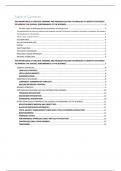
memory
the multi-store model of memory
types of LTM
the working memory model
explanations for forgetting: interference
explanations for forgetting: retrieval failure
factors affecting accuracy of eyewitness testimony: misleading info
factors affecting accuracy of eyewitness testimony: anxiety
improving accuracy of eyewitness testimony: cognitive interview
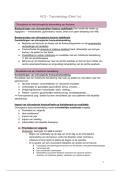
Coding, Capacity, Duration
short-term memory - STM; the limited-capacity memory store. Mainly acoustic
(sound), has capacity of 5-9 on avg. and is about 18 seconds
long-term memory - LTM; the permanent memory store. Mainly semantic
(meaning), has unlimted capacity and can store memories for a lifetime
coding
process of conveting information between different forms
encoding - transformation of internal thoughts and external events into STM to LTM.
process in which the information is processed and categorised for storage and
retrieval. (how info received)
visual
acoustic
semantic
research
Alan Baddeley (1966) gave different lists of words to four groups of participants
and asked to recall them in correct order
memory 1
, 1. acoustically similar - words sounded similar
2. acoustically dissimilar - words sounded different
3. semantically similar - words with similar meanings
4. semantically dissimilar - words with different meanings
tended to do worse on accoustically similar words when did immediate recall
→ STM
tended to do worse on semantically similar words when recalling after 20
mins → LTM
suggests that information is coded acoustically in STM (remembers the
sound, not the specifics) and semantically in LTM (general meaning, not
specific words)
evaluation
1. separate memory stores ✓
later research found that there are some exceptions to Baddeley’s findings,
but the idea that STM uses mostly acoustic coding and LTM semantic has
lasted
important step in our understanding of the memory system, leading to
the multi-store model
2. artificial stimuli ✘
word lists had no personal meanings to participants, so findings may not tell
us much about coding in different kinds of memory tasks, expecially
everyday life.
When processing more meaningful info, a person may use semantic coding
even for STM tasks.
limited application
capacity
the amount of informaiton that can be held in a memory store
research
1. Digit Span
memory 2
, Joseph Jacobs (1887); researcher read out four digits and participants
recalls in correct order, adding another digit and repeating when correct
until cannot follow order anymore, figuring out their digit span.
mean span for digits across all particpants was 9.3 items
mean span for letters was 7.3
2. span of memory and chuking
George Miller (1956) made observations of everyday practice; noted that
things come in sevens and thought the span of STM is about 7 items,
plus/minus 2.
found easier to remember 5 words with 5 letters through chunking,
grouping sets of digits or letters into units or chunks
evaluation
1. a valid study ✓
As, at the time, the research in psychology often lacked adequate controls,
digit spans may have been underestimated due to particiants distracted
during testing (confounding variable). Due to this, there have been
replications of Jacob’s study, like by Bopp and Verhaeghen (2005)
Jacob’s study is a valid test of digit span in STM
2. not so many chunks ✘
Nelson Cowan (2001) reviewed other research and concluded that the
capacity of STM is only about 4, plus or minus 1, chunks.
lower end of Miller’s estimate (five items_ is mrore appropriate than
seven
duration
the length of time information can be held in memory
research
1. STM
Margeret and Lloyd Peterson (1959) tested 24 students in 8 trails each. In
each trial, student given a consonant syllable to remember, and a 3-digit
number.
memory 3
the multi-store model of memory
types of LTM
the working memory model
explanations for forgetting: interference
explanations for forgetting: retrieval failure
factors affecting accuracy of eyewitness testimony: misleading info
factors affecting accuracy of eyewitness testimony: anxiety
improving accuracy of eyewitness testimony: cognitive interview
Coding, Capacity, Duration
short-term memory - STM; the limited-capacity memory store. Mainly acoustic
(sound), has capacity of 5-9 on avg. and is about 18 seconds
long-term memory - LTM; the permanent memory store. Mainly semantic
(meaning), has unlimted capacity and can store memories for a lifetime
coding
process of conveting information between different forms
encoding - transformation of internal thoughts and external events into STM to LTM.
process in which the information is processed and categorised for storage and
retrieval. (how info received)
visual
acoustic
semantic
research
Alan Baddeley (1966) gave different lists of words to four groups of participants
and asked to recall them in correct order
memory 1
, 1. acoustically similar - words sounded similar
2. acoustically dissimilar - words sounded different
3. semantically similar - words with similar meanings
4. semantically dissimilar - words with different meanings
tended to do worse on accoustically similar words when did immediate recall
→ STM
tended to do worse on semantically similar words when recalling after 20
mins → LTM
suggests that information is coded acoustically in STM (remembers the
sound, not the specifics) and semantically in LTM (general meaning, not
specific words)
evaluation
1. separate memory stores ✓
later research found that there are some exceptions to Baddeley’s findings,
but the idea that STM uses mostly acoustic coding and LTM semantic has
lasted
important step in our understanding of the memory system, leading to
the multi-store model
2. artificial stimuli ✘
word lists had no personal meanings to participants, so findings may not tell
us much about coding in different kinds of memory tasks, expecially
everyday life.
When processing more meaningful info, a person may use semantic coding
even for STM tasks.
limited application
capacity
the amount of informaiton that can be held in a memory store
research
1. Digit Span
memory 2
, Joseph Jacobs (1887); researcher read out four digits and participants
recalls in correct order, adding another digit and repeating when correct
until cannot follow order anymore, figuring out their digit span.
mean span for digits across all particpants was 9.3 items
mean span for letters was 7.3
2. span of memory and chuking
George Miller (1956) made observations of everyday practice; noted that
things come in sevens and thought the span of STM is about 7 items,
plus/minus 2.
found easier to remember 5 words with 5 letters through chunking,
grouping sets of digits or letters into units or chunks
evaluation
1. a valid study ✓
As, at the time, the research in psychology often lacked adequate controls,
digit spans may have been underestimated due to particiants distracted
during testing (confounding variable). Due to this, there have been
replications of Jacob’s study, like by Bopp and Verhaeghen (2005)
Jacob’s study is a valid test of digit span in STM
2. not so many chunks ✘
Nelson Cowan (2001) reviewed other research and concluded that the
capacity of STM is only about 4, plus or minus 1, chunks.
lower end of Miller’s estimate (five items_ is mrore appropriate than
seven
duration
the length of time information can be held in memory
research
1. STM
Margeret and Lloyd Peterson (1959) tested 24 students in 8 trails each. In
each trial, student given a consonant syllable to remember, and a 3-digit
number.
memory 3