Contemporary Issues in IP
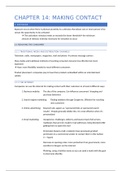
Hoofdstuk 1: the return of great power politics and europe
1. What is power?
1.1 Joseph nye – what is power?
➔ Power as a resource (ex. Soldiers) vs. power as a behavioral outcome
2. Anarchy and strategic interaction?
2.1 Kenneth Waltz – Neorealism (Structural Realism)
• Core claim: Anarchy compels self-help
• State goals: Survival, balance of power
• Cooperation: Fragile, limited by fear of cheating
• Change: Occurs via shifts in polarity (distribution of power)
• Policy: Maintain balance, avoid overexpansion
2.2 John Mearsheimer – Offensive Realism
• Core claim: Anarchy compels power maximisation Waltz: Staten zoeken
• State goals: Survival requires dominance; aim for hegemony veiligheid → balans is sleutel.
• Cooperation: Rare, temporary; rivalry inevitable Mearsheimer: Staten zoeken
• Change: Driven by power transitions macht → hegemonie is doel.
• Policy: Contain rivals, maximise relative power Wendt: Staten zijn wat ze van
2.3 Alexander Wendt – Constructivism elkaar maken →
• Core claim: Anarchy is socially constructed samenwerking is mogelijk.
• State goals: Identities and interests are socially shaped
,• Cooperation: Possible through trust, norms, shared identities
• Change: Norms and ideas can transform the system
• Policy: Invest in institutions, build cooperative norms
3. The return of great power politics
3.1 Barry Posen – Emerging Multipolarity
4. And Europe?
2.1 can Europe act autonomously?
How to define Strategic autonomy? The ability to decide and act free from external pressure
Europe is both 'playground' (object of US–China rivalry) and 'player' (seeking autonomy):
• Requires pooling resources via the EU
• Strong in trade & economics (centralised competences)
• Weak in defence & foreign policy (member states dominate)
• Autonomy = sector-specific and contingent
Europe faces external wedging (US/China divide Europeans to weaken EU unity) and
internal binding (France, Germany, Commission push cohesion).
Outcomes depend on:
• Franco-German alignment
• EU institutional centralisation
• Balance of stakes & resources
2.2 US and china approaches
, **Europe’s response**
• 'Autonomous but aligned': EU insists on independent decisions
• Aligns with US in some areas (Ukraine, certain tech)
• Keeps economic ties with China
• Franco-German engine crucial for unity
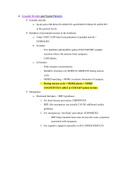
Hoofdstuk 2: India’s Current Geopolitical Context: Scoping Europe-India Cooperation
1. Sizing up the Indo-Pacific
An Interoceanic Continuum or just two well complementing Ocean theatres?
Geen enkel Has the strategic Centre of Gravity shifted from the Euro-Atlantic to the Indo-Pacific, or
land = alleen in fact, are the two vectors in intensively complex strategic interaction?
hele Indo- The Indo-Pacific–constellation of geographical subsets. Is any of them a fulcrum?
Pacific ● Rise of China argued as balancing the US-led regional order. However, the predatory rise
domineren. of China, equally needs a ‘Rebalance’ against quest for centricity.
Macht is ● Pacific vector of the Indo-Pacific marked by Militarized High Deterrence. Indian Ocean
verspreid over Region is steeped in Non-Traditional Under-Militarized Securitization. helpt om
veel landen ● Pacific’s challenge is managing Conflicts. IOR’s charter is managing connectivity. spanningen
(“plurality”). ● Regional Security Complexes/Regional Economic Complexes active. ‘Comprehensive (fault-lines)
=>samenwerki Security’ (development-security nexus) dovetails the fault-lines beter te
ng tssn ● No single sovereign can unilaterally hegemonize the Indo-Pacific. No overarching beheren.
meerdere bulwark at containment, possible. Distributed leverage; diffusion through plurality.
staten nodig The ‘Indo-Pacific’ is the New Ground Zero, but the ‘Indian Ocean Region’ is the Crux
om regio "New Ground Zero" = the central point where everything is happening in global politics.
stabiel te "Crux" = the core or heart of the whole.
houden. So: the Indo-Pacific is the new global arena of power and influence, but the Indian
Ocean Region (IOR) is the central point around which it all revolves.
1.1 The Complexity of Sino-Indian Interaction
✓ India and China => two large landmasses, two youthful demographics, but equally, two
resplendent Civilizational States.
✓ Both countries represent contrasting schemas of organizing political, economic, and
societal systems. (‘Command & Control’ vs ‘Democratic Pluralism’)
✓ Sino-Indian Conflict, distinctly different from other conflicts. Only instance of full scale
border dispute with virulent manifestations. Maritime disputes with others.
✓ Inherent disparity in hard numbers. (GDP, Per Capita Income, Industrial Heft, Fiscal
Resources, Military Spend, Infrastructural-Build Prowess)
✓ Chinese World View “Tianxia” (All under Heaven) comes up against India’s “Vaudhaiva
Kutumbakam” (One University, One Earth, One Family)
✓ Chinese achievements are stellar. But ‘Trust-Integrity-Intent’ is debatable. India
delivers sound outcomes, in optimal ‘Trust-Integrity-Ethical’ frame.
✓ China’s Tech-Nationalism, Economic-Protectionism, Historical-Claims, hurt the
Rules Based Intl Order. India, a votary of Rules Based Intl Order. (Self-Interested vis-à-
vis Responsible ‘Actor-Stakeholder’ in Global Governance)
✓ India a coveted global diplomatic partner (G7+, G20, BRICS, Quad, RIC). China has
multitude of Strategic Partnerships, but very few Strategic Partners.
✓ 50 % of India’s Export-GDP moves East, whilst 20% of its overall trade is routed
through the Red Sea. Meanwhile, 80% of China’s oil imports pass through the
Malacca Straits, 2/3rds of all trade passes through the Straits and 9/10 Crude Oil
exporters are resident in the IOR. Mutual Strategic Dilemmas on hand.
Hoofdstuk 1: the return of great power politics and europe
1. What is power?
1.1 Joseph nye – what is power?
➔ Power as a resource (ex. Soldiers) vs. power as a behavioral outcome
2. Anarchy and strategic interaction?
2.1 Kenneth Waltz – Neorealism (Structural Realism)
• Core claim: Anarchy compels self-help
• State goals: Survival, balance of power
• Cooperation: Fragile, limited by fear of cheating
• Change: Occurs via shifts in polarity (distribution of power)
• Policy: Maintain balance, avoid overexpansion
2.2 John Mearsheimer – Offensive Realism
• Core claim: Anarchy compels power maximisation Waltz: Staten zoeken
• State goals: Survival requires dominance; aim for hegemony veiligheid → balans is sleutel.
• Cooperation: Rare, temporary; rivalry inevitable Mearsheimer: Staten zoeken
• Change: Driven by power transitions macht → hegemonie is doel.
• Policy: Contain rivals, maximise relative power Wendt: Staten zijn wat ze van
2.3 Alexander Wendt – Constructivism elkaar maken →
• Core claim: Anarchy is socially constructed samenwerking is mogelijk.
• State goals: Identities and interests are socially shaped
,• Cooperation: Possible through trust, norms, shared identities
• Change: Norms and ideas can transform the system
• Policy: Invest in institutions, build cooperative norms
3. The return of great power politics
3.1 Barry Posen – Emerging Multipolarity
4. And Europe?
2.1 can Europe act autonomously?
How to define Strategic autonomy? The ability to decide and act free from external pressure
Europe is both 'playground' (object of US–China rivalry) and 'player' (seeking autonomy):
• Requires pooling resources via the EU
• Strong in trade & economics (centralised competences)
• Weak in defence & foreign policy (member states dominate)
• Autonomy = sector-specific and contingent
Europe faces external wedging (US/China divide Europeans to weaken EU unity) and
internal binding (France, Germany, Commission push cohesion).
Outcomes depend on:
• Franco-German alignment
• EU institutional centralisation
• Balance of stakes & resources
2.2 US and china approaches
, **Europe’s response**
• 'Autonomous but aligned': EU insists on independent decisions
• Aligns with US in some areas (Ukraine, certain tech)
• Keeps economic ties with China
• Franco-German engine crucial for unity
Hoofdstuk 2: India’s Current Geopolitical Context: Scoping Europe-India Cooperation
1. Sizing up the Indo-Pacific
An Interoceanic Continuum or just two well complementing Ocean theatres?
Geen enkel Has the strategic Centre of Gravity shifted from the Euro-Atlantic to the Indo-Pacific, or
land = alleen in fact, are the two vectors in intensively complex strategic interaction?
hele Indo- The Indo-Pacific–constellation of geographical subsets. Is any of them a fulcrum?
Pacific ● Rise of China argued as balancing the US-led regional order. However, the predatory rise
domineren. of China, equally needs a ‘Rebalance’ against quest for centricity.
Macht is ● Pacific vector of the Indo-Pacific marked by Militarized High Deterrence. Indian Ocean
verspreid over Region is steeped in Non-Traditional Under-Militarized Securitization. helpt om
veel landen ● Pacific’s challenge is managing Conflicts. IOR’s charter is managing connectivity. spanningen
(“plurality”). ● Regional Security Complexes/Regional Economic Complexes active. ‘Comprehensive (fault-lines)
=>samenwerki Security’ (development-security nexus) dovetails the fault-lines beter te
ng tssn ● No single sovereign can unilaterally hegemonize the Indo-Pacific. No overarching beheren.
meerdere bulwark at containment, possible. Distributed leverage; diffusion through plurality.
staten nodig The ‘Indo-Pacific’ is the New Ground Zero, but the ‘Indian Ocean Region’ is the Crux
om regio "New Ground Zero" = the central point where everything is happening in global politics.
stabiel te "Crux" = the core or heart of the whole.
houden. So: the Indo-Pacific is the new global arena of power and influence, but the Indian
Ocean Region (IOR) is the central point around which it all revolves.
1.1 The Complexity of Sino-Indian Interaction
✓ India and China => two large landmasses, two youthful demographics, but equally, two
resplendent Civilizational States.
✓ Both countries represent contrasting schemas of organizing political, economic, and
societal systems. (‘Command & Control’ vs ‘Democratic Pluralism’)
✓ Sino-Indian Conflict, distinctly different from other conflicts. Only instance of full scale
border dispute with virulent manifestations. Maritime disputes with others.
✓ Inherent disparity in hard numbers. (GDP, Per Capita Income, Industrial Heft, Fiscal
Resources, Military Spend, Infrastructural-Build Prowess)
✓ Chinese World View “Tianxia” (All under Heaven) comes up against India’s “Vaudhaiva
Kutumbakam” (One University, One Earth, One Family)
✓ Chinese achievements are stellar. But ‘Trust-Integrity-Intent’ is debatable. India
delivers sound outcomes, in optimal ‘Trust-Integrity-Ethical’ frame.
✓ China’s Tech-Nationalism, Economic-Protectionism, Historical-Claims, hurt the
Rules Based Intl Order. India, a votary of Rules Based Intl Order. (Self-Interested vis-à-
vis Responsible ‘Actor-Stakeholder’ in Global Governance)
✓ India a coveted global diplomatic partner (G7+, G20, BRICS, Quad, RIC). China has
multitude of Strategic Partnerships, but very few Strategic Partners.
✓ 50 % of India’s Export-GDP moves East, whilst 20% of its overall trade is routed
through the Red Sea. Meanwhile, 80% of China’s oil imports pass through the
Malacca Straits, 2/3rds of all trade passes through the Straits and 9/10 Crude Oil
exporters are resident in the IOR. Mutual Strategic Dilemmas on hand.