

NCLEX-RN study guide with the **Pharmacology section**.
---
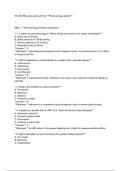
### 🧪 **Pharmacology Practice Questions**
**1. A patient is prescribed digoxin. Which finding should the nurse report immediately?**
A. Heart rate of 58 bpm
B. Blood pressure of 130/80 mmHg
C. Serum potassium of 3.0 mEq/L
D. Respiratory rate of 16/min
**Answer:** C
**Rationale:** Hypokalemia increases the risk of digoxin toxicity. A potassium level of 3.0 mEq/L
is dangerously low.
**2. Which medication is contraindicated in a patient with a penicillin allergy?**
A. Azithromycin
B. Ceftriaxone
C. Doxycycline
D. Ciprofloxacin
**Answer:** B
**Rationale:** Cephalosporins like ceftriaxone may cause cross-reactivity in patients allergic to
penicillin.
**3. What is the antidote for opioid overdose?**
A. Flumazenil
B. Naloxone
C. Atropine
D. Protamine sulfate
**Answer:** B
**Rationale:** Naloxone is a competitive opioid antagonist used to reverse opioid toxicity.
**4. A patient on warfarin has an INR of 5.2. What should the nurse anticipate?**
A. Administer vitamin K
B. Increase warfarin dose
C. Give aspirin
D. Continue current dose
**Answer:** A
**Rationale:** An INR above 4.5 increases bleeding risk. Vitamin K reverses warfarin effects.
**5. Which side effect is most concerning for a patient taking lisinopril?**
A. Dry cough
B. Dizziness
C. Angioedema
---
### 🧪 **Pharmacology Practice Questions**
**1. A patient is prescribed digoxin. Which finding should the nurse report immediately?**
A. Heart rate of 58 bpm
B. Blood pressure of 130/80 mmHg
C. Serum potassium of 3.0 mEq/L
D. Respiratory rate of 16/min
**Answer:** C
**Rationale:** Hypokalemia increases the risk of digoxin toxicity. A potassium level of 3.0 mEq/L
is dangerously low.
**2. Which medication is contraindicated in a patient with a penicillin allergy?**
A. Azithromycin
B. Ceftriaxone
C. Doxycycline
D. Ciprofloxacin
**Answer:** B
**Rationale:** Cephalosporins like ceftriaxone may cause cross-reactivity in patients allergic to
penicillin.
**3. What is the antidote for opioid overdose?**
A. Flumazenil
B. Naloxone
C. Atropine
D. Protamine sulfate
**Answer:** B
**Rationale:** Naloxone is a competitive opioid antagonist used to reverse opioid toxicity.
**4. A patient on warfarin has an INR of 5.2. What should the nurse anticipate?**
A. Administer vitamin K
B. Increase warfarin dose
C. Give aspirin
D. Continue current dose
**Answer:** A
**Rationale:** An INR above 4.5 increases bleeding risk. Vitamin K reverses warfarin effects.
**5. Which side effect is most concerning for a patient taking lisinopril?**
A. Dry cough
B. Dizziness
C. Angioedema


