

EIP QUESTIONS & ANSWERS
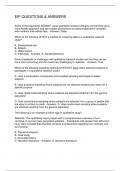
Some of the arguments AGAINST using qualitative research designs are that they use a
more flexible approach and can explain phenomena not easily explained or revealed
with numbers and ordinal data. - Answers :False
Which of the following IS NOT a method for collecting data in a qualitative research
study?
A. Standardized test
B. Artifacts
C. Observations
D. Interviews - Answers :A. Standardized test
Some drawbacks or challenges with qualitative research studies are that they can be
more time consuming and the results are challenging to replicate. - Answers :True
Which of the following sampling methods DOES NOT apply when selecting subjects to
participate in a qualitative research study?
A. Uses a combination of purposive and snowball sampling techniques to select
subjects
B. Uses purposive sampling where subjects are not selected randomly but rather for a
specific purpose
C. Uses randomized sampling where subjects are selected randomly from the general
population
D. Uses convenience sampling where subjects are selected from a group of people that
are easy to contact or reach - Answers :C. Uses randomized sampling where subjects
are selected randomly from the general population
The following is an example of which type of qualitative study?
'Methods: This qualitative inquiry began with a comprehensive overview of burn
narrative on survivor peer generated websites... Participants with greater than 30% burn
injury were included that provided narrative and discourse regarding burn recovery and
survivorship.'
A. Phenomenological
B. Case study
C. Grounded theory
D. Narrative disclosure - Answers :D. Narrative disclosure
, The following is an example of which type of qualitative study?
'Currently, there are limited guidelines that equip OT and PT with a summary of what
constitutes evidence-based high quality rehabilitation. This study aims to identify
rehabilitation practitioners' perspectives on the practices that constitute high quality hip
fracture rehabilitation.'
A. Ethnographical
B. Grounded theory
C. Phenomenological
D. Case Study - Answers :B. Grounded theory
Which of the following are TRUE about qualitative study designs. Select all that apply.
A. Relies on numerical and ordinal data
B. Must be tied to understanding, explanation, or the development of theory about an
observed phenomenon
C. Uses the subject's own words and narrative summaries of observable behavior to
express data, not numbers
D. Relies on words and images - Answers :B. Must be tied to understanding,
explanation, or the development of theory about an observed phenomenon
C. Uses the subject's own words and narrative summaries of observable behavior to
express data, not numbers
D. Relies on words and images
The following is an example of which type of qualitative study?
'Conclusion: AAT was used during PT in attempt to facilitate participation and distract
from pain in order to work on therapeutic activities and achieve the patient's functional
goals. This case report can be used as a model for other IRF therapy programs
interested in AAT, can provide information about a therapeutic modality and hopefully
will inspire future rigorously designed research studies.'
A. Phenomenological
B. Case study
C. Grounded theory
D. Ethnographical - Answers :B. Case study
The following is an example of which type of qualitative study?
Some of the arguments AGAINST using qualitative research designs are that they use a
more flexible approach and can explain phenomena not easily explained or revealed
with numbers and ordinal data. - Answers :False
Which of the following IS NOT a method for collecting data in a qualitative research
study?
A. Standardized test
B. Artifacts
C. Observations
D. Interviews - Answers :A. Standardized test
Some drawbacks or challenges with qualitative research studies are that they can be
more time consuming and the results are challenging to replicate. - Answers :True
Which of the following sampling methods DOES NOT apply when selecting subjects to
participate in a qualitative research study?
A. Uses a combination of purposive and snowball sampling techniques to select
subjects
B. Uses purposive sampling where subjects are not selected randomly but rather for a
specific purpose
C. Uses randomized sampling where subjects are selected randomly from the general
population
D. Uses convenience sampling where subjects are selected from a group of people that
are easy to contact or reach - Answers :C. Uses randomized sampling where subjects
are selected randomly from the general population
The following is an example of which type of qualitative study?
'Methods: This qualitative inquiry began with a comprehensive overview of burn
narrative on survivor peer generated websites... Participants with greater than 30% burn
injury were included that provided narrative and discourse regarding burn recovery and
survivorship.'
A. Phenomenological
B. Case study
C. Grounded theory
D. Narrative disclosure - Answers :D. Narrative disclosure
, The following is an example of which type of qualitative study?
'Currently, there are limited guidelines that equip OT and PT with a summary of what
constitutes evidence-based high quality rehabilitation. This study aims to identify
rehabilitation practitioners' perspectives on the practices that constitute high quality hip
fracture rehabilitation.'
A. Ethnographical
B. Grounded theory
C. Phenomenological
D. Case Study - Answers :B. Grounded theory
Which of the following are TRUE about qualitative study designs. Select all that apply.
A. Relies on numerical and ordinal data
B. Must be tied to understanding, explanation, or the development of theory about an
observed phenomenon
C. Uses the subject's own words and narrative summaries of observable behavior to
express data, not numbers
D. Relies on words and images - Answers :B. Must be tied to understanding,
explanation, or the development of theory about an observed phenomenon
C. Uses the subject's own words and narrative summaries of observable behavior to
express data, not numbers
D. Relies on words and images
The following is an example of which type of qualitative study?
'Conclusion: AAT was used during PT in attempt to facilitate participation and distract
from pain in order to work on therapeutic activities and achieve the patient's functional
goals. This case report can be used as a model for other IRF therapy programs
interested in AAT, can provide information about a therapeutic modality and hopefully
will inspire future rigorously designed research studies.'
A. Phenomenological
B. Case study
C. Grounded theory
D. Ethnographical - Answers :B. Case study
The following is an example of which type of qualitative study?


