

SIE Exam Study Guide | Key Concepts, Formulas & Flashcards | Securities Industry Essentials (FINRA)
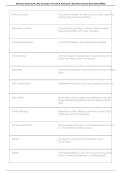
Primary market The primary market is where issuers raise capital by
selling newly issued securities.
Secondary market The secondary market is where investors trade
existing securities with other investors.
Investment banking Investment bankers help issuers raise capital.
Underwriting A broker-dealer may purchase securities from the
issuer and resell them to investors.
Syndicate A syndicate spreads underwriting risk among multiple
firms.
Firm commitment Underwriter buys the issue and assumes resale risk.
Best efforts Underwriter acts as agent and attempts to sell the
issue without guaranteeing the full amount will be
sold.
Public offerings Registered public offerings generally require SEC
registration and a prospectus.
Private placements Private placements rely on exemptions and are sold
to a more limited investor group.
Broker An agent for customer and typically earns a
commission.
Dealer A principal trading for its own account and typically
earns a markup/markdown or trading spread.
, SIE Exam Study Guide | Key Concepts, Formulas & Flashcards | Securities Industry Essentials (FINRA)
Market makers Stand ready to buy/sell specified securities.
Economic cycle Expansion: rising output/employment; Peak: activity
tops out; Contraction/recession: falling activity;
Trough: bottom before recovery.
Monetary policy Conducted by the Federal Reserve and affects
money/credit and interest rates.
Fiscal policy Federal government taxing and spending policy.
Easier monetary policy Generally seeks to stimulate economic activity and
tends to push short-term rates downward.
Tighter policy Seeks to restrain inflation/overheating and tends to
push rates upward.
Bond prices Generally move inversely to market interest rates.
Inflation Reduces purchasing power.
Common stock Represents residual ownership with voting rights and
potential dividends.
Preferred stock Usually pays a stated dividend and has priority over
common stock for dividends and liquidation.
Cumulative preferred If dividends are skipped, unpaid dividends
accumulate and must be paid before common
dividends can resume.
, SIE Exam Study Guide | Key Concepts, Formulas & Flashcards | Securities Industry Essentials (FINRA)
Convertible preferred May be converted into common stock according to
stated terms.
ADRs American Depositary Receipts represent interests in
foreign-company shares and trade in U.S. markets.
Stock splits A forward split increases shares and proportionally
reduces price per share.
Rights and warrants Rights are typically short-term privileges for existing
shareholders to buy new shares; warrants are longer-
term rights.
Bond basics A bond is debt; the issuer borrows principal and
promises interest and repayment according to the
bond terms.
Coupon rate Annual stated interest divided by par value.
Current yield Annual interest divided by current market price.
Interest-rate risk Risk that bond prices decline when market interest
rates rise.
Credit/default risk Risk that an issuer cannot make interest or principal
payments.
Call risk Risk that an issuer redeems a callable bond before
maturity.
Reinvestment risk Risk that interest or returned principal must be
reinvested at a lower rate.
Primary market The primary market is where issuers raise capital by
selling newly issued securities.
Secondary market The secondary market is where investors trade
existing securities with other investors.
Investment banking Investment bankers help issuers raise capital.
Underwriting A broker-dealer may purchase securities from the
issuer and resell them to investors.
Syndicate A syndicate spreads underwriting risk among multiple
firms.
Firm commitment Underwriter buys the issue and assumes resale risk.
Best efforts Underwriter acts as agent and attempts to sell the
issue without guaranteeing the full amount will be
sold.
Public offerings Registered public offerings generally require SEC
registration and a prospectus.
Private placements Private placements rely on exemptions and are sold
to a more limited investor group.
Broker An agent for customer and typically earns a
commission.
Dealer A principal trading for its own account and typically
earns a markup/markdown or trading spread.
, SIE Exam Study Guide | Key Concepts, Formulas & Flashcards | Securities Industry Essentials (FINRA)
Market makers Stand ready to buy/sell specified securities.
Economic cycle Expansion: rising output/employment; Peak: activity
tops out; Contraction/recession: falling activity;
Trough: bottom before recovery.
Monetary policy Conducted by the Federal Reserve and affects
money/credit and interest rates.
Fiscal policy Federal government taxing and spending policy.
Easier monetary policy Generally seeks to stimulate economic activity and
tends to push short-term rates downward.
Tighter policy Seeks to restrain inflation/overheating and tends to
push rates upward.
Bond prices Generally move inversely to market interest rates.
Inflation Reduces purchasing power.
Common stock Represents residual ownership with voting rights and
potential dividends.
Preferred stock Usually pays a stated dividend and has priority over
common stock for dividends and liquidation.
Cumulative preferred If dividends are skipped, unpaid dividends
accumulate and must be paid before common
dividends can resume.
, SIE Exam Study Guide | Key Concepts, Formulas & Flashcards | Securities Industry Essentials (FINRA)
Convertible preferred May be converted into common stock according to
stated terms.
ADRs American Depositary Receipts represent interests in
foreign-company shares and trade in U.S. markets.
Stock splits A forward split increases shares and proportionally
reduces price per share.
Rights and warrants Rights are typically short-term privileges for existing
shareholders to buy new shares; warrants are longer-
term rights.
Bond basics A bond is debt; the issuer borrows principal and
promises interest and repayment according to the
bond terms.
Coupon rate Annual stated interest divided by par value.
Current yield Annual interest divided by current market price.
Interest-rate risk Risk that bond prices decline when market interest
rates rise.
Credit/default risk Risk that an issuer cannot make interest or principal
payments.
Call risk Risk that an issuer redeems a callable bond before
maturity.
Reinvestment risk Risk that interest or returned principal must be
reinvested at a lower rate.


