

M1L3: GIZMO LAB: H-R DIAGRAM | ACCURATE AND VERIFIED
M1L3: Gizmo Lab: H-R Diagram
Name: Date: June 13
Prior Knowledge Questions (Do these BEFORE using the Gizmo.)
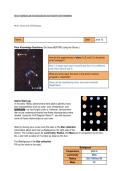
How do the appearances of stars A, B, and C in the photo
at left compare?
Star C is larger than stars A and B and Star A is a different
color then stars B and C.
What are some ways the stars in the photo could be
grouped or classified?
Stars can be classified by color, size and luminosity
(brightness)
Gizmo Warm-up
In the early 1900s, astronomers were able to identify many
star characteristics such as color, size, temperature, and
luminosity—or how bright a star is. However, astronomers
did not yet understand exactly how these characteristics were
related. Using the H-R Diagram Gizmo™, you will discover
some of these relationships on your own.
Start by moving your cursor over the stars in the Star collection.
Information about each star is displayed on the right side of the
Gizmo. The numbers given for Luminosity, Radius, and Mass are in comparison to the Sun.
So, a star with a radius of 2 is twice as large as the Sun.
Find Betelgeuse in the Star collection.
Fill out the chart to the right.
Betelgeuse
Temperature 3400 K
Luminosity 9500
Radius 383.4 Million Mi
Mass 20
, The Sun has a radius of 695,500 km. What is the radius of Betelgeuse? 1000 million mi
M1L3: Gizmo Lab: H-R Diagram
Name: Date: June 13
Prior Knowledge Questions (Do these BEFORE using the Gizmo.)
How do the appearances of stars A, B, and C in the photo
at left compare?
Star C is larger than stars A and B and Star A is a different
color then stars B and C.
What are some ways the stars in the photo could be
grouped or classified?
Stars can be classified by color, size and luminosity
(brightness)
Gizmo Warm-up
In the early 1900s, astronomers were able to identify many
star characteristics such as color, size, temperature, and
luminosity—or how bright a star is. However, astronomers
did not yet understand exactly how these characteristics were
related. Using the H-R Diagram Gizmo™, you will discover
some of these relationships on your own.
Start by moving your cursor over the stars in the Star collection.
Information about each star is displayed on the right side of the
Gizmo. The numbers given for Luminosity, Radius, and Mass are in comparison to the Sun.
So, a star with a radius of 2 is twice as large as the Sun.
Find Betelgeuse in the Star collection.
Fill out the chart to the right.
Betelgeuse
Temperature 3400 K
Luminosity 9500
Radius 383.4 Million Mi
Mass 20
, The Sun has a radius of 695,500 km. What is the radius of Betelgeuse? 1000 million mi


