

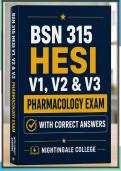
,BSN 315 – HESI RN Specialty Pharmacology Exam V1
Latest Update 2026/2027
Question 1
Which action should the nurse implement to assess the effectiveness of amlodipine therapy?
A. Review the client’s intake and output
B. Monitor the client’s serum electrolytes
C. Measure the client’s blood pressure
D. Assess the client’s serum calcium levels
Correct Answer: C. Measure the client’s blood pressure
Rationale:
Amlodipine is a calcium channel blocker used primarily to treat hypertension and angina by
relaxing vascular smooth muscle. The most direct indicator of therapeutic effectiveness is a
reduction in systemic blood pressure. Intake and output and electrolyte levels are not primary
indicators of amlodipine efficacy. Serum calcium levels are not routinely affected by this
medication.
Question 2
The nurse administers naloxone to a client experiencing opioid-induced respiratory depression.
One hour later, the client has a respiratory rate of 4 breaths/minute, oxygen saturation of 75%, and
is unresponsive. Which action should the nurse take next?
A. Initiate cardiopulmonary resuscitation
B. Determine the Glasgow Coma Scale score
C. Administer a second dose of naloxone
D. Prepare for chest tube insertion
Correct Answer: C. Administer a second dose of naloxone
Rationale:
Naloxone has a shorter half-life than most opioids, making repeat dosing necessary in some cases.
The client is exhibiting life-threatening respiratory depression, which requires immediate reversal of
,opioid effects. CPR is not indicated unless the client is pulseless. Chest tube insertion is unrelated
to opioid overdose management.
Question 3
A nurse is providing discharge teaching to a client prescribed sucralfate for peptic ulcer disease.
Which instruction is most important?
A. Take the medication with meals
B. Continue normal dosing if a dose is missed
C. Take the medication on an empty stomach one hour before meals
D. Take the medication with antacids for better absorption
Correct Answer: C. Take the medication on an empty stomach one hour before meals
Rationale:
Sucralfate forms a protective barrier over ulcer sites and requires an acidic environment to be
effective. Administering it on an empty stomach allows optimal coating of the ulcer. Taking it with
food or antacids reduces its effectiveness. Proper timing is essential for therapeutic success.
Question 4
The nurse provides discharge education to a client prescribed gabapentin for postherpetic
neuralgia. Which symptom should the client report to the healthcare provider?
A. Gastric irritation
B. Sexual dysfunction
C. Photosensitivity
D. Rapid weight gain
Correct Answer: D. Rapid weight gain
Rationale:
Gabapentin can cause weight gain due to fluid retention and increased appetite. Rapid or excessive
weight gain may indicate edema or adverse metabolic effects. Gastric irritation and photosensitivity
are not common side effects of gabapentin. Early reporting allows timely medication adjustment.
, Question 5
A prescription for ciprofloxacin 400 mg IV every 12 hours is to be infused over 1 hour. The IV
solution contains 400 mg in 200 mL. At what rate should the nurse program the infusion pump?
A. 100 mL/hr
B. 150 mL/hr
C. 200 mL/hr
D. 250 mL/hr
Correct Answer: C. 200 mL/hr
Rationale:
The total volume of 200 mL is to be infused over one hour. Dividing total volume by time yields an
infusion rate of 200 mL per hour. Accurate calculation ensures therapeutic dosing and prevents
infusion-related complications. Ciprofloxacin should be infused slowly to avoid vein irritation.
Question 6
A client with a fungal toenail infection reports no improvement after two weeks of OTC triple
antibiotic ointment use. Which nursing action is most appropriate?
A. Advise increasing application frequency
B. Recommend prescription-strength topical antibiotics
C. Reassure the client that fungal infections resolve slowly
D. Instruct the client to obtain a prescription for oral terbinafine
Correct Answer: D. Instruct the client to obtain a prescription for oral terbinafine
Rationale:
Fungal nail infections require antifungal therapy, not antibacterial agents. Oral terbinafine is often
necessary due to poor penetration of topical treatments into the nail bed. Increasing topical
antibiotics will not treat fungal organisms. Prompt antifungal therapy prevents further nail damage.
Question 7
A client receiving metoclopramide for chemotherapy-induced nausea develops involuntary facial
and extremity movements. Which action should the nurse take?
Latest Update 2026/2027
Question 1
Which action should the nurse implement to assess the effectiveness of amlodipine therapy?
A. Review the client’s intake and output
B. Monitor the client’s serum electrolytes
C. Measure the client’s blood pressure
D. Assess the client’s serum calcium levels
Correct Answer: C. Measure the client’s blood pressure
Rationale:
Amlodipine is a calcium channel blocker used primarily to treat hypertension and angina by
relaxing vascular smooth muscle. The most direct indicator of therapeutic effectiveness is a
reduction in systemic blood pressure. Intake and output and electrolyte levels are not primary
indicators of amlodipine efficacy. Serum calcium levels are not routinely affected by this
medication.
Question 2
The nurse administers naloxone to a client experiencing opioid-induced respiratory depression.
One hour later, the client has a respiratory rate of 4 breaths/minute, oxygen saturation of 75%, and
is unresponsive. Which action should the nurse take next?
A. Initiate cardiopulmonary resuscitation
B. Determine the Glasgow Coma Scale score
C. Administer a second dose of naloxone
D. Prepare for chest tube insertion
Correct Answer: C. Administer a second dose of naloxone
Rationale:
Naloxone has a shorter half-life than most opioids, making repeat dosing necessary in some cases.
The client is exhibiting life-threatening respiratory depression, which requires immediate reversal of
,opioid effects. CPR is not indicated unless the client is pulseless. Chest tube insertion is unrelated
to opioid overdose management.
Question 3
A nurse is providing discharge teaching to a client prescribed sucralfate for peptic ulcer disease.
Which instruction is most important?
A. Take the medication with meals
B. Continue normal dosing if a dose is missed
C. Take the medication on an empty stomach one hour before meals
D. Take the medication with antacids for better absorption
Correct Answer: C. Take the medication on an empty stomach one hour before meals
Rationale:
Sucralfate forms a protective barrier over ulcer sites and requires an acidic environment to be
effective. Administering it on an empty stomach allows optimal coating of the ulcer. Taking it with
food or antacids reduces its effectiveness. Proper timing is essential for therapeutic success.
Question 4
The nurse provides discharge education to a client prescribed gabapentin for postherpetic
neuralgia. Which symptom should the client report to the healthcare provider?
A. Gastric irritation
B. Sexual dysfunction
C. Photosensitivity
D. Rapid weight gain
Correct Answer: D. Rapid weight gain
Rationale:
Gabapentin can cause weight gain due to fluid retention and increased appetite. Rapid or excessive
weight gain may indicate edema or adverse metabolic effects. Gastric irritation and photosensitivity
are not common side effects of gabapentin. Early reporting allows timely medication adjustment.
, Question 5
A prescription for ciprofloxacin 400 mg IV every 12 hours is to be infused over 1 hour. The IV
solution contains 400 mg in 200 mL. At what rate should the nurse program the infusion pump?
A. 100 mL/hr
B. 150 mL/hr
C. 200 mL/hr
D. 250 mL/hr
Correct Answer: C. 200 mL/hr
Rationale:
The total volume of 200 mL is to be infused over one hour. Dividing total volume by time yields an
infusion rate of 200 mL per hour. Accurate calculation ensures therapeutic dosing and prevents
infusion-related complications. Ciprofloxacin should be infused slowly to avoid vein irritation.
Question 6
A client with a fungal toenail infection reports no improvement after two weeks of OTC triple
antibiotic ointment use. Which nursing action is most appropriate?
A. Advise increasing application frequency
B. Recommend prescription-strength topical antibiotics
C. Reassure the client that fungal infections resolve slowly
D. Instruct the client to obtain a prescription for oral terbinafine
Correct Answer: D. Instruct the client to obtain a prescription for oral terbinafine
Rationale:
Fungal nail infections require antifungal therapy, not antibacterial agents. Oral terbinafine is often
necessary due to poor penetration of topical treatments into the nail bed. Increasing topical
antibiotics will not treat fungal organisms. Prompt antifungal therapy prevents further nail damage.
Question 7
A client receiving metoclopramide for chemotherapy-induced nausea develops involuntary facial
and extremity movements. Which action should the nurse take?


