

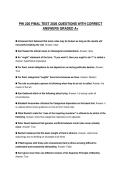
PHI 220 FINAL TEST 2026 QUESTIONS WITH CORRECT
ANSWERS GRADED A+
● Immanuel Kant believed that some rules may be broken as long as the results will
not justify breaking the rule. Answer: false
● Kant based his ethical views on theological considerations. Answer: false
● An "ought" statement of the form, "if you want X, then you ought to do Y" is called a.
Answer: hypothetical imperative
● For Kant, moral obligations do not depend on us having particular desires. Answer:
True
● For Kant, categorical "oughts" have force because we have. Answer: Reason
● The rule or principle a person is following when they do an act is called. Answer: the
maxim of the act
● Kant believed which of the following about lying. Answer: it is wrong under all
circumstances
● Elizabeth Anscombe criticizes the Categorical Imperative on the basis that. Answer: it
is useless without some guidance on how to form moral rules
● What Rachel's calls the "case of the inquiring murderer" is offered to do which of the
following. Answer: show that categorical imperative is too absolute
● Peter Geech believed that genuine conflicts between moral rules never actually
occur. Answer: True
● Rachel's believes that the basic insight of Kant's ethics is. Answer: valid moral
reasonings are not binding on all people at all times
● O'Neill agrees with those who characterize Kant's ethics as being difficult to
understand and excessively demanding. Answer: False
● Kant gives more than one different version of his Supreme Principle of Morality.
Answer: True
, ● For Kant, the maxim of an act is the principle or policy one follows when deciding on
an action. Answer: True
● For Kant, what makes an action moral or immoral are the consequences of our
action, not what we intend. Answer: False
● Kant believed that it is wrong to use someone as a means to our ends. Answer: False
● Which of the following makes a false promise wrong, according to Kant. Answer: it
treats the person who believes the false promise as a thing and not as a person
● For Kant, the special moral status of people (i.e. their dignity) is based on their.
Answer: rationality
● When I ask a friend to lend me some money, I am treating that person as a means in
violation of the categorical imperative. Answer: false
● Bentham was a proponent of the retrubitivist justification of punishment. Answer:
false
● Deceiving someone in order to get them to do what you want would not violate the
Categorical Imperative because they will have acted voluntarily and not under
coercion. Answer: false
● Treating someone as an end in themselves requires that we make our purpose one of
their purpose. Answer: false
● Kant objects to treating other people as a means. Answer: false
● In the example of the plumber on Rachels page 138-139, hiring a plumber would be.
Answer: morally okay because you are not treating the plumber as simply a means
● Jeremy Bentham believed that some punishments were well deserved and therefore
good things. Answer: False
● Bentham was opposed to the retributivist justification because. Answer: he thought
retributivism advocated inflicted suffering without any gain
● What are the utilitarian justifications of punishment. Answer: 1. gratification to victims
● Which of the following is a retributivist justification for punishment. Answer: the
criminal deserves the punishment
ANSWERS GRADED A+
● Immanuel Kant believed that some rules may be broken as long as the results will
not justify breaking the rule. Answer: false
● Kant based his ethical views on theological considerations. Answer: false
● An "ought" statement of the form, "if you want X, then you ought to do Y" is called a.
Answer: hypothetical imperative
● For Kant, moral obligations do not depend on us having particular desires. Answer:
True
● For Kant, categorical "oughts" have force because we have. Answer: Reason
● The rule or principle a person is following when they do an act is called. Answer: the
maxim of the act
● Kant believed which of the following about lying. Answer: it is wrong under all
circumstances
● Elizabeth Anscombe criticizes the Categorical Imperative on the basis that. Answer: it
is useless without some guidance on how to form moral rules
● What Rachel's calls the "case of the inquiring murderer" is offered to do which of the
following. Answer: show that categorical imperative is too absolute
● Peter Geech believed that genuine conflicts between moral rules never actually
occur. Answer: True
● Rachel's believes that the basic insight of Kant's ethics is. Answer: valid moral
reasonings are not binding on all people at all times
● O'Neill agrees with those who characterize Kant's ethics as being difficult to
understand and excessively demanding. Answer: False
● Kant gives more than one different version of his Supreme Principle of Morality.
Answer: True
, ● For Kant, the maxim of an act is the principle or policy one follows when deciding on
an action. Answer: True
● For Kant, what makes an action moral or immoral are the consequences of our
action, not what we intend. Answer: False
● Kant believed that it is wrong to use someone as a means to our ends. Answer: False
● Which of the following makes a false promise wrong, according to Kant. Answer: it
treats the person who believes the false promise as a thing and not as a person
● For Kant, the special moral status of people (i.e. their dignity) is based on their.
Answer: rationality
● When I ask a friend to lend me some money, I am treating that person as a means in
violation of the categorical imperative. Answer: false
● Bentham was a proponent of the retrubitivist justification of punishment. Answer:
false
● Deceiving someone in order to get them to do what you want would not violate the
Categorical Imperative because they will have acted voluntarily and not under
coercion. Answer: false
● Treating someone as an end in themselves requires that we make our purpose one of
their purpose. Answer: false
● Kant objects to treating other people as a means. Answer: false
● In the example of the plumber on Rachels page 138-139, hiring a plumber would be.
Answer: morally okay because you are not treating the plumber as simply a means
● Jeremy Bentham believed that some punishments were well deserved and therefore
good things. Answer: False
● Bentham was opposed to the retributivist justification because. Answer: he thought
retributivism advocated inflicted suffering without any gain
● What are the utilitarian justifications of punishment. Answer: 1. gratification to victims
● Which of the following is a retributivist justification for punishment. Answer: the
criminal deserves the punishment


