H1: New Urgency, New
Possibilities
1: Marketing planning: value, purpose and contents
Marketing is everywhere
Businesses must fight to cath the customer’s eye
Marketing planning is important
- Customers have more information, more choices, higher expectations, more power, and
more involvement
- Stakeholders are looking for companies to make a difference
Shareholders: about the money
Stakeholders: everyone who has a connection with the company
Get your customers involved in your marketing (a two-way communication)
Customers demand transparency
- Received benefits vs perceived total price
- Creating value = satisfying customer’s needs
- Marketing is all about creating, communicating, delivering and exchanging offerings that
provide value
- Marketing = a promise
Providing value through satisfying customers’ needs
Purpose of marketing planning
o Strategic > 1 year
o Tactical = 1 year
o Operational < 1 year
- To provide a framework for guiding the company toward its objectives
- A structured process helps you identify, assess and select appropriate marketing
opportunities and strategies
Contents of a marketing plan
- Executive summary
- Current situation
- Objectives and issues
- Target market, customer analysis and positioning
- Marketing strategy
- Marketing programs
- Financial and operational plans
- Metrics and implementation
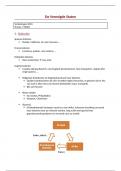
Strategic marketing plan should look like this
2: Developing a marketing plan
Get a fresh perspective by creating a new plan every year, rather than adapting last year’s plan.
,Step 1: Research and analyze the current situation
Get a fresh perspective by creating a new plan every year, rather than adapting last year’s plan.
The marketer performs:
- Externel analysis
- Internal analysis
Externel analysis involves the understandig of:
- Demographic
- Economic
- Technological
- Political-legal
- Ecological
- Social-cultural
- Competitors
Internal analysis
Marketers also assess the firm’s capabilities and the strategies of competitors in order to:
- Build on strengths
- Exploit competitors’ weaknesses
Step 2: Understand markets and customers
- Consumers or businesses
- Comprehensive understanding is desired
o Buying habits and behaviors
o Who? What? Where? When? Why? How?
o Are buying patterns changing? Why?
Example: McDonald’s GLOCAL = as global as possible, as local as needed
Elke site is aangepast aan het land
Step 3: Plan segmentation, targeting and positioning
Purpose of segmentation: to group customers with similar needs, wants behavior or attitudes
Targeting: the selection of specific segments for marketing
Positioning: a competitively distinctive place (position) in the mind of the targeted customers
- Vb: M&M’s
o Sales stagnation in chocolate market
o Higher market share for competitors
o Sales decrease of more than $23 million between 1995 and 1997
o Urgency and call for action
Chocolate is fun and impulsive
Chocolate is colourful
M&M’s are different
,Marketing planning is important
- Customers have more information, more choices, higher expectations, more power, and
more involvement
o Proof?
o Examples?
- Stakeholders are looking for companies to make a difference
o What’s in it for me?
o More and more involved in the company
Step 4: Plan direction, objectives and marketing support
Goals: long-term targets
Objectives: shorter-term targets
Sustainable marketing:
- Balancing long-term goals with short-term objectives and budget realities
- Responsible to the larger society
Step 5: Develop marketing strategies and programs
- Consistent with the firm’s overall direction, goals and strategies
- Utilizing the tools of the ‘marketing mix’, enhanced by service
o Increasing use of ‘three screens’: TV, cell phone and computer
- Includes the development of strategic alliances with suppliers, partners and channel partners
Step 6: Plan metrics and implementation control
Metrics: numerical measures of performance-related activities and outcomes
Metrics include:
- Return on marketing investment (ROMI)
- Market share
- Cost per customer acquired
Marketing control: measuring interim performance against metrics, diagnosing any performance
issues and making change as needed
3: Preparing for marketing planning
Primary marketing tools
- Product
- Place
- Price
- Promotion
Support strategies: customer service
, 4 guiding principles for effective marketing planning:
1. Anticipate change
o Do not copy but innovate
2. Engage everyone
o All stakeholders
o Consumers
o Employees
3. Seek alliances
o When you can’t manage on your own
4. Make marketing meaningful
o Make it liked
o Make it useful
H2: Analysing the current
situation
1: Environmental scanning & SWOT analysis
Involves the analysis of both:
- Internal factors
- External factors
The macro- and micro-environments
To formulate a flexible and practical marketing plan, one needs to properly track and differentiate
between macro-environmental and micro-environmental factors:
- Macro-environmental factors
o = broad forces that impact overall marketing strategy and performance
Demographic
Economic
Ecological
Technological
Political-legal
Social-cultural forces
- Micro-environmental factors
o = more directly influence marketing strategies and activities
Customers
Competitors
Channel members, partners, suppliers and employees
SWOT analysis
- Strengths
- Weaknesses
- Opportunities
- Threats
Possibilities
1: Marketing planning: value, purpose and contents
Marketing is everywhere
Businesses must fight to cath the customer’s eye
Marketing planning is important
- Customers have more information, more choices, higher expectations, more power, and
more involvement
- Stakeholders are looking for companies to make a difference
Shareholders: about the money
Stakeholders: everyone who has a connection with the company
Get your customers involved in your marketing (a two-way communication)
Customers demand transparency
- Received benefits vs perceived total price
- Creating value = satisfying customer’s needs
- Marketing is all about creating, communicating, delivering and exchanging offerings that
provide value
- Marketing = a promise
Providing value through satisfying customers’ needs
Purpose of marketing planning
o Strategic > 1 year
o Tactical = 1 year
o Operational < 1 year
- To provide a framework for guiding the company toward its objectives
- A structured process helps you identify, assess and select appropriate marketing
opportunities and strategies
Contents of a marketing plan
- Executive summary
- Current situation
- Objectives and issues
- Target market, customer analysis and positioning
- Marketing strategy
- Marketing programs
- Financial and operational plans
- Metrics and implementation
Strategic marketing plan should look like this
2: Developing a marketing plan
Get a fresh perspective by creating a new plan every year, rather than adapting last year’s plan.
,Step 1: Research and analyze the current situation
Get a fresh perspective by creating a new plan every year, rather than adapting last year’s plan.
The marketer performs:
- Externel analysis
- Internal analysis
Externel analysis involves the understandig of:
- Demographic
- Economic
- Technological
- Political-legal
- Ecological
- Social-cultural
- Competitors
Internal analysis
Marketers also assess the firm’s capabilities and the strategies of competitors in order to:
- Build on strengths
- Exploit competitors’ weaknesses
Step 2: Understand markets and customers
- Consumers or businesses
- Comprehensive understanding is desired
o Buying habits and behaviors
o Who? What? Where? When? Why? How?
o Are buying patterns changing? Why?
Example: McDonald’s GLOCAL = as global as possible, as local as needed
Elke site is aangepast aan het land
Step 3: Plan segmentation, targeting and positioning
Purpose of segmentation: to group customers with similar needs, wants behavior or attitudes
Targeting: the selection of specific segments for marketing
Positioning: a competitively distinctive place (position) in the mind of the targeted customers
- Vb: M&M’s
o Sales stagnation in chocolate market
o Higher market share for competitors
o Sales decrease of more than $23 million between 1995 and 1997
o Urgency and call for action
Chocolate is fun and impulsive
Chocolate is colourful
M&M’s are different
,Marketing planning is important
- Customers have more information, more choices, higher expectations, more power, and
more involvement
o Proof?
o Examples?
- Stakeholders are looking for companies to make a difference
o What’s in it for me?
o More and more involved in the company
Step 4: Plan direction, objectives and marketing support
Goals: long-term targets
Objectives: shorter-term targets
Sustainable marketing:
- Balancing long-term goals with short-term objectives and budget realities
- Responsible to the larger society
Step 5: Develop marketing strategies and programs
- Consistent with the firm’s overall direction, goals and strategies
- Utilizing the tools of the ‘marketing mix’, enhanced by service
o Increasing use of ‘three screens’: TV, cell phone and computer
- Includes the development of strategic alliances with suppliers, partners and channel partners
Step 6: Plan metrics and implementation control
Metrics: numerical measures of performance-related activities and outcomes
Metrics include:
- Return on marketing investment (ROMI)
- Market share
- Cost per customer acquired
Marketing control: measuring interim performance against metrics, diagnosing any performance
issues and making change as needed
3: Preparing for marketing planning
Primary marketing tools
- Product
- Place
- Price
- Promotion
Support strategies: customer service
, 4 guiding principles for effective marketing planning:
1. Anticipate change
o Do not copy but innovate
2. Engage everyone
o All stakeholders
o Consumers
o Employees
3. Seek alliances
o When you can’t manage on your own
4. Make marketing meaningful
o Make it liked
o Make it useful
H2: Analysing the current
situation
1: Environmental scanning & SWOT analysis
Involves the analysis of both:
- Internal factors
- External factors
The macro- and micro-environments
To formulate a flexible and practical marketing plan, one needs to properly track and differentiate
between macro-environmental and micro-environmental factors:
- Macro-environmental factors
o = broad forces that impact overall marketing strategy and performance
Demographic
Economic
Ecological
Technological
Political-legal
Social-cultural forces
- Micro-environmental factors
o = more directly influence marketing strategies and activities
Customers
Competitors
Channel members, partners, suppliers and employees
SWOT analysis
- Strengths
- Weaknesses
- Opportunities
- Threats