EQ1 Coasts 15.4.19
EQ1: why are coastal landscapes different and what processes causes these differences?
The coastal zone
The coast as a system:
Inputs;
- Marine → waves, tides, storm surges.
- Atmospheric → weather/ climate, climate change, solar energy.
- Land → rock type and structure, tectonic activity.
- People → human activity, coastal management.
Processes;
- Weathering.
- Mass movement.
- Erosion.
- Transport.
- Deposition.
Outputs;
- Erosional landforms.
- Depositional landforms.
- Different types of coasts.
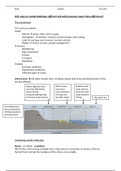
Littoral zone → the wider coastal zone, including coastal land areas and shallow parts of the
sea just offshore.
Above high tide level Where wave Shallow water
and only affected by processes areas close to
waves during occur between land and used
exceptionally high tide the high and extensively for
levels and major storms. low tide marks. fishing. The open sea.
Land adjacent to
the sea and often
heavily populated
and urbanised.
Classifying coastal landscapes
Rocky – or cliffed – coastlines:
Which have cliffs varying in height from a few metres to hundreds of metres; cliffs are
formed from rock but the hardness of the rock is very variable.
EQ1: why are coastal landscapes different and what processes causes these differences?
The coastal zone
The coast as a system:
Inputs;
- Marine → waves, tides, storm surges.
- Atmospheric → weather/ climate, climate change, solar energy.
- Land → rock type and structure, tectonic activity.
- People → human activity, coastal management.
Processes;
- Weathering.
- Mass movement.
- Erosion.
- Transport.
- Deposition.
Outputs;
- Erosional landforms.
- Depositional landforms.
- Different types of coasts.
Littoral zone → the wider coastal zone, including coastal land areas and shallow parts of the
sea just offshore.
Above high tide level Where wave Shallow water
and only affected by processes areas close to
waves during occur between land and used
exceptionally high tide the high and extensively for
levels and major storms. low tide marks. fishing. The open sea.
Land adjacent to
the sea and often
heavily populated
and urbanised.
Classifying coastal landscapes
Rocky – or cliffed – coastlines:
Which have cliffs varying in height from a few metres to hundreds of metres; cliffs are
formed from rock but the hardness of the rock is very variable.