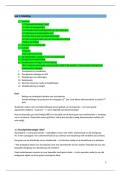
Frequency/frequentie
= number of times each value occurred
Absolute drequency Graphing frequency distributions Shapes of distribution
= aantal keer dat gebeurtenis is voorgekomen Graphs can show information about trends/general characteristics Distribution can be characterised by the shape
= number of times each value occurred more clearly than tables of the drawn frequency distribution
Relative frequency Histograms Symmetrical distribution
= ratio/percentage of the number of times a shows the shape of the distribution
value occurs to the total number of outcomes Bar graph, composed of series
of columns, each representing
one score or class interval
X-axis: intervals
Y-axis: frequency
Cumulative frequency Frequency polygons Asymmetrical distribution
= accumulation of previous relative line plot, each point on the line
frequencies represents frequency or
percentage
Relative and cumulative – useful to compare X-axis: scores
between samples Y-axis: frequency
Grouped frequency distributions Stem-and-leaf plots Frequency distributions:
= Class intervals/intervals/ranges, group = refined grouped frequency order data and identify group patterns
numeric data into categories distribution do NOT provide a practical quantitative
• Equal width/length Separates each score into two summary
• Mutually exclusive parts
• Enough intervals to represent all data Leaf: last or rightmost single
digit of each score
Stem: remaining leftmost digits
Distribution qualitative/categorical data
• No class intervals
• Cumulative frequency only if it makes
sense
1
, Wetenschappelijke vaardigheden les 6: Measures of central tendency = indices to reflect concepts of the center of distribution
2
= number of times each value occurred
Absolute drequency Graphing frequency distributions Shapes of distribution
= aantal keer dat gebeurtenis is voorgekomen Graphs can show information about trends/general characteristics Distribution can be characterised by the shape
= number of times each value occurred more clearly than tables of the drawn frequency distribution
Relative frequency Histograms Symmetrical distribution
= ratio/percentage of the number of times a shows the shape of the distribution
value occurs to the total number of outcomes Bar graph, composed of series
of columns, each representing
one score or class interval
X-axis: intervals
Y-axis: frequency
Cumulative frequency Frequency polygons Asymmetrical distribution
= accumulation of previous relative line plot, each point on the line
frequencies represents frequency or
percentage
Relative and cumulative – useful to compare X-axis: scores
between samples Y-axis: frequency
Grouped frequency distributions Stem-and-leaf plots Frequency distributions:
= Class intervals/intervals/ranges, group = refined grouped frequency order data and identify group patterns
numeric data into categories distribution do NOT provide a practical quantitative
• Equal width/length Separates each score into two summary
• Mutually exclusive parts
• Enough intervals to represent all data Leaf: last or rightmost single
digit of each score
Stem: remaining leftmost digits
Distribution qualitative/categorical data
• No class intervals
• Cumulative frequency only if it makes
sense
1
, Wetenschappelijke vaardigheden les 6: Measures of central tendency = indices to reflect concepts of the center of distribution
2