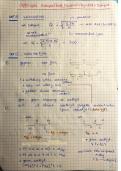
WEEK 2: PP – BRUNER, THEORY OF INSTRUCTION & DISCOVERY LEARNING
SLIDE 3: WHO IS BRUNER?
o Key figure in translating vygotsky’s work into English
o Born 1915 – died 2016 age 101
o Taught oxford uni 1970-1980
SLIDE 6: 1. REVIST SCAFFOLDING CONCEPT
Types of effective scaffolding:
o Modelling an action
o Suggesting strategy for solving problem
o Structuring learning into manageable parts
SLIDE 7 & 8: 2. MODES OF REPRESENTATIONS
Children’s cognitive development occurs in three modes:
o Enactive mode = first 18 months, learn though action
o Iconic mode = 18months – 6/7yrs, learn through images
o Symbolic mode 6/7 yrs, learn through abstract symbols
Modes NOT stages:
symbolic
iconic
enactive
SLIDE 9: 3. SPIRAL CURRICULUM
“We begin with the hypothesis that any subject can be taught effectively in some
intellectually honest form to any child at any stage of development.” – BRUNER 1968
o Learners return to address advanced components of a topic as they develop over
time.
o Learners construct new concepts based upon their existing/prior knowledge.
SLIDE 11: 4. ACCELERATED LEARNING
“any idea or body of knowledge can be presented in a form simple enough so that any
particular learner can understand it.” – BRUNER 1966
SLIDE 13 & 16: 5. DISCOVERY LEARNING/PROBLEM-BASED LEARNING (PBL)
o Children should be given opportunities to discover/solve concepts/problems
themselves.
o Role of teacher = provide child with problem & provide resources to allow child to
discover solution & encourage collaboration & discussions.
o Role of child = solve the problem
SLIDE 3: WHO IS BRUNER?
o Key figure in translating vygotsky’s work into English
o Born 1915 – died 2016 age 101
o Taught oxford uni 1970-1980
SLIDE 6: 1. REVIST SCAFFOLDING CONCEPT
Types of effective scaffolding:
o Modelling an action
o Suggesting strategy for solving problem
o Structuring learning into manageable parts
SLIDE 7 & 8: 2. MODES OF REPRESENTATIONS
Children’s cognitive development occurs in three modes:
o Enactive mode = first 18 months, learn though action
o Iconic mode = 18months – 6/7yrs, learn through images
o Symbolic mode 6/7 yrs, learn through abstract symbols
Modes NOT stages:
symbolic
iconic
enactive
SLIDE 9: 3. SPIRAL CURRICULUM
“We begin with the hypothesis that any subject can be taught effectively in some
intellectually honest form to any child at any stage of development.” – BRUNER 1968
o Learners return to address advanced components of a topic as they develop over
time.
o Learners construct new concepts based upon their existing/prior knowledge.
SLIDE 11: 4. ACCELERATED LEARNING
“any idea or body of knowledge can be presented in a form simple enough so that any
particular learner can understand it.” – BRUNER 1966
SLIDE 13 & 16: 5. DISCOVERY LEARNING/PROBLEM-BASED LEARNING (PBL)
o Children should be given opportunities to discover/solve concepts/problems
themselves.
o Role of teacher = provide child with problem & provide resources to allow child to
discover solution & encourage collaboration & discussions.
o Role of child = solve the problem