FLG 222: Metabolism
Bioenergetics
- Bioenergetics describes the transfer and utilization of energy in biologic systems.
- It makes use of a few basic ideas from the field of thermodynamics, particularly the concept of
free energy.
- Changes in free energy (ΔG) provide a measure of the energetic feasibility of a chemical
reaction and can, therefore, allow prediction of whether a reaction or process can take place.
- Bioenergetics concerns only the initial and final energy
states of reaction components, not the mechanism or how
much time is needed for the chemical change to take place.
- Bioenergetics predicts if a process is possible, whereas
kinetics measures how fast the reaction occurs.
ΔG – Change in free energy
- The direction and extent to which a chemical reaction proceeds is determined by the degree to which two factors change
during the reaction.
- These are enthalpy (ΔH, a measure of the change in heat content of the
reactants and products) and entropy (ΔS, a measure of the change in
randomness or disorder of reactants and products.
- When combined mathematically, enthalpy and entropy can be used to define
a third quantity, free energy (G), which predicts the direction in which a
reaction will spontaneously proceed.
ATP as a carrier of free energy
- ATP is a nucleotide: adenine – ribose – triphosphate
- Active form of ATP exists complexed with magnesium ( Mg2+) or manganese (Mn2+).
- It is an energy rich molecule because it contains 2 phosphoanhydride bonds.
- The phosphoanhydride bonds are high energy bonds.
- A large amount of free energy is released when ATP is
hydrolysed.
- Reactions or processes that have a large positive ΔG, such
as moving ions against a concentration gradient across a cell
membrane, are made possible by coupling the endergonic
movement of ions with a second, spontaneous process with a
large negative ΔG, such as the exergonic hydrolysis of
adenosine triphosphate (ATP).
- In the absence of enzymes, ATP is a stable molecule because its hydrolysis has a high activation
energy.
Sequential hydrolysis of ATP
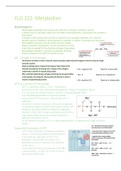
- ATP consists of a molecule of adenosine (adenine +
ribose) to which three phosphate groups are attached.
- In the sequential hydrolysis of ATP, if one
phosphate is removed, ADP is produced; if two
phosphates are removed, adenosine monophosphate
(AMP) results.
- The standard free energy of hydrolysis of ATP, ΔG,
is approximately –7.3 kcal/mol for each of the two
terminal phosphate groups.
, - Because of this large negative ΔG, ATP is called a high-energy phosphate compound.
ATP Turnover Rate
-
-
-
-
-
Catabolism
- Catabolic reactions serve to capture chemical energy (ATP) from the degradation of energy-rich fuel
molecules (converted into building blocks needed for the synthesis of complex molecules.)
- Energy generation by degradation of complex molecules occurs in three stages.
- Catabolic pathways are typically oxidative, and require coenzymes such as NAD+.
Cellular Respiration to produce ATP
Cellular respiration is divided into three metabolic processes: glycolysis, the Krebs (TCA/
citric acid) cycle, and oxidative phosphorylation. Each of these occurs in a specific region
of the cell.
- Glycolysis occurs in the cytosol.
- The Krebs (TCA/ Citric acid) cycle takes
place in the matrix of the mitochondria.
- Oxidative phosphorylation is carried out on
the inner mitochondrial membrane.
- In the absence of oxygen, respiration
consists of two metabolic pathways:
glycolysis and fermentation.
- Glucose is the primary substrate for the
process of cellular respiration. Both of these
occur in the cytosol.
Bioenergetics
- Bioenergetics describes the transfer and utilization of energy in biologic systems.
- It makes use of a few basic ideas from the field of thermodynamics, particularly the concept of
free energy.
- Changes in free energy (ΔG) provide a measure of the energetic feasibility of a chemical
reaction and can, therefore, allow prediction of whether a reaction or process can take place.
- Bioenergetics concerns only the initial and final energy
states of reaction components, not the mechanism or how
much time is needed for the chemical change to take place.
- Bioenergetics predicts if a process is possible, whereas
kinetics measures how fast the reaction occurs.
ΔG – Change in free energy
- The direction and extent to which a chemical reaction proceeds is determined by the degree to which two factors change
during the reaction.
- These are enthalpy (ΔH, a measure of the change in heat content of the
reactants and products) and entropy (ΔS, a measure of the change in
randomness or disorder of reactants and products.
- When combined mathematically, enthalpy and entropy can be used to define
a third quantity, free energy (G), which predicts the direction in which a
reaction will spontaneously proceed.
ATP as a carrier of free energy
- ATP is a nucleotide: adenine – ribose – triphosphate
- Active form of ATP exists complexed with magnesium ( Mg2+) or manganese (Mn2+).
- It is an energy rich molecule because it contains 2 phosphoanhydride bonds.
- The phosphoanhydride bonds are high energy bonds.
- A large amount of free energy is released when ATP is
hydrolysed.
- Reactions or processes that have a large positive ΔG, such
as moving ions against a concentration gradient across a cell
membrane, are made possible by coupling the endergonic
movement of ions with a second, spontaneous process with a
large negative ΔG, such as the exergonic hydrolysis of
adenosine triphosphate (ATP).
- In the absence of enzymes, ATP is a stable molecule because its hydrolysis has a high activation
energy.
Sequential hydrolysis of ATP
- ATP consists of a molecule of adenosine (adenine +
ribose) to which three phosphate groups are attached.
- In the sequential hydrolysis of ATP, if one
phosphate is removed, ADP is produced; if two
phosphates are removed, adenosine monophosphate
(AMP) results.
- The standard free energy of hydrolysis of ATP, ΔG,
is approximately –7.3 kcal/mol for each of the two
terminal phosphate groups.
, - Because of this large negative ΔG, ATP is called a high-energy phosphate compound.
ATP Turnover Rate
-
-
-
-
-
Catabolism
- Catabolic reactions serve to capture chemical energy (ATP) from the degradation of energy-rich fuel
molecules (converted into building blocks needed for the synthesis of complex molecules.)
- Energy generation by degradation of complex molecules occurs in three stages.
- Catabolic pathways are typically oxidative, and require coenzymes such as NAD+.
Cellular Respiration to produce ATP
Cellular respiration is divided into three metabolic processes: glycolysis, the Krebs (TCA/
citric acid) cycle, and oxidative phosphorylation. Each of these occurs in a specific region
of the cell.
- Glycolysis occurs in the cytosol.
- The Krebs (TCA/ Citric acid) cycle takes
place in the matrix of the mitochondria.
- Oxidative phosphorylation is carried out on
the inner mitochondrial membrane.
- In the absence of oxygen, respiration
consists of two metabolic pathways:
glycolysis and fermentation.
- Glucose is the primary substrate for the
process of cellular respiration. Both of these
occur in the cytosol.