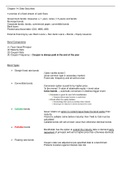
Chapter 14: Debt Securities
≡ promise of a fixed stream of cash flows
Government bonds: treasuries (< 1 year), notes (1-5 years) and bonds
Municipal bonds
Corporate bonds: bonds, commercial paper, convertible bonds
Bank loans
Pooled securitized debt: CDO, MBS, ABS
External financing by use: Bank Loans > Non-bank Loans > Bonds > Equity Issuance
Bond Components
(1) Face Value/Principal
(2) Maturity Date
(3) Coupon Rate
(4) Coupon Frequency – Coupon is always paid at the end of the year
Bond Types
➢ Straight fixed rate bonds
(“plain vanilla bonds”)
(most common type in secondary market)
Fixed rate, frequency and all sold at once
➢ Convertible bonds
Conversion option is paid for by higher price
“in the money” if value of obtainable equity > bond value
CoCo bonds → automatic conversion in distress trigger event
➢ Callable bonds
Issuer retains an option to reclaim/repurchase the bond earlier than
maturity
If bond is callable (retire before maturity) then Yield to Call must be
calculated
Callable bonds will sell at lower value than otherwise identical bonds
➢ Puttable bonds
Bondholder has the option to extend the maturity date or demand early
repayment of principal (will sell at higher price than otherwise identical)
➢ Floating-rate bonds
Coupon rates are adjusted at pre-specified date to a benchmark
Protects investors against interest-rate risk
, ➢ Serial bonds
Principal is paid back gradually – similar to sinking funds
➢ Preferred stock
Exchange-traded and liquid, missed payment does not mean default
Dividends = coupon payments
➢ Catastrophe bonds
Principal is paid when natural disaster occurs
Very good for diversification because low correlation with other classes
➢ Social Impact bonds
Non-profits; designed to bring efficiency to public non-profit market
➢ Securitized bonds
Tied to expected cash flows of some underlying assets
Hybrid finance: creditors take on part of the business risk
Securitization
1. Pooling of assets, loans into a portfolio
2. Slice it into senior, mezzanine and junior trenches
Magic: take 2 loans both of 10% default risk, pool together and create senior and junior tranche
Senior tranche only defaults when both default, junior when at least 1 defaults
➔ The more assets you pool,
the more tranches (assets) will have a
better risk-reward structure than the
underlying asset (loans, bonds)
Key parameters to price/rate securitized
bonds
,Default Risk
Determinants of bond safety
Financial ratios
1) coverage ratios
2) leverage ratios
3) liquidity ratios
4) profitability ratios
5) cash flow-to-debt ratio
Covenants
Restrictions on payouts, new debt
Collateral
Bond Pricing
𝐶𝑜𝑢𝑝𝑜𝑛 1 𝐹𝑎𝑐𝑒 𝑉𝑎𝑙𝑢𝑒
𝐵𝑜𝑛𝑑 𝑃𝑟𝑖𝑐𝑒 = ∗ [1 − 𝑇
]+
𝑟 (1 + 𝑟) (1 + 𝑟)𝑇
𝐶𝑡 𝐹𝑉
𝑃𝐵 = ∑ 𝑡
+
(1 + 𝑟) (1 + 𝑟)𝑇
Excel: =PRICE(settlement date, maturity date, annual coupon rate, YTM, redemption value, number of coupon
payments per year)*10
*10 to return a 1000 FV bond instead of 100
Redemption value = how much % of the face value is redeemed in the end
Excel command gives you flat price of a 100$ face value bond
➔ Bond Prices between Coupon Dates
Accrued interest is added to the Bond Price because it is already closer to the next coupon payment
Invoice Price = Flat Price + Accrued Interest
(example of semiannual
payment)
, Coupon rate < market
interest rate
→ investors must be
compensated by bond’s
price appreciation = bond
must sell below Face
Value
Coupon rate > market
interest rate
→ more compensation
than time value
→ bonds sell above Face
Value
Compounding
Converting annual interest rates to effective interest rates APR to EAR
𝐴𝑃𝑅 𝑘
𝑘 𝑐𝑜𝑚𝑝𝑜𝑢𝑛𝑑𝑖𝑛𝑔 𝑝𝑒𝑟𝑖𝑜𝑑𝑠 𝑝𝑒𝑟 𝑦𝑒𝑎𝑟; 1 + 𝐸𝐴𝑅 = (1 + )
𝑘
Usually EAR > APR
EAR increases with the frequency of
compounding
Weekly compounding > monthly
compounding
Daily compounding
~
, Chapter 15: The Yield Curve
I.
Simple notion of return but omits capital gains/losses
II. Yield to Maturity
≡ the ANNUAL rate at which the market discounts the future bond payments; accepted as proxy for average
return
➔ Assumes that coupon payments can be reinvested at same rate
➔ Assumes that investors hold till maturity
Excel: =YIELD(settlement date, maturity date, annual coupon rate, current bond price, redemption value,
number of coupon payments per year)*10
redemption value = 100 = 100%
*10 to get to 1000 face value
Excel: =IRR(series/interval of payments -> price today= negative payment)
If bonds currently sell at a premium the coupon rate > current yield > YTM
If bonds currently sell at a discount → coupon rate < current yield < YTM
Realized compound return vs. YTM
Realized compound return = Yield to maturity if all paid out coupons are reinvested at the same interest rate as
the YTM
III. Yield to Call
IV. Holding Period Return
≡ promise of a fixed stream of cash flows
Government bonds: treasuries (< 1 year), notes (1-5 years) and bonds
Municipal bonds
Corporate bonds: bonds, commercial paper, convertible bonds
Bank loans
Pooled securitized debt: CDO, MBS, ABS
External financing by use: Bank Loans > Non-bank Loans > Bonds > Equity Issuance
Bond Components
(1) Face Value/Principal
(2) Maturity Date
(3) Coupon Rate
(4) Coupon Frequency – Coupon is always paid at the end of the year
Bond Types
➢ Straight fixed rate bonds
(“plain vanilla bonds”)
(most common type in secondary market)
Fixed rate, frequency and all sold at once
➢ Convertible bonds
Conversion option is paid for by higher price
“in the money” if value of obtainable equity > bond value
CoCo bonds → automatic conversion in distress trigger event
➢ Callable bonds
Issuer retains an option to reclaim/repurchase the bond earlier than
maturity
If bond is callable (retire before maturity) then Yield to Call must be
calculated
Callable bonds will sell at lower value than otherwise identical bonds
➢ Puttable bonds
Bondholder has the option to extend the maturity date or demand early
repayment of principal (will sell at higher price than otherwise identical)
➢ Floating-rate bonds
Coupon rates are adjusted at pre-specified date to a benchmark
Protects investors against interest-rate risk
, ➢ Serial bonds
Principal is paid back gradually – similar to sinking funds
➢ Preferred stock
Exchange-traded and liquid, missed payment does not mean default
Dividends = coupon payments
➢ Catastrophe bonds
Principal is paid when natural disaster occurs
Very good for diversification because low correlation with other classes
➢ Social Impact bonds
Non-profits; designed to bring efficiency to public non-profit market
➢ Securitized bonds
Tied to expected cash flows of some underlying assets
Hybrid finance: creditors take on part of the business risk
Securitization
1. Pooling of assets, loans into a portfolio
2. Slice it into senior, mezzanine and junior trenches
Magic: take 2 loans both of 10% default risk, pool together and create senior and junior tranche
Senior tranche only defaults when both default, junior when at least 1 defaults
➔ The more assets you pool,
the more tranches (assets) will have a
better risk-reward structure than the
underlying asset (loans, bonds)
Key parameters to price/rate securitized
bonds
,Default Risk
Determinants of bond safety
Financial ratios
1) coverage ratios
2) leverage ratios
3) liquidity ratios
4) profitability ratios
5) cash flow-to-debt ratio
Covenants
Restrictions on payouts, new debt
Collateral
Bond Pricing
𝐶𝑜𝑢𝑝𝑜𝑛 1 𝐹𝑎𝑐𝑒 𝑉𝑎𝑙𝑢𝑒
𝐵𝑜𝑛𝑑 𝑃𝑟𝑖𝑐𝑒 = ∗ [1 − 𝑇
]+
𝑟 (1 + 𝑟) (1 + 𝑟)𝑇
𝐶𝑡 𝐹𝑉
𝑃𝐵 = ∑ 𝑡
+
(1 + 𝑟) (1 + 𝑟)𝑇
Excel: =PRICE(settlement date, maturity date, annual coupon rate, YTM, redemption value, number of coupon
payments per year)*10
*10 to return a 1000 FV bond instead of 100
Redemption value = how much % of the face value is redeemed in the end
Excel command gives you flat price of a 100$ face value bond
➔ Bond Prices between Coupon Dates
Accrued interest is added to the Bond Price because it is already closer to the next coupon payment
Invoice Price = Flat Price + Accrued Interest
(example of semiannual
payment)
, Coupon rate < market
interest rate
→ investors must be
compensated by bond’s
price appreciation = bond
must sell below Face
Value
Coupon rate > market
interest rate
→ more compensation
than time value
→ bonds sell above Face
Value
Compounding
Converting annual interest rates to effective interest rates APR to EAR
𝐴𝑃𝑅 𝑘
𝑘 𝑐𝑜𝑚𝑝𝑜𝑢𝑛𝑑𝑖𝑛𝑔 𝑝𝑒𝑟𝑖𝑜𝑑𝑠 𝑝𝑒𝑟 𝑦𝑒𝑎𝑟; 1 + 𝐸𝐴𝑅 = (1 + )
𝑘
Usually EAR > APR
EAR increases with the frequency of
compounding
Weekly compounding > monthly
compounding
Daily compounding
~
, Chapter 15: The Yield Curve
I.
Simple notion of return but omits capital gains/losses
II. Yield to Maturity
≡ the ANNUAL rate at which the market discounts the future bond payments; accepted as proxy for average
return
➔ Assumes that coupon payments can be reinvested at same rate
➔ Assumes that investors hold till maturity
Excel: =YIELD(settlement date, maturity date, annual coupon rate, current bond price, redemption value,
number of coupon payments per year)*10
redemption value = 100 = 100%
*10 to get to 1000 face value
Excel: =IRR(series/interval of payments -> price today= negative payment)
If bonds currently sell at a premium the coupon rate > current yield > YTM
If bonds currently sell at a discount → coupon rate < current yield < YTM
Realized compound return vs. YTM
Realized compound return = Yield to maturity if all paid out coupons are reinvested at the same interest rate as
the YTM
III. Yield to Call
IV. Holding Period Return