
Basic Anatomy And Physiology
Basic Anatomy And Physiology
Aquí están los mejores recursos para pasar Basic Anatomy And Physiology. Encuentra Basic Anatomy And Physiology guías de estudio, notas, tareas, y mucho más.
Libros populares
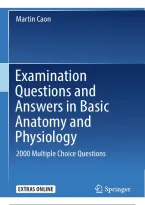
Examen
Basic Anatomy and Physiology: 2000 Multiple Choice Examination Questions and Answers
NuevoReview essential human biology concepts with Basic Anatomy and Physiology: 2000 Multiple Choice Examination Questions and Answers. This resource supports revision of body organization, cells and tissues, skeletal and muscular systems, nervous system function, circulation, respiration, digestion, and other major body systems. It is useful for students preparing for anatomy and physiology assessments and strengthening their understanding of how body structures and functions work together. Use alon...
 masterstudy

Examen
Chapter 1: Basic anatomy and physiology questions with well researched answers
PopularHow are all the organs able to move in the body without damaging each other? - They have parietal and visceral membranes filled with serous fluid that reduce friction Midsagittal plane - Quadrants of the abdominopelvic region - The nine abdominopelvic regions - Transverse plane - What are anatomical landmarks? - Anatomical position: hands at sides, palms forward Supine: lying down, face up Prone: lying down, face down What are located in the right upper quadrant in the abdominal cav...
martinndungu1986

Examen
Basic Anatomy and Physiology – 2000 Multiple Choice Examination Questions and Answers
NuevoStrengthen your understanding of human anatomy and physiology with this comprehensive collection of 2000 multiple-choice examination questions and answers. Review essential concepts covering body organization, cells and tissues, skeletal and muscular systems, cardiovascular function, respiratory processes, digestion, nervous system functions, and other major body systems. This resource helps students test their knowledge, reinforce key concepts, identify areas for improvement, and prepare for an...
 ExamCrafters

Examen
Basic Anatomy and Physiology – 2000 Multiple Choice Examination Questions and Answers
NuevoStrengthen your understanding of human anatomy and physiology with 2,000 multiple-choice examination questions and answers. This study resource is designed to help students review essential concepts, test their knowledge, and prepare effectively for anatomy and physiology examinations. Cover important topics including cell structure and function, tissues, skeletal and muscular systems, nervous system, circulatory system, respiratory system, digestive system, urinary system, endocrine system, ...
wantamra
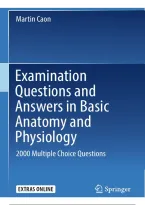
Examen
Basic Anatomy and Physiology – 2000 Multiple Choice Examination Questions and Answers
NuevoReview fundamental human anatomy and physiology concepts with this collection of 2000 multiple-choice examination questions and answers. Explore major body systems, including the skeletal, muscular, nervous, cardiovascular, respiratory, digestive, urinary, and endocrine systems. This resource supports students studying anatomy and physiology in nursing, healthcare, and related life sciences. Use the questions and answers alongside textbooks, lecture notes, and course materials to test your knowl...
 UniversityHub
Lote
Electrical Wiring Commercial 18th Edition by Simmons
NuevoElectrical Wiring Commercial 18th Edition by Simmons
masterstudy

Examen
Basic Anatomy & Physiology – Multiple Choice Questions and Answers, 2000 Questions
NuevoThis document provides 2000 multiple-choice questions and answers for basic anatomy and physiology, covering all major body systems, physiological processes, and functional anatomy to support exam preparation and knowledge review.
doingqwerty

Examen
Examination Questions and Answers in Basic Anatomy and Physiology
NuevoExamination Questions and Answers in Basic Anatomy and Physiology
 MedStudy

Examen
Examination Questions and Answers in Basic Anatomy and Physiology 2000 Multiple Choice Questions
NuevoExamination Questions and Answers in Basic Anatomy and Physiology 2000 Multiple Choice Questions
MedStudy

Lote
Basic Medical Science Q&A Bundle Anatomy, Physiology, and Immunology
This package includes high-quality multiple choice question banks and assignment notes tailored for students in medical, nursing, and laboratory science programs. It features: 2400+ MCQs on Basic Anatomy and Physiology Detailed Q&A on Respiratory Emergencies Immunology assignments and lecture-based summaries Core concepts from innate/acquired i
 TheAStudentMind
Examen
Basic Immunology
1-Which of the following molecules presents on all T cells? a. CD1 b. CD3 c. CD20 d. CD2 2-Which of the following molecules is expressed on the surface of B cells? a. CD4 b. CD3 c. CD19 d. CD28 3-Which of the following cells forming the largest % in WBC differential count in adult? a. Lymphocyte b. Mast cell c. Macrophage d. Neutrophil 4- Which of the following cells in antigen presenting cell? a. Basophil b. Mast cell c. Macrophage d. Neu...
TheAStudentMind

Notas de lectura
Immunology Assignment 1 – Lectures 1 and 2 | Innate vs. Acquired Immunity, Immune Cell Functions, Lymphoid Organs
Assignment 1: Lectures 1 and 2 1. Enumerate 2 cells belonging to the innate immune system & 2 cells belonging to the acquired immune system. Innate immune system: Granulocytes ex: Neutrophils, Eosinophils, Mast cells, Natural Killer cells and Macrophages. Acquired immune system: B & T lymphocytes. 2. Specify one func on for macrophages, neutrophils, eosinophils, mast cells, natural killer cell, B cell, Th cell, Tc cell. Macrophages: phagocytosis. Neutrophils: phagocytosis. Eo...
TheAStudentMind

Examen
Basic Immunology – Multiple Choice Questions with Answers | Immune System Fundamentals
1-Which of the following molecules presents on all T cells? a. CD1 b. CD3 c. CD20 d. CD2 2-Which of the following molecules is expressed on the surface of B cells? a. CD4 b. CD3 c. CD19 d. CD28 3-Which of the following cells forming the largest % in WBC differential count in adult? a. Lymphocyte b. Mast cell c. Macrophage d. Neutrophil 4- Which of the following cells in antigen presenting cell? a. Basophil b. Mast cell c. Macrophage d. Neu...
TheAStudentMind

Notas de lectura
Basic Immunology
This document offers a clear and concise summary of basic immunology, focusing on the essential elements of the immune system and its defense mechanisms. It covers innate and adaptive immunity, antigen recognition, lymphocyte development, immune memory, and the roles of key cells and molecules. Suitable for students in medicine, nursing, and health sciences as a foundational resource or exam preparation tool.
TheAStudentMind

Notas de lectura
Understanding basic immunology
Understanding basic immunology Dr Mary Collins 1 Immunology • Immunology– the study of how the body fights disease and infection • Immunity– State of being able to resist a particular infection or toxin 2 Overview • Function of defences • Immune response to infection and vaccines • Generating specific immunity • Enhancing the immune defences 3 Functions of the immune system Protection • Identify and destroy pathogens • Cancer Housekeepin...
TheAStudentMind

Notas de lectura
The Immune system
The immune system consists of specialized cells and organs that protect an organism from outside biological effects and from inside changes. If the immune system is functioning properly, it protects the body against microbial infections, destroying cancer cells and foreign substances. If the immune system weakens, it allows pathogens to grow and flourish. Organs of the immune system Central (primary) lymphoid organs These are the sites of maturation of the lymphocytes 1-Bone...
TheAStudentMind

Notas de lectura
Basic Immunology
Basic Immunology Immunology • Can be defined as the study of a host’s reactions when foreign substances are introduced into the body. immunogen • A foreign substance that induces such an immune response is called an . • Immunology as a science has its roots in the study of immunity, the condition of being resistant to infection. Immunity • All those physiological mechanisms that endow the animal with the capacity to recognize materials as foreign to itself and to ...
TheAStudentMind

Notas de lectura
Basic Immunology – Core Principles and Immune Response Overview | Medical and Health Sciences Summary
BasicImmunology INTRODUCTION ◼Immunology is the study of host defencemechanisms. ◼Immunity is the ability of the host to protect itself against foreignorganisms. ◼The immune system comprises the tissues, cells & molecules which mount the immuneresponse. Coagulation
TheAStudentMind

Notas de lectura
Basic Anatomy and Physiology – 2400 Multiple Choice Questions and Answers | Complete Exam
Which of the listed terms is described by: “All the chemical processes that take place in the organelles and cytoplasm the cells of the body”? A.Metabolism B. Cellular respiration © Springer International Publishing AG, part of Springer Nature 2018 M. Caon, Examination Questions and Answers in Basic Anatomy and Physiology, 1 2 1 Organisation of the Body C. Homeostasis D. Physiology Answer is A: The quoted statement is a definition of metabolism. 2. Which major organ...
TheAStudentMind

Notas de lectura
Medical Immunology – Core Concepts and Immune System Mechanisms | Medical School Summary
This document provides a structured summary of medical immunology, focusing on the fundamental principles of immune system function and clinical applications. Topics include innate and adaptive immunity, antigen presentation, hypersensitivity reactions, immunodeficiencies, and vaccine responses. It is suitable for medical students and healthcare professionals preparing for exams or reviewing core content.
TheAStudentMind
Examen
Immunology and vaccinology Q&A Havard University ID 503 Clinical immunology and vaccinology Immunological and vaccinology Take away Exam
Immunology and vaccinology Q&A Havard University ID 503 Clinical immunology and vaccinology Immunological and vaccinology Take away Exam 1. Describe the ELISA technique, immunoprecipitation, agglutination, and their applications. ELISA ELISA (enzyme-linked immunosorbent assay) is a plate-based assay technique designed for detecting and quantifying peptides, proteins, antibodies, and hormones. In ELISA, an antigen must be immobilized to a solid surface and then complexed with an antibody l...
TheAStudentMind