
Review and Pretest FCCS
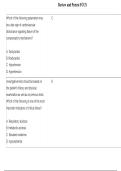
Which of the following parameters may C
be a late sign of cardiovascular
disturbance signaling failure of the
compensatory mechanisms?
A. Tachycardia
B. Bradycardia
C. Hypotension
D. Hypertension
Investigative tests should be based on B
the patient's history and physical
examination as well as on previous tests.
Which of the following is one of the most
important indicators of critical illness?
A. Respiratory acidosis
B. Metabolic acidosis
C. Elevated creatinine
D. Hyponatremia
, Review and Pretest FCCS
A 22-year-old man is brought to the C
emergency room after falling from a
horse. He is awaiting transfer to another
facility. He has a chest contusion and a
non-displaced femur fracture. He is in
spinal motion restriction with a cervical
collar and long backboard. He has
worsening respiratory distress and
hypoxemia requiring endotracheal
intubation. Which of the following
modifications of the manual assisted
ventilation technique is appropriate?
A. Place an oral airway one size larger
than usual.
B. Add additional downward pressure on
the face mask once it is sealed.
C. Use a jaw thrust technique in place of
neck extension.
D. Increase the tidal volume with each
manual assisted breath.
, Review and Pretest FCCS
Which of the following anatomic features B
is most likely to contribute to difficulty in
maintaining a patent airway in a supine
patient?
A. Edentulous mandible
B. Posteriorly displaced tongue
C. Deviated nasal septum
D. Anteriorly displaced thyroid cartilage
, Review and Pretest FCCS
An elderly patient is on the medical ward D
for respiratory distress. Which of the
following is correct regarding airway
assessment?
A. Laryngeal displacement toward the
chest during inspiration occurs only with
upper airway obstruction
B. Chest rise with inspiration indicates an
adequate tidal volume
C. Unilateral absent breath sounds on
auscultation is a tension pneumothorax
D. Complete airway obstruction is likely
when chest retraction and movement is
present, but there are no breath sounds
Which of the following parameters may C
be a late sign of cardiovascular
disturbance signaling failure of the
compensatory mechanisms?
A. Tachycardia
B. Bradycardia
C. Hypotension
D. Hypertension
Investigative tests should be based on B
the patient's history and physical
examination as well as on previous tests.
Which of the following is one of the most
important indicators of critical illness?
A. Respiratory acidosis
B. Metabolic acidosis
C. Elevated creatinine
D. Hyponatremia
, Review and Pretest FCCS
A 22-year-old man is brought to the C
emergency room after falling from a
horse. He is awaiting transfer to another
facility. He has a chest contusion and a
non-displaced femur fracture. He is in
spinal motion restriction with a cervical
collar and long backboard. He has
worsening respiratory distress and
hypoxemia requiring endotracheal
intubation. Which of the following
modifications of the manual assisted
ventilation technique is appropriate?
A. Place an oral airway one size larger
than usual.
B. Add additional downward pressure on
the face mask once it is sealed.
C. Use a jaw thrust technique in place of
neck extension.
D. Increase the tidal volume with each
manual assisted breath.
, Review and Pretest FCCS
Which of the following anatomic features B
is most likely to contribute to difficulty in
maintaining a patent airway in a supine
patient?
A. Edentulous mandible
B. Posteriorly displaced tongue
C. Deviated nasal septum
D. Anteriorly displaced thyroid cartilage
, Review and Pretest FCCS
An elderly patient is on the medical ward D
for respiratory distress. Which of the
following is correct regarding airway
assessment?
A. Laryngeal displacement toward the
chest during inspiration occurs only with
upper airway obstruction
B. Chest rise with inspiration indicates an
adequate tidal volume
C. Unilateral absent breath sounds on
auscultation is a tension pneumothorax
D. Complete airway obstruction is likely
when chest retraction and movement is
present, but there are no breath sounds


