Gero Exam One
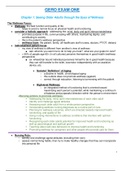
GERO EXAM ONE Chapter 1: Seeing Older Adults through the Eyes of Wellness The Wellness Focus: ● Wellness: the best function and quality of life ○ helps to avoid a narrow focus on physical health and functioning ● consider a holistic approach - addressing the: mind, body and spirit interconnectedness ○ promotes purpose in life, communicating with others, maintaining dignity, and contributing to society ○ this is the patient’s wellness perspective ○ wellness team: the patient, family, all healthcare staff (nurses, doctors, PT/OT, dietary) ● individualized patient focus ○ my view of wellness is different from another’s view of wellness ■ ask: what do you want me to do to help you heal? what are your goals for care? ○ 50% of people age 65+ (in all cultures) perceive themselves in good health (wellness perspective) ■ ex: wheelchair bound individual perceives himself to be in good health because they can still transfer to the toilet, locomotor independently with an assistive device, etc. ● Societal “Definition” of Aging: ○ a decline in health, chronological aging ○ this outlook does not promote wellness (ageism) ○ correct through education, listening to/conversing with the patient ● High-level Wellness: ○ an integrated method of functioning that is oriented toward maximizing each person’s potential, while maintaining a continuum of balance and purposeful direction within the person's environment ●Nursing actions to promote wellness: Addressing the body, mind, spirit interrelatedness of each older adult Identify and challenge ageist attitudes Assessing each older adult from a whole person perspective Incorporating wellness nursing diagnoses as a routine part of care Planning for wellness outcomes, which are directed towards improved health, functioning, and quality of life Using nursing interventions to address conditions that interfere with optimal functioning Recognizing each older adults potential for improved health and functioning as well as psychological and spiritual growth Teaching about self-care behaviors to improve health and functioning Promoting wellness for caregivers and other people who provide care for them ● Nursing Role: ○ identify and challenge ageist attitudes (including their own) ○ assess normal living habits, than try to make healthy changes that they can incorporate into personal life ■ ask them how they go about their day so we can help them plan when exactly to take medication ○ assess each OA from a “whole person” perspective ○ Incorporate wellness into care NOTE: Providing care is a fine line. Assess the abilities of the patient to determine what they can complete independently (to promote healing) and what they require assistance with (they came to you for a reason… example: car accident, MI) NOTE: Always assess before doing D/C teaching... open up conversation with asking them to tell them what they already know. Find out what they want to know. Use open ended questions -assess how is the patient’s vision, hearing, pain, confusion, fatigue, environment, and learning style (all of these factors can interfere with them learning what you teaching them) Types of Aging: ● Subjective Age: ○ describes a person’s perception of his or her age (How they feel) ○ multidimensional process, influenced by physical and social-cognitive functioning ○ most older adults feel younger than their chronological age ■ helps maintain a positive view of themselves ■ positively affects health, functioning, and sense of well-being ● Perceived Age: ○ other people’s estimation of someone’s age ● Chronological Age: ○ length of time that has passed since birth (actual age) ● Functional Age: (more relevant than the actual age they are) ○ indicators of age by ■ physiologic health ■ psychological well-being ■ socioeconomic factors ■ the ability to function and participate in desirable activities ● functional age is associated with higher levels of well being and more positive attiudes about again ● ex: if you don’t have the income to purchase healthier foods = decreased FA ……………………………………CONTINUED…………………………….
Información del documento
- Subido en
- 13 de febrero de 2021
- Número de páginas
- 28
- Escrito en
- 2020/2021
- Tipo
- Otro
- Personaje
- Desconocido