

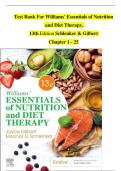
Test Bank For Williams' Essentials of Nutrition
and Diet Therapy,
13th Edition Schlenker & Gilbert
Chapter 1 - 25
,TABLE OF CONTENT
PART 1: INTRODUCTION TO HUMAN NUTRITION
1. Nutrition and Health
2. Digestion, Absorption, and Metabolism
3. Carbohydrates
4. Lipids
5. Proteins
6. Vitamins
7. Minerals and Water
8. Energy Balance
PART 2: COMMUNITY NUTRITION AND THE LIFE CYCLE
9. Food Selection and Food Safety
10. Community Nutrition: Promoting Healthy Eating
11. Nutrition During Pregnancy and Lactation
12. Nutrition for Normal Growth and Development
13. Nutrition for Adults: Early, Middle, and Later Years
,14. Nutrition and Physical Fitness
15. The Complexity of Obesity: Beyond Energy Balance
PART 3: INTRODUCTION TO CLINICAL NUTRITION
16. Nutrition Assessment and Nutrition Therapy in Patient Care
17. Metabolic Stress
18. Drug-Nutrient Interactions
19. Nutrition Support: Enteral and Parenteral Nutrition
20. Gastrointestinal Diseases
21. Diseases of the Heart, Blood Vessels, and Lungs
22. Diabetes Mellitus
23. Renal Disease
24. Acquired Immunodeficiency Syndrome (AIDS)
25. Cancer
, Chapter 01: Nutrition and Health
Schlenker & Gilbert: Williams’ Essentials of Nutrition and Diet Therapy, 13th Edition
MULTIPLE CHOICE
1. The major focus of nutritional recommendations in this century has shifted to:
a. prevention and control of chronic diseases.
b. improved sanitation and public health.
c. prevention and control of infectious diseases.
d. development of healthful foods using food technology.
ANSWER: A DIF: Easy REF: p. 2
MSC: Type of Question: Knowledge
2. A physical science that contributes to understanding yhow ynutrition yrelates yto yhealth yand
ywell- ybeing yis:
a. anatomy.
b. biochemistry.
c. physics.
d. pharmacology.
ANSWER: y B DIF: Easy REF: yp. y6
MSC: y Type yof yQuestion: yKnowledge
3. The ybody yof yscientific yknowledge yrelated yto ynutritional yrequirements yof yhuman
ygrowth, ymaintenance, yactivity, yand yreproduction yis yknown yas:
a. physiology.
b. nutrition yscience.
c. biochemistry.
d. dietetics.
ANSWER: y B DIF: Easy REF: yp. y7
MSC: y Type yof yQuestion: yKnowledge
4. The yprofessional yprimarily yresponsible yfor yapplication yof ynutrition yscience yin yclinical
ypractice ysettings yis ythe:
a. nurse.
b. physician.
c. public yhealth ynutritionist.
d. registered ydietitian.
ANSWER: y D DIF: Easy REF: yp. y7
MSC: y Type yof yQuestion: yKnowledge
5. The yprimary yresponsibility yfor ynutrition ycare yof ypeople yin ythe ycommunity ybelongs yto ythe:
a. community yphysician.
b. public yhealth ynurse.
c. public yhealth ynutritionist.
d. registered ydietitian.
ANSWER: y C DIF: Easy REF: yp. y7
and Diet Therapy,
13th Edition Schlenker & Gilbert
Chapter 1 - 25
,TABLE OF CONTENT
PART 1: INTRODUCTION TO HUMAN NUTRITION
1. Nutrition and Health
2. Digestion, Absorption, and Metabolism
3. Carbohydrates
4. Lipids
5. Proteins
6. Vitamins
7. Minerals and Water
8. Energy Balance
PART 2: COMMUNITY NUTRITION AND THE LIFE CYCLE
9. Food Selection and Food Safety
10. Community Nutrition: Promoting Healthy Eating
11. Nutrition During Pregnancy and Lactation
12. Nutrition for Normal Growth and Development
13. Nutrition for Adults: Early, Middle, and Later Years
,14. Nutrition and Physical Fitness
15. The Complexity of Obesity: Beyond Energy Balance
PART 3: INTRODUCTION TO CLINICAL NUTRITION
16. Nutrition Assessment and Nutrition Therapy in Patient Care
17. Metabolic Stress
18. Drug-Nutrient Interactions
19. Nutrition Support: Enteral and Parenteral Nutrition
20. Gastrointestinal Diseases
21. Diseases of the Heart, Blood Vessels, and Lungs
22. Diabetes Mellitus
23. Renal Disease
24. Acquired Immunodeficiency Syndrome (AIDS)
25. Cancer
, Chapter 01: Nutrition and Health
Schlenker & Gilbert: Williams’ Essentials of Nutrition and Diet Therapy, 13th Edition
MULTIPLE CHOICE
1. The major focus of nutritional recommendations in this century has shifted to:
a. prevention and control of chronic diseases.
b. improved sanitation and public health.
c. prevention and control of infectious diseases.
d. development of healthful foods using food technology.
ANSWER: A DIF: Easy REF: p. 2
MSC: Type of Question: Knowledge
2. A physical science that contributes to understanding yhow ynutrition yrelates yto yhealth yand
ywell- ybeing yis:
a. anatomy.
b. biochemistry.
c. physics.
d. pharmacology.
ANSWER: y B DIF: Easy REF: yp. y6
MSC: y Type yof yQuestion: yKnowledge
3. The ybody yof yscientific yknowledge yrelated yto ynutritional yrequirements yof yhuman
ygrowth, ymaintenance, yactivity, yand yreproduction yis yknown yas:
a. physiology.
b. nutrition yscience.
c. biochemistry.
d. dietetics.
ANSWER: y B DIF: Easy REF: yp. y7
MSC: y Type yof yQuestion: yKnowledge
4. The yprofessional yprimarily yresponsible yfor yapplication yof ynutrition yscience yin yclinical
ypractice ysettings yis ythe:
a. nurse.
b. physician.
c. public yhealth ynutritionist.
d. registered ydietitian.
ANSWER: y D DIF: Easy REF: yp. y7
MSC: y Type yof yQuestion: yKnowledge
5. The yprimary yresponsibility yfor ynutrition ycare yof ypeople yin ythe ycommunity ybelongs yto ythe:
a. community yphysician.
b. public yhealth ynurse.
c. public yhealth ynutritionist.
d. registered ydietitian.
ANSWER: y C DIF: Easy REF: yp. y7

