

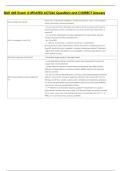
NUR 445 Exam 4 UPDATED ACTUAL Questions and CORRECT Answers
Shock due to widespread vasodilation, includes anaphylactic, septic, and neurogenic
What is distributive shock?
shock (spinal injury, spinal anesthesia)
- Occurs when the heart is damaged and unable to pump enough blood forwards so
blood is backed up, often as a result of an acute MI, severe valve disfunction, or
severe HF
- s/s: chest pain, diaphoresis, N/V, pallor, decreased CO, lung crackles, dyspnea,
cardiac enzymes elevated, increased CVP
What is cardiogenic shock? s/s? - dx: 12 lead EKG,
- tx: 100% o2 nonrebreather, vasopressor (dopamine, norepinephrine,
phenylephrine), inotropic (dobutamine), nitro for chest pain but careful because can
lower BP, diuretics for pulm congestion, morphine to decrease cardiac O2 demand,
surgical interventions (emergency revascularization, ventricular assist device, intra-
aortic balloon pump)
What is the main issue with shock? - decreased oxygen supply to vital organ tissues
- not enough blood volume in circulatory system which decreases the amount of
oxygen that can be delivered
- causes: blood loss (trauma, internal bleeds, hemothorax), secondary fluid loss
following vomiting, diarrhea, excessive urination, BURNS, excessive third spacing
fluid loss (ascites)
- s/s: start out with anxiety/restlessness, confusion, decreased peripheral extremity
What is hypovolemic shock? causes? s/s? perfusion, tachycardia, tachypnea (respiratory alkalosis), and increased BG; turns into
tx? lethargy, low BP (low cardiac output), pallor, metabolic and respiratory acidosis as
no urine is being excreted and hyperventilation fails and turns into hypoventilation,
may result in coma and renal/hepatic failure
- tx: ***100% O2 non-rebreather, fluid resuscitation*** dependent on cause of
hypovolemia, monitor urine output, vitals, CVP (should increase as volume increases
and Tx works), neuro status, and peripheral perfusion; if hemorrhagic treat with 1:1:1 of
PRBC (O- is universal donor), plasma, platelets
, initial stage: hypoxia (decreased SPO2), subtle manifestations, decreased CO
compensatory stage: body attempts to compensate for hypoxia by increasing RR,
HR, peripheral vasoconstriction (pale, clammy, cold extremities, weakened
peripheral pulses, cap refil >3sec., DECREASED URINARY OUTPUT), metabolic
acidosis begins
4 Stages of shock
progressive stage: compensatory mechanisms fail and BP drops, severe shunting of
blood to vital organs and poor perfusion to peripheral organs, metabolic acidosis
worsens, severe electrolyte imbalance occurs, respiratory acidosis begins
refractory stage: prolonged inadequate blood supply causes cell death, multi-
system organ failure, anaerobic metabolism occurs resulting in building of lactic
acid; once this stage is reached, it is irreversible
Apply 100% O2 via non-rebreather
What are nursing interventions that need to
Prep for intubation
be done quickly for hypovolemic shock?
Insert 2 large bore IV lines (18G or larger) for fluid resuscitation
- def: ventricular filling blocked possibly from cardiac tamponade (pericarditis),
tension pneumothorax, PE (increases afterload)
- s/s: decreased CO, LOC, UO, pulse strength, poor peripheral perfusion, decreased
What is obstructive shock?
bowel sounds, chest pain (pleuritic if PE), n/v, muffled heart tones (cardiac
tamponade)
** if cardiac tamponade is the cause, patient may require a pericardiocentesis
- Caused by spinal cord injury, usually as a result of a traumatic accident or injury that
disrupts sympathetic nervous system communication
- s/s: hypotension from vasodilation, profound bradycardia, metabolic acidosis,
What is neurogenic shock?
orthostatic hypotension, warm dry skin, oliguria
- tx: atropine (increases HR), Iv fluids, transcutaneous pacing, change bed position
very slowly, VTE prophylaxis (venous pooling increased risk for blood clots)
- Severe life threatening allergic reaction where IGE antibodies cause histamine
release results and widespread vasodilation
- s/s: SOB, tachypnea, wheezing, stridor, cyanosis, confusion, tachycardia,
hypotension, pallor, weak pulses, edema, angioedema, urticaria
What is anaphylactic shock? s/s? tx?
- tx: remove allergen if possible, IM epi (sympathomimetic med to promote
bronchodilation and vasoconstriction), then assess airway, apply O2, and prep for
intubation if airway is compromised, insert IV, admin antihistamines, corticosteroids,
and albuterol
- infection causes organ dysfunction followed by circulatory and metabolic
abnormalities
- Early s/s: tachycardia, tachypnea, bounding pulses, warm/flushed skin, febrile,
normal or high BP, increased CO and PaO2
- Late s/s: pallor, weak pulses, hypothermia, tachycardia, hypotension, lethargy,
confusion, coma, anuria, decreased PVaO2 due to decreased CO, elevated lactic
What is septic shock? s/s? Tx? acid, elevated WBC
- prevention: hand washing, cover wounds
- tx: bundle of care within 1 hr measure lactate levels (greater than 2= going into
sepsis), obtain blood (prior to antibiotics), sputum, and urine cultures, admin broad
spectrum antibiotics while awaiting culture results, admin fluids (30mL/kg) if
hypotensive or lactate above 4, admin vasopressors if BP doesn't respond to fluids,
corticosteroid therapy; small spectrum antibiotics once organism is identified
Shock due to widespread vasodilation, includes anaphylactic, septic, and neurogenic
What is distributive shock?
shock (spinal injury, spinal anesthesia)
- Occurs when the heart is damaged and unable to pump enough blood forwards so
blood is backed up, often as a result of an acute MI, severe valve disfunction, or
severe HF
- s/s: chest pain, diaphoresis, N/V, pallor, decreased CO, lung crackles, dyspnea,
cardiac enzymes elevated, increased CVP
What is cardiogenic shock? s/s? - dx: 12 lead EKG,
- tx: 100% o2 nonrebreather, vasopressor (dopamine, norepinephrine,
phenylephrine), inotropic (dobutamine), nitro for chest pain but careful because can
lower BP, diuretics for pulm congestion, morphine to decrease cardiac O2 demand,
surgical interventions (emergency revascularization, ventricular assist device, intra-
aortic balloon pump)
What is the main issue with shock? - decreased oxygen supply to vital organ tissues
- not enough blood volume in circulatory system which decreases the amount of
oxygen that can be delivered
- causes: blood loss (trauma, internal bleeds, hemothorax), secondary fluid loss
following vomiting, diarrhea, excessive urination, BURNS, excessive third spacing
fluid loss (ascites)
- s/s: start out with anxiety/restlessness, confusion, decreased peripheral extremity
What is hypovolemic shock? causes? s/s? perfusion, tachycardia, tachypnea (respiratory alkalosis), and increased BG; turns into
tx? lethargy, low BP (low cardiac output), pallor, metabolic and respiratory acidosis as
no urine is being excreted and hyperventilation fails and turns into hypoventilation,
may result in coma and renal/hepatic failure
- tx: ***100% O2 non-rebreather, fluid resuscitation*** dependent on cause of
hypovolemia, monitor urine output, vitals, CVP (should increase as volume increases
and Tx works), neuro status, and peripheral perfusion; if hemorrhagic treat with 1:1:1 of
PRBC (O- is universal donor), plasma, platelets
, initial stage: hypoxia (decreased SPO2), subtle manifestations, decreased CO
compensatory stage: body attempts to compensate for hypoxia by increasing RR,
HR, peripheral vasoconstriction (pale, clammy, cold extremities, weakened
peripheral pulses, cap refil >3sec., DECREASED URINARY OUTPUT), metabolic
acidosis begins
4 Stages of shock
progressive stage: compensatory mechanisms fail and BP drops, severe shunting of
blood to vital organs and poor perfusion to peripheral organs, metabolic acidosis
worsens, severe electrolyte imbalance occurs, respiratory acidosis begins
refractory stage: prolonged inadequate blood supply causes cell death, multi-
system organ failure, anaerobic metabolism occurs resulting in building of lactic
acid; once this stage is reached, it is irreversible
Apply 100% O2 via non-rebreather
What are nursing interventions that need to
Prep for intubation
be done quickly for hypovolemic shock?
Insert 2 large bore IV lines (18G or larger) for fluid resuscitation
- def: ventricular filling blocked possibly from cardiac tamponade (pericarditis),
tension pneumothorax, PE (increases afterload)
- s/s: decreased CO, LOC, UO, pulse strength, poor peripheral perfusion, decreased
What is obstructive shock?
bowel sounds, chest pain (pleuritic if PE), n/v, muffled heart tones (cardiac
tamponade)
** if cardiac tamponade is the cause, patient may require a pericardiocentesis
- Caused by spinal cord injury, usually as a result of a traumatic accident or injury that
disrupts sympathetic nervous system communication
- s/s: hypotension from vasodilation, profound bradycardia, metabolic acidosis,
What is neurogenic shock?
orthostatic hypotension, warm dry skin, oliguria
- tx: atropine (increases HR), Iv fluids, transcutaneous pacing, change bed position
very slowly, VTE prophylaxis (venous pooling increased risk for blood clots)
- Severe life threatening allergic reaction where IGE antibodies cause histamine
release results and widespread vasodilation
- s/s: SOB, tachypnea, wheezing, stridor, cyanosis, confusion, tachycardia,
hypotension, pallor, weak pulses, edema, angioedema, urticaria
What is anaphylactic shock? s/s? tx?
- tx: remove allergen if possible, IM epi (sympathomimetic med to promote
bronchodilation and vasoconstriction), then assess airway, apply O2, and prep for
intubation if airway is compromised, insert IV, admin antihistamines, corticosteroids,
and albuterol
- infection causes organ dysfunction followed by circulatory and metabolic
abnormalities
- Early s/s: tachycardia, tachypnea, bounding pulses, warm/flushed skin, febrile,
normal or high BP, increased CO and PaO2
- Late s/s: pallor, weak pulses, hypothermia, tachycardia, hypotension, lethargy,
confusion, coma, anuria, decreased PVaO2 due to decreased CO, elevated lactic
What is septic shock? s/s? Tx? acid, elevated WBC
- prevention: hand washing, cover wounds
- tx: bundle of care within 1 hr measure lactate levels (greater than 2= going into
sepsis), obtain blood (prior to antibiotics), sputum, and urine cultures, admin broad
spectrum antibiotics while awaiting culture results, admin fluids (30mL/kg) if
hypotensive or lactate above 4, admin vasopressors if BP doesn't respond to fluids,
corticosteroid therapy; small spectrum antibiotics once organism is identified

