RE10
Leaseholds
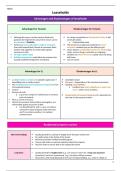
Advantages and disadvantages of leaseholds
Advantages for Tenants Disadvantages for Tenants
Although the term of a lease must be fixed once As a lease is granted for a fixed period of time, it will
granted, the length of the actual term chosen can be eventually expire.
any duration = flexibility. • A depreciating asset
Parties are more easily able to enforce covenants The tenant has to approach landlord for a lease
than with freehold land. Almost all covenants (both extension; landlord may not be willing to give
positive and negative) are enforceable against Leases impose considerable burdens on tenants (e.g.
successors in title. repair, service charge, restriction on assigning).
No large capital outlay Landlord can forfeit the lease; capital value lost along
Building management undertaken by someone else with lease.
(usually landlord/management comnpany) Lack of control
Advantages for LL Disadvantages for LL
Landlord retains an interest in saleable capital asset + Unreliable tenant
benefitting from a steady income. Disrepair = depreciation of the investment/premises
The freehold estate can be disposed of separately from Ongoing responsibilities
the leasehold interest. o Landlord may retain obligations to repair and
Control insure, which can be a burden.
Recover all costs
o E.g service charge for maintenance of common No guarantee of income/capital growth, dependant on
parts of property the state of the property market
Rent as a form of income
Almost all covenants, both positive and negative, are
enforceable against successors in title
o Can benefit both LL and T, e.g LL can enforce
covenant to repair property under the lease,
and T can enforce positive C to maintain
common areas
Residential property market
Short-term lettings Usually granted for a period of 1 year at the full open market rent
No capital value in the hands of the tenant
Informal procedure handled by letting agents
Tenants will make no searches/enquiries about the property
Usual for lease to not be able to be assigned by tenant
Long lease Usually granted for lengthy term (e.g., 125 years) in return for a lump sum payment
(‘premium’) and a low ‘ground rent’ (e.g., less than £100 per annum)
Usual when units being disposed of form part of larger building, e.g., units in a block of
1
,RE10
flats/masionettes
Disposed of using leasehold arrangement due to greater ability to enforce positive and
negative covenants
Have capital value and usually few/loose controls on tenant’s ability to dispose of property by
assignment
Can be bought and sold like freehold land conveyancing mirrors procedure for sale of
freehold e.g., charging purchase price, investigating title and carrying out searches and
enquiries, consideration for funding acquisition (e.g., mortgage)
Tenants have various statutory rights to extend terms of leases, landlords unlikely to be
able to regain vacant possession of land and re-let
Landlords will often dispose of freehold of common parts to management company (owned
by through his shares by tenants of individual units) rather than retain interest in
development after completion
Solicitors acting for should look out for long leases containing ground rents that are more
than a nominal amount.
o Where ground rent provides an income stream for the developer landlord, the
developer is more likely to retain the freehold reversion or sell it on to an investor
o This leaves the occupying tenants with a landlord who collects the ground rent and
service charge and enforces the covenants.
o Interests of the freeholder and occupying tenant are NOT usually aligned this can
lead to disputes between landlord and tenant.
Commercial property market
Most commercial property is owned under leases.
Þ Businesses attracted to flexibility that a lease provides, e.g. business growth or down-sizing.
Þ Cost of buying a freehold will often be prohibitively expensive; most businesses do not want to tie up capital in
this way.
Þ Effective enforcement of both positive and negative covenants.
Leases are often for shorter terms between 5-15 years.
Þ Whilst possible for a capital sum to be payable (both on grant of lease and subsequent assignment), this is less
usually than in the case of longer residential leases.
Þ Cost to the tenant comes in the form of payment of a market rent, much higher relatively than residential lease
rent.
Þ Rent is usually subject to a review every few years. This means that the lease will contain detailed controls on the
tenant’s freedom to assign or deal with the property, as the landlord will be keen to ensure that any assignee is at
least as able as the current tenant to meet the liability due under the lease.
Terms of commercial leases are often the subject of detailed negotiation between the parties on grant.
Þ Code for Leasing Business Premises in England and Wales 2007 – helps identify a ‘fair’ position between landlord
and tenant
Less usual for the parties to exchange contracts and instead the transaction will often simply proceed straight to
completion as it not as necessary to synchronise a chain of transactions.
Besides this, steps making up procedure for granting/assigning commercial lease similar to that of
selling freehold land
Key terminology
2
, RE10
GRANT = when a lease is created.
Þ When the owner of the freehold (L) creates a lease in favour of the tenant (T),
this is a grant of a lease = head lease. The only superior title is the freehold
reversion.
Þ When T grants a lease to S = sub-lease.
There are now THREE legal estates in existence over the land:
1. Freehold
2. Head-leasehold
3. Sub-leasehold
Þ Each estate can be bought and sold in its own right.
L can transfer the freehold to 1, T can transfer the head-lease to 2, S can transfer the sub-lease to 3.
Þ ASSIGNMENT = transfer of a leasehold
o Grant lease created for the FIRST time (document giving effect = lease itself)
o Assignment transfers REMAINDER of such lease once created (document giving effect = transfer or deed
of assignment).
Two further points…
Þ When a tenant grants a sub-lease term of sub-lease must be for a period that is SHORTER than the head-lease
itself. If granted for a term equal to or greater than head-lease = treated as being an assignment of tenant’s lease.
Þ In the example, it has been assumed that there are no restrictions on either T’s or S’s freedom to dispose of their
respective leasehold interests.
In practice, it is common find restrictions on a tenant’s freedom to assign or sub-let; need to check terms of
lease.
Essential Characteristics of Leases
Lease = interest in land granting EXCLUSIVE possession of a property for a fixed period of time (Street v Mountford)
o Right to exclude all others, including landlord from property
Court will look at substance of agreement to decide whether it is LEASE or LICENCE
Lease can take effect in possession at a future time (within 21 years of its grant)(LPA 1925 s149(3))
Commencement date (date when right to possession arises) can be backdated
Types of lease
Periodic Granted for a period of time e.g. weekly, monthly, quarterly, yearly.
Automatically renews from one period to the next until determined by a “notice to quit”.
Can be granted expressly/by implication e.g., where individual occupies property and begins
to rent regularly; where tenant holds over after expiry of fixed-term tenancy with landlord’s
consent
Fixed term A lease granted for a specific term.
Can be of any length.
The lease automatically expires at the end of the term.
No need to serve notice to determine the lease.
Tenancy at will A tenancy that can be ended at any time by the landlord or the tenant.
3
Leaseholds
Advantages and disadvantages of leaseholds
Advantages for Tenants Disadvantages for Tenants
Although the term of a lease must be fixed once As a lease is granted for a fixed period of time, it will
granted, the length of the actual term chosen can be eventually expire.
any duration = flexibility. • A depreciating asset
Parties are more easily able to enforce covenants The tenant has to approach landlord for a lease
than with freehold land. Almost all covenants (both extension; landlord may not be willing to give
positive and negative) are enforceable against Leases impose considerable burdens on tenants (e.g.
successors in title. repair, service charge, restriction on assigning).
No large capital outlay Landlord can forfeit the lease; capital value lost along
Building management undertaken by someone else with lease.
(usually landlord/management comnpany) Lack of control
Advantages for LL Disadvantages for LL
Landlord retains an interest in saleable capital asset + Unreliable tenant
benefitting from a steady income. Disrepair = depreciation of the investment/premises
The freehold estate can be disposed of separately from Ongoing responsibilities
the leasehold interest. o Landlord may retain obligations to repair and
Control insure, which can be a burden.
Recover all costs
o E.g service charge for maintenance of common No guarantee of income/capital growth, dependant on
parts of property the state of the property market
Rent as a form of income
Almost all covenants, both positive and negative, are
enforceable against successors in title
o Can benefit both LL and T, e.g LL can enforce
covenant to repair property under the lease,
and T can enforce positive C to maintain
common areas
Residential property market
Short-term lettings Usually granted for a period of 1 year at the full open market rent
No capital value in the hands of the tenant
Informal procedure handled by letting agents
Tenants will make no searches/enquiries about the property
Usual for lease to not be able to be assigned by tenant
Long lease Usually granted for lengthy term (e.g., 125 years) in return for a lump sum payment
(‘premium’) and a low ‘ground rent’ (e.g., less than £100 per annum)
Usual when units being disposed of form part of larger building, e.g., units in a block of
1
,RE10
flats/masionettes
Disposed of using leasehold arrangement due to greater ability to enforce positive and
negative covenants
Have capital value and usually few/loose controls on tenant’s ability to dispose of property by
assignment
Can be bought and sold like freehold land conveyancing mirrors procedure for sale of
freehold e.g., charging purchase price, investigating title and carrying out searches and
enquiries, consideration for funding acquisition (e.g., mortgage)
Tenants have various statutory rights to extend terms of leases, landlords unlikely to be
able to regain vacant possession of land and re-let
Landlords will often dispose of freehold of common parts to management company (owned
by through his shares by tenants of individual units) rather than retain interest in
development after completion
Solicitors acting for should look out for long leases containing ground rents that are more
than a nominal amount.
o Where ground rent provides an income stream for the developer landlord, the
developer is more likely to retain the freehold reversion or sell it on to an investor
o This leaves the occupying tenants with a landlord who collects the ground rent and
service charge and enforces the covenants.
o Interests of the freeholder and occupying tenant are NOT usually aligned this can
lead to disputes between landlord and tenant.
Commercial property market
Most commercial property is owned under leases.
Þ Businesses attracted to flexibility that a lease provides, e.g. business growth or down-sizing.
Þ Cost of buying a freehold will often be prohibitively expensive; most businesses do not want to tie up capital in
this way.
Þ Effective enforcement of both positive and negative covenants.
Leases are often for shorter terms between 5-15 years.
Þ Whilst possible for a capital sum to be payable (both on grant of lease and subsequent assignment), this is less
usually than in the case of longer residential leases.
Þ Cost to the tenant comes in the form of payment of a market rent, much higher relatively than residential lease
rent.
Þ Rent is usually subject to a review every few years. This means that the lease will contain detailed controls on the
tenant’s freedom to assign or deal with the property, as the landlord will be keen to ensure that any assignee is at
least as able as the current tenant to meet the liability due under the lease.
Terms of commercial leases are often the subject of detailed negotiation between the parties on grant.
Þ Code for Leasing Business Premises in England and Wales 2007 – helps identify a ‘fair’ position between landlord
and tenant
Less usual for the parties to exchange contracts and instead the transaction will often simply proceed straight to
completion as it not as necessary to synchronise a chain of transactions.
Besides this, steps making up procedure for granting/assigning commercial lease similar to that of
selling freehold land
Key terminology
2
, RE10
GRANT = when a lease is created.
Þ When the owner of the freehold (L) creates a lease in favour of the tenant (T),
this is a grant of a lease = head lease. The only superior title is the freehold
reversion.
Þ When T grants a lease to S = sub-lease.
There are now THREE legal estates in existence over the land:
1. Freehold
2. Head-leasehold
3. Sub-leasehold
Þ Each estate can be bought and sold in its own right.
L can transfer the freehold to 1, T can transfer the head-lease to 2, S can transfer the sub-lease to 3.
Þ ASSIGNMENT = transfer of a leasehold
o Grant lease created for the FIRST time (document giving effect = lease itself)
o Assignment transfers REMAINDER of such lease once created (document giving effect = transfer or deed
of assignment).
Two further points…
Þ When a tenant grants a sub-lease term of sub-lease must be for a period that is SHORTER than the head-lease
itself. If granted for a term equal to or greater than head-lease = treated as being an assignment of tenant’s lease.
Þ In the example, it has been assumed that there are no restrictions on either T’s or S’s freedom to dispose of their
respective leasehold interests.
In practice, it is common find restrictions on a tenant’s freedom to assign or sub-let; need to check terms of
lease.
Essential Characteristics of Leases
Lease = interest in land granting EXCLUSIVE possession of a property for a fixed period of time (Street v Mountford)
o Right to exclude all others, including landlord from property
Court will look at substance of agreement to decide whether it is LEASE or LICENCE
Lease can take effect in possession at a future time (within 21 years of its grant)(LPA 1925 s149(3))
Commencement date (date when right to possession arises) can be backdated
Types of lease
Periodic Granted for a period of time e.g. weekly, monthly, quarterly, yearly.
Automatically renews from one period to the next until determined by a “notice to quit”.
Can be granted expressly/by implication e.g., where individual occupies property and begins
to rent regularly; where tenant holds over after expiry of fixed-term tenancy with landlord’s
consent
Fixed term A lease granted for a specific term.
Can be of any length.
The lease automatically expires at the end of the term.
No need to serve notice to determine the lease.
Tenancy at will A tenancy that can be ended at any time by the landlord or the tenant.
3