Mitosis is important for:
- Growth (increasing the number of cells) and repair (replacing old or damaged cells)
- Asexual reproduction (involves one parent passing on their genes to result in genetically identical offspring)
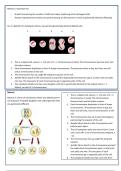
So, if a diploid cell undergoes mitosis, you get two genetically identical diploid cells.
1 2 3 4 5
1. This is a diploid cell, where n = 1 (2 sets of 1 = 2 chromosomes in total). The chromosomes become short and
fat before mitosis.
2. Each chromosome duplicates to form X shape chromosomes. They become twice as big, but there are still
only 2 chromosomes in the cell.
3. The chromosome line up, single file along the equator of the cell.
4. Spindle fibres attach to the chromosome and pull the duplicated chromosomes apart, so that each one splits
into two. The two parts of each chromosomes go to opposite poles of the cell.
5. The cytoplasm divides and two new daughter cells form, genetically identical to the original cell (n = 1,
diploid, so total of 2 chromosomes).
Meiosis
1. This is a diploid cell, where n = 2 (2 sets of 2 = 4
Meiosis is a form of cell division where one diploid parent chromosomes in total). The chromosomes
cell produces 4 haploid daughter cells called gametes that become short and fat before meiosis.
are genetically different. 2. Each chromosome duplicates to form X shape
chromosomes. They become twice as big, but
there are still only 2 sets of chromosomes in the
cell.
3. The chromosomes line up in pairs (homologous
pairs) along the equator of the cell.
4. Spindle fibres attach to the chromosomes and
pull the pairs apart.
5. The cell cytoplasm splits into two to form 2 new
cells, each with 1 set of chromosomes (haploid, n
= 2).
6. The chromosomes line up single file along the
equator.
7. Spindle fibres attach to the chromosome and pull
the duplicated chromosomes apart, so that each
one splits into two. The two parts of each
chromosomes go to opposite poles of the cell.
8. The cytoplasm divides and two new cells form
from each cell (haploid, n = 2).
, Meiosis forms genetically different cells (variation) because:
- When the chromosomes line up in pairs, which side each chromosome of the pair goes to is random
(independent segregation)
- When the chromosomes line up in pairs file, the alleles can swap about between homologous chromosomes
(crossing over or recombination)
Sexual Reproduction and Fertilisation
- Humans reproduce sexually, which means that 2 parents are involved.
- The male produces the male gamete, sperm, in the testis.
- The female produces the female gamete, ova (eggs), in the ovaries.
- Gametes are produced by meiosis, a form of cell division that results in gametes.
- Ovum and sperm are haploid, meaning that they have ½ the amount of DNA or only 1 set of
chromosomes, 23 for humans.
- Fertilisation is when the nucleus of an egg fuses (joins) with the nucleus of a sperm to form a
zygote.
- A zygote is diploid which means that it contains the full amount of DNA or 2 sets of
chromosomes, 46 (23 pairs) for humans.
- The zygote will then divide by mitosis over and over again to form an embryo, a group of
genetically identical diploid cells, all with the full 46 chromosomes.
Meiosis A type of cell division that results in haploid gametes that are genetically different
to each other
Gamete A haploid sex cell containing one set of chromosomes (half the total number of
chromosomes)
Sexual Reproduction When male and female gametes fuse to result in a genetically different offspring
(contain a mixture of genes from each of the two parents)
Fertilisation When two haploid gamete nuclei fuse together to form a diploid zygote
Zygote The resulting diploid cell when two gametes fuse
Embryo The resultant organism (group of cells) when a zygote undergoes repeated cell
division by mitosis
Mitosis A type of cell division that results in genetically identical cells
- Growth (increasing the number of cells) and repair (replacing old or damaged cells)
- Asexual reproduction (involves one parent passing on their genes to result in genetically identical offspring)
So, if a diploid cell undergoes mitosis, you get two genetically identical diploid cells.
1 2 3 4 5
1. This is a diploid cell, where n = 1 (2 sets of 1 = 2 chromosomes in total). The chromosomes become short and
fat before mitosis.
2. Each chromosome duplicates to form X shape chromosomes. They become twice as big, but there are still
only 2 chromosomes in the cell.
3. The chromosome line up, single file along the equator of the cell.
4. Spindle fibres attach to the chromosome and pull the duplicated chromosomes apart, so that each one splits
into two. The two parts of each chromosomes go to opposite poles of the cell.
5. The cytoplasm divides and two new daughter cells form, genetically identical to the original cell (n = 1,
diploid, so total of 2 chromosomes).
Meiosis
1. This is a diploid cell, where n = 2 (2 sets of 2 = 4
Meiosis is a form of cell division where one diploid parent chromosomes in total). The chromosomes
cell produces 4 haploid daughter cells called gametes that become short and fat before meiosis.
are genetically different. 2. Each chromosome duplicates to form X shape
chromosomes. They become twice as big, but
there are still only 2 sets of chromosomes in the
cell.
3. The chromosomes line up in pairs (homologous
pairs) along the equator of the cell.
4. Spindle fibres attach to the chromosomes and
pull the pairs apart.
5. The cell cytoplasm splits into two to form 2 new
cells, each with 1 set of chromosomes (haploid, n
= 2).
6. The chromosomes line up single file along the
equator.
7. Spindle fibres attach to the chromosome and pull
the duplicated chromosomes apart, so that each
one splits into two. The two parts of each
chromosomes go to opposite poles of the cell.
8. The cytoplasm divides and two new cells form
from each cell (haploid, n = 2).
, Meiosis forms genetically different cells (variation) because:
- When the chromosomes line up in pairs, which side each chromosome of the pair goes to is random
(independent segregation)
- When the chromosomes line up in pairs file, the alleles can swap about between homologous chromosomes
(crossing over or recombination)
Sexual Reproduction and Fertilisation
- Humans reproduce sexually, which means that 2 parents are involved.
- The male produces the male gamete, sperm, in the testis.
- The female produces the female gamete, ova (eggs), in the ovaries.
- Gametes are produced by meiosis, a form of cell division that results in gametes.
- Ovum and sperm are haploid, meaning that they have ½ the amount of DNA or only 1 set of
chromosomes, 23 for humans.
- Fertilisation is when the nucleus of an egg fuses (joins) with the nucleus of a sperm to form a
zygote.
- A zygote is diploid which means that it contains the full amount of DNA or 2 sets of
chromosomes, 46 (23 pairs) for humans.
- The zygote will then divide by mitosis over and over again to form an embryo, a group of
genetically identical diploid cells, all with the full 46 chromosomes.
Meiosis A type of cell division that results in haploid gametes that are genetically different
to each other
Gamete A haploid sex cell containing one set of chromosomes (half the total number of
chromosomes)
Sexual Reproduction When male and female gametes fuse to result in a genetically different offspring
(contain a mixture of genes from each of the two parents)
Fertilisation When two haploid gamete nuclei fuse together to form a diploid zygote
Zygote The resulting diploid cell when two gametes fuse
Embryo The resultant organism (group of cells) when a zygote undergoes repeated cell
division by mitosis
Mitosis A type of cell division that results in genetically identical cells