

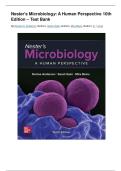
Nester's Microbiology: A Human Perspective 10th
Edition – Test Bank
by Denise G. Anderson (Author), Sarah Salm (Author), Mira Beins (Author), & 1 more
,TABLE OF CONTENTS
1. Humans and the Microbial World
2. The Molecules of Life
3. Cells and Methods to Observe Them
4. Dynamics of Microbial Growth
5. Control of Microbial Growth
6. Microbial Metabolism: Fueling Cell Growth
7. The Blueprint of Life, from DNA to Protein
8. Bacterial Genetics
9. Biotechnology
10. Identifying and Classifying Microorganisms
11. The Diversity of Bacteria and Archaea
12. The Eukaryotic Members of the Microbial World
13. Viruses, Viroids and Prions
14. The Innate Immune Response
15. The Adaptive Immune Response
16. Host-Microbe Interactions
17. Applications of Immune Responses
18. Immunological Disorders
19. Epidemiology
20. Antimicrobial Medications
21. Respiratory System Infections
22. Skin Infections
23. Wound Infections
24. Digestive System Infections
25. Blood and Lymphatic Infections
26. Nervous System Infections
27. Genitourinary Tract Infections
28. Microbial Ecology
29. Environmental Microbiology: Treatment of water, Wastes, and Polluted Habitats
30. Food Microbiology
,Nester's Microbiology: A Human Perspective 10th
Edition
TRUE/FALSE - Write 'T' if the statement is true and 'F' if the statement is false.
1) Spontaneous generation refers to the idea that organisms came from other organisms.
⊚ true
⊚ false
2) The human body only contains bacteria during illness.
⊚ true
⊚ false
3) Bacteria and eukarya both contain membrane-bound organelles.
⊚ true
⊚ false
4) The scientific name of an organism indicates its domain.
⊚ true
⊚ false
5) Viroids are naked (lacking a protein shell) pieces of RNA that infect plants.
⊚ true
⊚ false
6) Viruses simultaneously contain DNA, RNA, and protein.
⊚ true
, ⊚ false
Edition – Test Bank
by Denise G. Anderson (Author), Sarah Salm (Author), Mira Beins (Author), & 1 more
,TABLE OF CONTENTS
1. Humans and the Microbial World
2. The Molecules of Life
3. Cells and Methods to Observe Them
4. Dynamics of Microbial Growth
5. Control of Microbial Growth
6. Microbial Metabolism: Fueling Cell Growth
7. The Blueprint of Life, from DNA to Protein
8. Bacterial Genetics
9. Biotechnology
10. Identifying and Classifying Microorganisms
11. The Diversity of Bacteria and Archaea
12. The Eukaryotic Members of the Microbial World
13. Viruses, Viroids and Prions
14. The Innate Immune Response
15. The Adaptive Immune Response
16. Host-Microbe Interactions
17. Applications of Immune Responses
18. Immunological Disorders
19. Epidemiology
20. Antimicrobial Medications
21. Respiratory System Infections
22. Skin Infections
23. Wound Infections
24. Digestive System Infections
25. Blood and Lymphatic Infections
26. Nervous System Infections
27. Genitourinary Tract Infections
28. Microbial Ecology
29. Environmental Microbiology: Treatment of water, Wastes, and Polluted Habitats
30. Food Microbiology
,Nester's Microbiology: A Human Perspective 10th
Edition
TRUE/FALSE - Write 'T' if the statement is true and 'F' if the statement is false.
1) Spontaneous generation refers to the idea that organisms came from other organisms.
⊚ true
⊚ false
2) The human body only contains bacteria during illness.
⊚ true
⊚ false
3) Bacteria and eukarya both contain membrane-bound organelles.
⊚ true
⊚ false
4) The scientific name of an organism indicates its domain.
⊚ true
⊚ false
5) Viroids are naked (lacking a protein shell) pieces of RNA that infect plants.
⊚ true
⊚ false
6) Viruses simultaneously contain DNA, RNA, and protein.
⊚ true
, ⊚ false

