Lecture 7
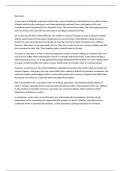
Humanistic tradition: carl rogers
● Main emphasis: conscious awareness of needs, choice and personal responsibility
● Human need for growth and realizing one’s full potential
Human nature is positive and life affirming
Approach is a counter response to psychoanalytic and behavioural traditions, both of which
are held that people have little free will in determining their actions
Carl Rogers: the person
● Born in illinois, chicago
○ Large family, moved to farm
○ Isolated childhood, shy and lacking in social skills
● Controlling parents: artistic expression was forbidden
● He was curious about the necessary conditions for the development of plants and
animals; same principles guided his conditions for human growth
Only way to knowledge is science
No objective truth
His theory emphasized a few points:
● Identify the conditions for personality change
● Theory of personality is derived from the theory of the person
○ Through therapy: growth development
● Fully functioning person
● Through the theory, we can delineate other areas of functioning that lead to the fully
functioning person
○ Interpersonal relations, family, education...
Rogers theory: based on environment as much as innate tendencies
1. Formative tendency: we evolve, change and become different. Natural tendency for
all organic and inorganic matter
2. Actualizing tendency: fulfillment happens when we satisfy needs; we become fulfilled
when we attend to physiological, intellectual and emotional needs
Balance between maintenance and enhancement
Conditions for actualization: authenticity, empathy, unconditional positive regard
The self and self-actualization
The self concept: experiences of the self
Measuring self concept: the IQ technique
The ideal self: the self concept that we would LIKE to possess
incongruence=anxiety
Needs
● As we develop, we experience things: self experiences
, ○ Development of the need for positive regard
● Positive self regard: liking and accepting who we are
● All children are born with a need for positive self regard (accepted and loved)
● Conditions of worth thwart this need
Conditions of worth
● Many parents and significant others place conditions of worth
○ Conditional positive regard: obstacle growth
● But the key to development of unconditional positive self regard and moving toward
self-actualization is the receipt of unconditional positive regard
○ Anxiety results when people get off track in pursuit of self-actualization
Incongruence
● What happens when the self and self-concept are at odds?
○ Disequilibrium
○ Conditions of worth will cause this. Ex ia am a bad person for doing this, for
thinking this, fro feelings this
○ Psychological imbalance
● Vulnerability: unaware of the discrepancy
● Can't understand why we do the things we do
● Anxiety and threat: when we start to realize the incongruence
● Defensiveness: protect against anxiety and threat
● Disorganization: when incongruence becomes too obvious
○ Not enough time to defence, distort protect
Theory of psychotherapy
● Rogers approach to therapy (Client centered therapy) is designed to get a person
back on the path toward self-actualization
Three conditions for therapeutic progress/psychological growth
1. Congruence: therapist must create an atmosphere of genuine acceptance of
the client
2. Unconditional positive regard
3. Empathetic listening: client must feel that the therapist understands them
Person-centered theory in perspective
● Dramatic influence in psychotherapy settings
● Humanistic values and respecting the client
● Developed a method for assessing psychotherapy studies
○ Measures of personality change are significant
○ However: vague and imprecise concepts; falsifiability; applied in a
problem focused manner?
Existential psychology
Purpose: regain contact with basic experience of what it means to be alive
How does it feel to exist?
Humanistic tradition: carl rogers
● Main emphasis: conscious awareness of needs, choice and personal responsibility
● Human need for growth and realizing one’s full potential
Human nature is positive and life affirming
Approach is a counter response to psychoanalytic and behavioural traditions, both of which
are held that people have little free will in determining their actions
Carl Rogers: the person
● Born in illinois, chicago
○ Large family, moved to farm
○ Isolated childhood, shy and lacking in social skills
● Controlling parents: artistic expression was forbidden
● He was curious about the necessary conditions for the development of plants and
animals; same principles guided his conditions for human growth
Only way to knowledge is science
No objective truth
His theory emphasized a few points:
● Identify the conditions for personality change
● Theory of personality is derived from the theory of the person
○ Through therapy: growth development
● Fully functioning person
● Through the theory, we can delineate other areas of functioning that lead to the fully
functioning person
○ Interpersonal relations, family, education...
Rogers theory: based on environment as much as innate tendencies
1. Formative tendency: we evolve, change and become different. Natural tendency for
all organic and inorganic matter
2. Actualizing tendency: fulfillment happens when we satisfy needs; we become fulfilled
when we attend to physiological, intellectual and emotional needs
Balance between maintenance and enhancement
Conditions for actualization: authenticity, empathy, unconditional positive regard
The self and self-actualization
The self concept: experiences of the self
Measuring self concept: the IQ technique
The ideal self: the self concept that we would LIKE to possess
incongruence=anxiety
Needs
● As we develop, we experience things: self experiences
, ○ Development of the need for positive regard
● Positive self regard: liking and accepting who we are
● All children are born with a need for positive self regard (accepted and loved)
● Conditions of worth thwart this need
Conditions of worth
● Many parents and significant others place conditions of worth
○ Conditional positive regard: obstacle growth
● But the key to development of unconditional positive self regard and moving toward
self-actualization is the receipt of unconditional positive regard
○ Anxiety results when people get off track in pursuit of self-actualization
Incongruence
● What happens when the self and self-concept are at odds?
○ Disequilibrium
○ Conditions of worth will cause this. Ex ia am a bad person for doing this, for
thinking this, fro feelings this
○ Psychological imbalance
● Vulnerability: unaware of the discrepancy
● Can't understand why we do the things we do
● Anxiety and threat: when we start to realize the incongruence
● Defensiveness: protect against anxiety and threat
● Disorganization: when incongruence becomes too obvious
○ Not enough time to defence, distort protect
Theory of psychotherapy
● Rogers approach to therapy (Client centered therapy) is designed to get a person
back on the path toward self-actualization
Three conditions for therapeutic progress/psychological growth
1. Congruence: therapist must create an atmosphere of genuine acceptance of
the client
2. Unconditional positive regard
3. Empathetic listening: client must feel that the therapist understands them
Person-centered theory in perspective
● Dramatic influence in psychotherapy settings
● Humanistic values and respecting the client
● Developed a method for assessing psychotherapy studies
○ Measures of personality change are significant
○ However: vague and imprecise concepts; falsifiability; applied in a
problem focused manner?
Existential psychology
Purpose: regain contact with basic experience of what it means to be alive
How does it feel to exist?