

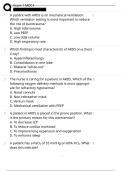
Exam 1 MDC4
1. A patient with ARDS is on mechanical ventilation. C
Which ventilator setting is most important to reduce
the risk of barotrauma?
A. High tidal volume
B. Low PEEP
C. Low tidal volume
D. High respiratory rate
2. Which finding is most characteristic of ARDS on a chest C
X-ray?
A. Hyperinflated lungs
B. Consolidation in one lobe
C. Bilateral "white-out"
D. Pneumothorax
3. The nurse is caring for a patient in ARDS. Which of the D
following oxygen delivery methods is most appropri-
ate for refractory hypoxemia?
A. Nasal cannula
B. Non-rebreather mask
C. Venturi mask
D. Mechanical ventilation with PEEP
4. A patient in ARDS is placed in the prone position. What C
is the primary reason for this intervention?
A. To decrease ICP
B. To reduce cardiac workload
C. To improve lung expansion and oxygenation
D. To enhance sleep
5. A patient has a PaO₂ of 55 mmHg on 60% FiO₂. What B
does this indicate?
, Exam 1 MDC4
A. Adequate oxygenation
B. Refractory hypoxemia
C. Hypocapnia
D. Respiratory alkalosis
6. What is the primary complication of using high FiO₂ B
over an extended period?
A. Hypoventilation
B. Oxygen toxicity
C. Dehydration
D. Hypernatremia
7. The patient's ventilator high-pressure alarm is sound- B
ing. What should the nurse assess first?
A. FiO₂ setting
B. Need for suctioning
C. Room temperature
D. ABG results
8. Which of the following ventilator modes allows spon- C
taneous breathing with minimal support?
A. Assist-control
B. SIMV
C. CPAP
D. Controlled ventilation
9. Which action is priority when the low-pressure ventila- B
tor alarm sounds?
A. Increase PEEP
B. Reconnect tubing to the ventilator
C. Administer sedative
D. Decrease tidal volume
, Exam 1 MDC4
10. What is the correct PEEP range usually used for ARDS C
patients?
A. 1-3 cm H₂O
B. 4-6 cm H₂O
C. 5-15 cm H₂O
D. 15-20 cm H₂O
11. A client's ABG is PaO₂: 58, PaCO₂: 38, pH: 7.39. What's C
the interpretation?
A. Metabolic alkalosis
B. Normal ABG
C. Hypoxemia
D. Respiratory acidosis
12. Which medication improves oxygenation in ARDS by B
reducing pulmonary artery pressure?
A. Albuterol
B. Epoprostenol
C. Atropine
D. Epinephrine
13. What nursing intervention helps prevent ventilator-as- C
sociated pneumonia (VAP)?
A. Keep HOB flat
B. Change ventilator tubing daily
C. Oral care every 4 hours
D. Administer antibiotics daily
14. Which patient is at greatest risk for developing ARDS? C
A. Patient with a fractured femur
B. Patient post-appendectomy
C. Patient with sepsis
D. Patient with GERD
1. A patient with ARDS is on mechanical ventilation. C
Which ventilator setting is most important to reduce
the risk of barotrauma?
A. High tidal volume
B. Low PEEP
C. Low tidal volume
D. High respiratory rate
2. Which finding is most characteristic of ARDS on a chest C
X-ray?
A. Hyperinflated lungs
B. Consolidation in one lobe
C. Bilateral "white-out"
D. Pneumothorax
3. The nurse is caring for a patient in ARDS. Which of the D
following oxygen delivery methods is most appropri-
ate for refractory hypoxemia?
A. Nasal cannula
B. Non-rebreather mask
C. Venturi mask
D. Mechanical ventilation with PEEP
4. A patient in ARDS is placed in the prone position. What C
is the primary reason for this intervention?
A. To decrease ICP
B. To reduce cardiac workload
C. To improve lung expansion and oxygenation
D. To enhance sleep
5. A patient has a PaO₂ of 55 mmHg on 60% FiO₂. What B
does this indicate?
, Exam 1 MDC4
A. Adequate oxygenation
B. Refractory hypoxemia
C. Hypocapnia
D. Respiratory alkalosis
6. What is the primary complication of using high FiO₂ B
over an extended period?
A. Hypoventilation
B. Oxygen toxicity
C. Dehydration
D. Hypernatremia
7. The patient's ventilator high-pressure alarm is sound- B
ing. What should the nurse assess first?
A. FiO₂ setting
B. Need for suctioning
C. Room temperature
D. ABG results
8. Which of the following ventilator modes allows spon- C
taneous breathing with minimal support?
A. Assist-control
B. SIMV
C. CPAP
D. Controlled ventilation
9. Which action is priority when the low-pressure ventila- B
tor alarm sounds?
A. Increase PEEP
B. Reconnect tubing to the ventilator
C. Administer sedative
D. Decrease tidal volume
, Exam 1 MDC4
10. What is the correct PEEP range usually used for ARDS C
patients?
A. 1-3 cm H₂O
B. 4-6 cm H₂O
C. 5-15 cm H₂O
D. 15-20 cm H₂O
11. A client's ABG is PaO₂: 58, PaCO₂: 38, pH: 7.39. What's C
the interpretation?
A. Metabolic alkalosis
B. Normal ABG
C. Hypoxemia
D. Respiratory acidosis
12. Which medication improves oxygenation in ARDS by B
reducing pulmonary artery pressure?
A. Albuterol
B. Epoprostenol
C. Atropine
D. Epinephrine
13. What nursing intervention helps prevent ventilator-as- C
sociated pneumonia (VAP)?
A. Keep HOB flat
B. Change ventilator tubing daily
C. Oral care every 4 hours
D. Administer antibiotics daily
14. Which patient is at greatest risk for developing ARDS? C
A. Patient with a fractured femur
B. Patient post-appendectomy
C. Patient with sepsis
D. Patient with GERD

