
FBLA Cybersecurity Study Guide by National
Champion
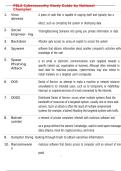
1. Virus A piece of code that is capable of copying itself and typically has a
detrimental
ettect, such as corrupting the system or destroying data
2. Social Tricking/Deceiving Someone into giving you private information or data
Engineer- ing
3. Backdoor Attacker gets access by using an exploit to access the system
4. Spyware software that obtains information about another computer's activities witho
knowledge of the user
5. Spear is an email or electronic communications scam targeted towards a
Phishing specific individ- ual, organization or business. Although often intended to
Attack
steal data for malicious purposes, cybercriminals may also intend to
install malware on a targeted user's computer.
6. DOS Denial of Service: an attempt to make a machine or network resource
unavailable to its intended users, such as to temporarily or indefinitely
interrupt or suspend services of a host connected to the Internet.
7. DDOS Distributed Denial of Service: occurs when multiple systems flood the
bandwidth or resources of a targeted system, usually one or more web
servers. Such an attack is often the result of multiple compromised
systems (for example, a botnet) flooding the targeted system with traflc.
8. Botnet a network of private computers infected with malicious software and
controlled
as a group without the owners' knowledge, used to send spam messages
ddos attacks, mine for cryptocurrency, and more
9. Dumpster Diving looking through trash to obtain sensitive information
10. Ransomware malicious software that blocks access to computer until an amount of mon
is
paid
1/
37
,FBLA Cybersecurity Study Guide by National
Champion
2/
37
, FBLA Cybersecurity Study Guide by National
Champion
11. Malware software intended to harm computers, networks, people, or businesses
12. Drive-by Downloads installed by just passing through an infected webpage
Down- load
13. E-mail flooding sending many emails to a target to flood the inbox and take down the
server
14. Trojan Horse a virus disguised as real software, to make it appear harmless so
victims download and run it
15. Worm a self-replicating virus that does not usually alter files but resides in active
memory and duplicates itself. Worms use parts of an operating system
that are automatic and usually invisible to the user. It is common for
worms to be noticed only when their uncontrolled replication consumes
system resources, slowing or halting other tasks.
16. DNS spoofing also referred to as DNS cache poisoning, is a form of computer hacking in
which corrupt Domain Name System data is introduced into a DNS
resolver's cache, causing the name server to return an incorrect IP
address, which results in diverting traflc to the attacker's computer (or
any other computer).
17. Scareware Malware which tricks users into buying fake antivirus protection
18. White Hat A hacker who does good. Tests security systems with consent of the owne
19. Black Hat A hacker who uses their abilities for malicious purposes such as breaching
and
bypassing internet secuirty.
20. Cyberterrorist Someone who uses computers to cause severe damage or widespread fe
in
society.
21. Hacktivist a computer hacker whose activity is aimed at promoting a social or politic
cause.
3/
37
, FBLA Cybersecurity Study Guide by National
Champion
22. Cyberespionage
4/
37
Champion
1. Virus A piece of code that is capable of copying itself and typically has a
detrimental
ettect, such as corrupting the system or destroying data
2. Social Tricking/Deceiving Someone into giving you private information or data
Engineer- ing
3. Backdoor Attacker gets access by using an exploit to access the system
4. Spyware software that obtains information about another computer's activities witho
knowledge of the user
5. Spear is an email or electronic communications scam targeted towards a
Phishing specific individ- ual, organization or business. Although often intended to
Attack
steal data for malicious purposes, cybercriminals may also intend to
install malware on a targeted user's computer.
6. DOS Denial of Service: an attempt to make a machine or network resource
unavailable to its intended users, such as to temporarily or indefinitely
interrupt or suspend services of a host connected to the Internet.
7. DDOS Distributed Denial of Service: occurs when multiple systems flood the
bandwidth or resources of a targeted system, usually one or more web
servers. Such an attack is often the result of multiple compromised
systems (for example, a botnet) flooding the targeted system with traflc.
8. Botnet a network of private computers infected with malicious software and
controlled
as a group without the owners' knowledge, used to send spam messages
ddos attacks, mine for cryptocurrency, and more
9. Dumpster Diving looking through trash to obtain sensitive information
10. Ransomware malicious software that blocks access to computer until an amount of mon
is
paid
1/
37
,FBLA Cybersecurity Study Guide by National
Champion
2/
37
, FBLA Cybersecurity Study Guide by National
Champion
11. Malware software intended to harm computers, networks, people, or businesses
12. Drive-by Downloads installed by just passing through an infected webpage
Down- load
13. E-mail flooding sending many emails to a target to flood the inbox and take down the
server
14. Trojan Horse a virus disguised as real software, to make it appear harmless so
victims download and run it
15. Worm a self-replicating virus that does not usually alter files but resides in active
memory and duplicates itself. Worms use parts of an operating system
that are automatic and usually invisible to the user. It is common for
worms to be noticed only when their uncontrolled replication consumes
system resources, slowing or halting other tasks.
16. DNS spoofing also referred to as DNS cache poisoning, is a form of computer hacking in
which corrupt Domain Name System data is introduced into a DNS
resolver's cache, causing the name server to return an incorrect IP
address, which results in diverting traflc to the attacker's computer (or
any other computer).
17. Scareware Malware which tricks users into buying fake antivirus protection
18. White Hat A hacker who does good. Tests security systems with consent of the owne
19. Black Hat A hacker who uses their abilities for malicious purposes such as breaching
and
bypassing internet secuirty.
20. Cyberterrorist Someone who uses computers to cause severe damage or widespread fe
in
society.
21. Hacktivist a computer hacker whose activity is aimed at promoting a social or politic
cause.
3/
37
, FBLA Cybersecurity Study Guide by National
Champion
22. Cyberespionage
4/
37

