
NSG 316 Exam 1
Study online at https://quizlet.com/_hkfb6t
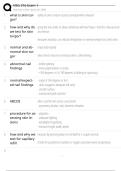
1. what is skin tur- ability of skin to return to place promptly when released
gor?
2. how and why do grasp the skin under or above collarbone with two fingers. hold for a few seconds
we test for skin and release
turgor?
measures elasticity. can indicate dehydration or extreme weight loss (extra skin)
3. normal and ab- snaps back rapidly
normal skin tur-
gor takes time to return to normal position. called tenting
4. abnormal nail - brittle/splitting
findings - linear pigmentation or striata
- <160 degrees or it is 180 degrees (clubbing or spooning)
5. normal/expect- - angle of 160 degrees or less
ed nail findings - clean (suggests adequate self-care)
- smooth surface
- transluscent/pink nail bed
6. ABCDE often used for skin cancer assessment
- asymmetry, border, color, diameter, elevation
7. procedure for as- - palpation
sessing skin le- - adequate lighting
sions - woodlight/magnifying
- measure length, width, depth
8. how and why we measure by pressing down on nail bed for a couple seconds
test for capillary
refill checks for peripheral circulation or oxygen saturation levels (respiratory)
9.
, NSG 316 Exam 1
Study online at https://quizlet.com/_hkfb6t
normal and ab- - color returns within 1-2 seconds
normal capillary - takes longer than 1-2 seconds
refill findings
10. 2+ edema moderate pitting
indentation subsides rapidly
11. 1+ edema mild pitting
slight indentation
no perceptible swelling of the leg
12. 3+ edema deep pitting
looks swollen
indentation remains for short time
13. 4+ edema very deep pitting
leg is very swollen
indentation lasts long time (can be indefinite)
14. ecchymosis - any type of injury that causes blood vessels to burst open
(bruise) - leaking blood under the skin
15. purpura - dark, red discolored areas due to decreased vascularity of the skin but increased
vascular fragility
16. petechiae round spots that appear on skin as a result of bleeding
red, brown, or purple
17. secondary le- resulting from a change in primary lesion from passage of time (evolutionary)
sions
18. primary lesions develop on previously unaltered skin
- macules, papules, nodule, tumor, cyst, papule, vesicle, etc.
Study online at https://quizlet.com/_hkfb6t
1. what is skin tur- ability of skin to return to place promptly when released
gor?
2. how and why do grasp the skin under or above collarbone with two fingers. hold for a few seconds
we test for skin and release
turgor?
measures elasticity. can indicate dehydration or extreme weight loss (extra skin)
3. normal and ab- snaps back rapidly
normal skin tur-
gor takes time to return to normal position. called tenting
4. abnormal nail - brittle/splitting
findings - linear pigmentation or striata
- <160 degrees or it is 180 degrees (clubbing or spooning)
5. normal/expect- - angle of 160 degrees or less
ed nail findings - clean (suggests adequate self-care)
- smooth surface
- transluscent/pink nail bed
6. ABCDE often used for skin cancer assessment
- asymmetry, border, color, diameter, elevation
7. procedure for as- - palpation
sessing skin le- - adequate lighting
sions - woodlight/magnifying
- measure length, width, depth
8. how and why we measure by pressing down on nail bed for a couple seconds
test for capillary
refill checks for peripheral circulation or oxygen saturation levels (respiratory)
9.
, NSG 316 Exam 1
Study online at https://quizlet.com/_hkfb6t
normal and ab- - color returns within 1-2 seconds
normal capillary - takes longer than 1-2 seconds
refill findings
10. 2+ edema moderate pitting
indentation subsides rapidly
11. 1+ edema mild pitting
slight indentation
no perceptible swelling of the leg
12. 3+ edema deep pitting
looks swollen
indentation remains for short time
13. 4+ edema very deep pitting
leg is very swollen
indentation lasts long time (can be indefinite)
14. ecchymosis - any type of injury that causes blood vessels to burst open
(bruise) - leaking blood under the skin
15. purpura - dark, red discolored areas due to decreased vascularity of the skin but increased
vascular fragility
16. petechiae round spots that appear on skin as a result of bleeding
red, brown, or purple
17. secondary le- resulting from a change in primary lesion from passage of time (evolutionary)
sions
18. primary lesions develop on previously unaltered skin
- macules, papules, nodule, tumor, cyst, papule, vesicle, etc.

