

OpenStax Biology 2e Instructor Answer GuideOpenStax
(28 filesBiology
merged).pdf
OpenStax 2e Instructor
Biology Answer
2eIAG_1:
Instructor Guide
2026AnswerOpenStax
(28 filesBiology
Guide: merged).pdf
2026 2e Instructor Answer Guide (28 files merged).pdf
OpenStax Biology 2e Instructor AnswerOpenStax
Guide (28Biology
files merged)
2e Instructor
(14 files
Answer
merged).pdf
OpenStax
Guide (28Biology
files merged)
2e Instructor
(14 files
Answer
merged).pdf
Guide (28 files merged) (14 files merged).pdf
OpenStax Biology 2e Instructor Answer Guide
Biology 2e
Unit 1: The Chemistry of Life
Chapter 1: The Study of Life
Visual Connection Questions
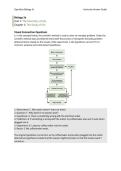
1. In the example below, the scientific method is used to solve an everyday problem. Order the
scientific method steps (numbered items) with the process of solving the everyday problem
(lettered items). Based on the results of the experiment, is the hypothesis correct? If it is
incorrect, propose some alternative hypotheses.
1. Observation: C. My toaster doesn’t toast my bread.
2. Question: F. Why doesn’t my toaster work?
3. Hypothesis: A. There is something wrong with the electrical outlet.
4. Prediction: B. If something is wrong with the outlet, my coffeemaker also won’t work when
plugged into it.
5. Experiment: D. I plug my coffee maker into the outlet.
6. Result: E. My coffeemaker works.
The original hypothesis is incorrect, as the coffeemaker works when plugged into the outlet.
Alternative hypotheses include that the toaster might be broken or that the toaster wasn’t
turned on.
Page 1 1 of 223 Page 1 of 223
3/27/2026,
OpenStax 7:07:45
BiologyPM
2e Instructor Answer Guide
OpenStax
(28 filesBiology
merged).pdf 3/27/2026
2e Instructor Answer Guide
OpenStax
(28 filesBiology 2e Instructor Answer Guide3/27/2026,
merged).pdf 7:07:42 PM
(28 files merged).pdf
, OpenStax Biology 2e Instructor Answer GuideOpenStax
(28 filesBiology
merged).pdf
OpenStax 2e Instructor
Biology Answer
2eIAG_1:
Instructor Guide
2026AnswerOpenStax
(28 filesBiology
Guide: merged).pdf
2026 2e Instructor Answer Guide (28 files merged).pdf
OpenStax Biology 2e Instructor AnswerOpenStax
Guide (28Biology
files merged)
2e Instructor
(14 files
Answer
merged).pdf
OpenStax
Guide (28Biology
files merged)
2e Instructor
(14 files
Answer
merged).pdf
Guide (28 files merged) (14 files merged).pdf
OpenStax Biology 2e Instructor Answer Guide
2. Decide if each of the following is an example of inductive or deductive reasoning.
1: inductive
2: deductive
3: deductive
4: inductive
3. Which of the following statements is false?
b. Communities exist within populations which exist within ecosystems.
Page 2 2 of 223 Page 2 of 223
3/27/2026,
OpenStax 7:07:45
BiologyPM
2e Instructor Answer Guide
OpenStax
(28 filesBiology
merged).pdf 3/27/2026
2e Instructor Answer Guide
OpenStax
(28 filesBiology 2e Instructor Answer Guide3/27/2026,
merged).pdf 7:07:42 PM
(28 files merged).pdf
, OpenStax Biology 2e Instructor Answer GuideOpenStax
(28 filesBiology
merged).pdf
OpenStax 2e Instructor
Biology Answer
2eIAG_1:
Instructor Guide
2026AnswerOpenStax
(28 filesBiology
Guide: merged).pdf
2026 2e Instructor Answer Guide (28 files merged).pdf
OpenStax Biology 2e Instructor AnswerOpenStax
Guide (28Biology
files merged)
2e Instructor
(14 files
Answer
merged).pdf
OpenStax
Guide (28Biology
files merged)
2e Instructor
(14 files
Answer
merged).pdf
Guide (28 files merged) (14 files merged).pdf
OpenStax Biology 2e Instructor Answer Guide
Review Questions
4. The first forms of life on Earth were ____.
b. microorganisms
5. A suggested and testable explanation for an event is called a ___.
a. hypothesis
6. Which of the following sciences is not considered a natural science?
d. computer science
7. The type of logical thinking that uses related observations to arrive at a general conclusion is
called ____.
d. inductive reasoning
8. The process of ____ helps to ensure that a scientist’s research is original, significant, logical,
and thorough.
c. peer review
9. A person notices that her houseplants that are regularly exposed to music seem to grow
more quickly than those in rooms with no music. As a result, she determines that plants grow
better when exposed to music. This example most closely resembles which type of reasoning?
a. inductive reasoning
10. The smallest unit of biological structure that meets the functional requirements of “living” is
the ____.
c. cell
11. Viruses are not considered living because they ____.
a. are not made of cells
12. The presence of a membrane-enclosed nucleus is a characteristic of _____.
b. eukaryotic cells
13. A group of individuals of the same species living in the same area is called a(n) _____.
c. population
14. Which of the following sequences represents the hierarchy of biological organization from
the most inclusive to the least complex level?
d. biosphere, ecosystem, community, population, organism
15. Where in a phylogenetic tree would you expect to find the organism that had evolved most
recently?
d. at the branch tips
Page 3 3 of 223 Page 3 of 223
3/27/2026,
OpenStax 7:07:45
BiologyPM
2e Instructor Answer Guide
OpenStax
(28 filesBiology
merged).pdf 3/27/2026
2e Instructor Answer Guide
OpenStax
(28 filesBiology 2e Instructor Answer Guide3/27/2026,
merged).pdf 7:07:42 PM
(28 files merged).pdf
, OpenStax Biology 2e Instructor Answer GuideOpenStax
(28 filesBiology
merged).pdf
OpenStax 2e Instructor
Biology Answer
2eIAG_1:
Instructor Guide
2026AnswerOpenStax
(28 filesBiology
Guide: merged).pdf
2026 2e Instructor Answer Guide (28 files merged).pdf
OpenStax Biology 2e Instructor AnswerOpenStax
Guide (28Biology
files merged)
2e Instructor
(14 files
Answer
merged).pdf
OpenStax
Guide (28Biology
files merged)
2e Instructor
(14 files
Answer
merged).pdf
Guide (28 files merged) (14 files merged).pdf
OpenStax Biology 2e Instructor Answer Guide
Critical Thinking Questions
16. Although the scientific method is used by most of the sciences, it can also be applied to
everyday situations. Think about a problem that you may have at home, at school, or with your
car, and apply the scientific method to solve it
Answers will vary, but should apply the steps of the scientific method. One possibility could be a
car which doesn’t start. The hypothesis could be that the car doesn’t start because the battery
is dead. The experiment would be to change the battery or to charge the battery and then
check whether the car starts or not. If it starts, the problem was due to the battery, and the
hypothesis is accepted.
17. Give an example of how applied science has had a direct effect on your daily life.
Answers will vary. One example of how applied science has had a direct effect on daily life is the
presence of vaccines. Vaccines to prevent diseases such polio, measles, tetanus, and even
influenza affect daily life by contributing to individual and societal health.
18. Name two topics that are likely to be studied by biologists, and two areas of scientific study
that would fall outside the realm of biology.
Answers will vary. Topics that fall inside the area of biological study include how diseases affect
human bodies, how pollution impacts a species’ habitat, and how plants respond to their
environments. Topics that fall outside of biology (the “study of life”) include how metamorphic
rock is formed and how planetary orbits function.
19. Thinking about the topic of cancer, write a basic science question and an applied science
question that a researcher interested in this topic might ask.
Answers will vary. Basic science: What evolutionary purpose might cancer serve? Applied
science: What strategies might be found to prevent cancer from reproducing at the cellular
level?
20. Select two items that biologists agree are necessary in order to consider an organism
“alive.” For each, give an example of a nonliving object that otherwise fits the definition of
“alive.”
Answers will vary. Layers of sedimentary rock have order but are not alive. Technology is
capable of regulation but is not, of itself, alive.
21. Consider the levels of organization of the biological world, and place each of these items in
order from smallest level of organization to most encompassing: skin cell, elephant, water
molecule, planet Earth, tropical rainforest, hydrogen atom, wolf pack, liver.
Smallest level of organization to largest: hydrogen atom, water molecule, skin cell, liver,
elephant, wolf pack, tropical rainforest, planet Earth.
Page 4 4 of 223 Page 4 of 223
3/27/2026,
OpenStax 7:07:45
BiologyPM
2e Instructor Answer Guide
OpenStax
(28 filesBiology
merged).pdf 3/27/2026
2e Instructor Answer Guide
OpenStax
(28 filesBiology 2e Instructor Answer Guide3/27/2026,
merged).pdf 7:07:42 PM
(28 files merged).pdf
(28 filesBiology
merged).pdf
OpenStax 2e Instructor
Biology Answer
2eIAG_1:
Instructor Guide
2026AnswerOpenStax
(28 filesBiology
Guide: merged).pdf
2026 2e Instructor Answer Guide (28 files merged).pdf
OpenStax Biology 2e Instructor AnswerOpenStax
Guide (28Biology
files merged)
2e Instructor
(14 files
Answer
merged).pdf
OpenStax
Guide (28Biology
files merged)
2e Instructor
(14 files
Answer
merged).pdf
Guide (28 files merged) (14 files merged).pdf
OpenStax Biology 2e Instructor Answer Guide
Biology 2e
Unit 1: The Chemistry of Life
Chapter 1: The Study of Life
Visual Connection Questions
1. In the example below, the scientific method is used to solve an everyday problem. Order the
scientific method steps (numbered items) with the process of solving the everyday problem
(lettered items). Based on the results of the experiment, is the hypothesis correct? If it is
incorrect, propose some alternative hypotheses.
1. Observation: C. My toaster doesn’t toast my bread.
2. Question: F. Why doesn’t my toaster work?
3. Hypothesis: A. There is something wrong with the electrical outlet.
4. Prediction: B. If something is wrong with the outlet, my coffeemaker also won’t work when
plugged into it.
5. Experiment: D. I plug my coffee maker into the outlet.
6. Result: E. My coffeemaker works.
The original hypothesis is incorrect, as the coffeemaker works when plugged into the outlet.
Alternative hypotheses include that the toaster might be broken or that the toaster wasn’t
turned on.
Page 1 1 of 223 Page 1 of 223
3/27/2026,
OpenStax 7:07:45
BiologyPM
2e Instructor Answer Guide
OpenStax
(28 filesBiology
merged).pdf 3/27/2026
2e Instructor Answer Guide
OpenStax
(28 filesBiology 2e Instructor Answer Guide3/27/2026,
merged).pdf 7:07:42 PM
(28 files merged).pdf
, OpenStax Biology 2e Instructor Answer GuideOpenStax
(28 filesBiology
merged).pdf
OpenStax 2e Instructor
Biology Answer
2eIAG_1:
Instructor Guide
2026AnswerOpenStax
(28 filesBiology
Guide: merged).pdf
2026 2e Instructor Answer Guide (28 files merged).pdf
OpenStax Biology 2e Instructor AnswerOpenStax
Guide (28Biology
files merged)
2e Instructor
(14 files
Answer
merged).pdf
OpenStax
Guide (28Biology
files merged)
2e Instructor
(14 files
Answer
merged).pdf
Guide (28 files merged) (14 files merged).pdf
OpenStax Biology 2e Instructor Answer Guide
2. Decide if each of the following is an example of inductive or deductive reasoning.
1: inductive
2: deductive
3: deductive
4: inductive
3. Which of the following statements is false?
b. Communities exist within populations which exist within ecosystems.
Page 2 2 of 223 Page 2 of 223
3/27/2026,
OpenStax 7:07:45
BiologyPM
2e Instructor Answer Guide
OpenStax
(28 filesBiology
merged).pdf 3/27/2026
2e Instructor Answer Guide
OpenStax
(28 filesBiology 2e Instructor Answer Guide3/27/2026,
merged).pdf 7:07:42 PM
(28 files merged).pdf
, OpenStax Biology 2e Instructor Answer GuideOpenStax
(28 filesBiology
merged).pdf
OpenStax 2e Instructor
Biology Answer
2eIAG_1:
Instructor Guide
2026AnswerOpenStax
(28 filesBiology
Guide: merged).pdf
2026 2e Instructor Answer Guide (28 files merged).pdf
OpenStax Biology 2e Instructor AnswerOpenStax
Guide (28Biology
files merged)
2e Instructor
(14 files
Answer
merged).pdf
OpenStax
Guide (28Biology
files merged)
2e Instructor
(14 files
Answer
merged).pdf
Guide (28 files merged) (14 files merged).pdf
OpenStax Biology 2e Instructor Answer Guide
Review Questions
4. The first forms of life on Earth were ____.
b. microorganisms
5. A suggested and testable explanation for an event is called a ___.
a. hypothesis
6. Which of the following sciences is not considered a natural science?
d. computer science
7. The type of logical thinking that uses related observations to arrive at a general conclusion is
called ____.
d. inductive reasoning
8. The process of ____ helps to ensure that a scientist’s research is original, significant, logical,
and thorough.
c. peer review
9. A person notices that her houseplants that are regularly exposed to music seem to grow
more quickly than those in rooms with no music. As a result, she determines that plants grow
better when exposed to music. This example most closely resembles which type of reasoning?
a. inductive reasoning
10. The smallest unit of biological structure that meets the functional requirements of “living” is
the ____.
c. cell
11. Viruses are not considered living because they ____.
a. are not made of cells
12. The presence of a membrane-enclosed nucleus is a characteristic of _____.
b. eukaryotic cells
13. A group of individuals of the same species living in the same area is called a(n) _____.
c. population
14. Which of the following sequences represents the hierarchy of biological organization from
the most inclusive to the least complex level?
d. biosphere, ecosystem, community, population, organism
15. Where in a phylogenetic tree would you expect to find the organism that had evolved most
recently?
d. at the branch tips
Page 3 3 of 223 Page 3 of 223
3/27/2026,
OpenStax 7:07:45
BiologyPM
2e Instructor Answer Guide
OpenStax
(28 filesBiology
merged).pdf 3/27/2026
2e Instructor Answer Guide
OpenStax
(28 filesBiology 2e Instructor Answer Guide3/27/2026,
merged).pdf 7:07:42 PM
(28 files merged).pdf
, OpenStax Biology 2e Instructor Answer GuideOpenStax
(28 filesBiology
merged).pdf
OpenStax 2e Instructor
Biology Answer
2eIAG_1:
Instructor Guide
2026AnswerOpenStax
(28 filesBiology
Guide: merged).pdf
2026 2e Instructor Answer Guide (28 files merged).pdf
OpenStax Biology 2e Instructor AnswerOpenStax
Guide (28Biology
files merged)
2e Instructor
(14 files
Answer
merged).pdf
OpenStax
Guide (28Biology
files merged)
2e Instructor
(14 files
Answer
merged).pdf
Guide (28 files merged) (14 files merged).pdf
OpenStax Biology 2e Instructor Answer Guide
Critical Thinking Questions
16. Although the scientific method is used by most of the sciences, it can also be applied to
everyday situations. Think about a problem that you may have at home, at school, or with your
car, and apply the scientific method to solve it
Answers will vary, but should apply the steps of the scientific method. One possibility could be a
car which doesn’t start. The hypothesis could be that the car doesn’t start because the battery
is dead. The experiment would be to change the battery or to charge the battery and then
check whether the car starts or not. If it starts, the problem was due to the battery, and the
hypothesis is accepted.
17. Give an example of how applied science has had a direct effect on your daily life.
Answers will vary. One example of how applied science has had a direct effect on daily life is the
presence of vaccines. Vaccines to prevent diseases such polio, measles, tetanus, and even
influenza affect daily life by contributing to individual and societal health.
18. Name two topics that are likely to be studied by biologists, and two areas of scientific study
that would fall outside the realm of biology.
Answers will vary. Topics that fall inside the area of biological study include how diseases affect
human bodies, how pollution impacts a species’ habitat, and how plants respond to their
environments. Topics that fall outside of biology (the “study of life”) include how metamorphic
rock is formed and how planetary orbits function.
19. Thinking about the topic of cancer, write a basic science question and an applied science
question that a researcher interested in this topic might ask.
Answers will vary. Basic science: What evolutionary purpose might cancer serve? Applied
science: What strategies might be found to prevent cancer from reproducing at the cellular
level?
20. Select two items that biologists agree are necessary in order to consider an organism
“alive.” For each, give an example of a nonliving object that otherwise fits the definition of
“alive.”
Answers will vary. Layers of sedimentary rock have order but are not alive. Technology is
capable of regulation but is not, of itself, alive.
21. Consider the levels of organization of the biological world, and place each of these items in
order from smallest level of organization to most encompassing: skin cell, elephant, water
molecule, planet Earth, tropical rainforest, hydrogen atom, wolf pack, liver.
Smallest level of organization to largest: hydrogen atom, water molecule, skin cell, liver,
elephant, wolf pack, tropical rainforest, planet Earth.
Page 4 4 of 223 Page 4 of 223
3/27/2026,
OpenStax 7:07:45
BiologyPM
2e Instructor Answer Guide
OpenStax
(28 filesBiology
merged).pdf 3/27/2026
2e Instructor Answer Guide
OpenStax
(28 filesBiology 2e Instructor Answer Guide3/27/2026,
merged).pdf 7:07:42 PM
(28 files merged).pdf

