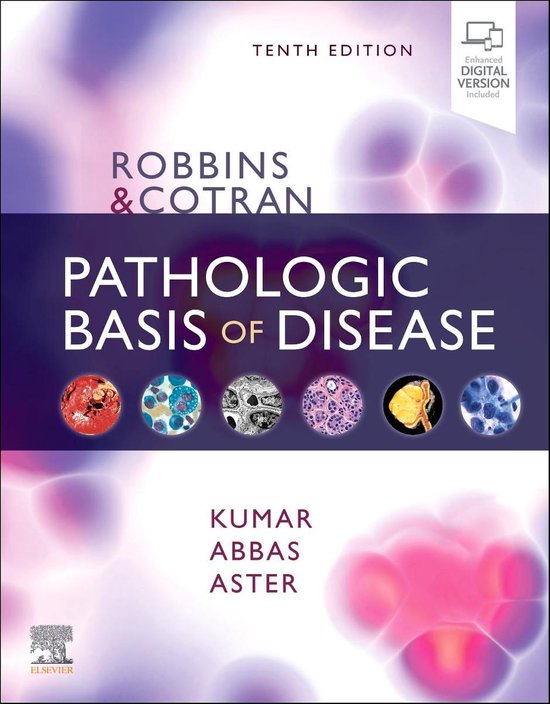
Robbins & Cotran 10th Ed. Pathology Test Bank | Chapter-
by-Chapter Questions & Verified Solutions
Robbins & Cotran Pathologic Basis of Disease
10th Edition
• Author(s)Vinay Kumar; Abul K. Abbas; Jon C. Aster
1. Chapter Reference — The Genome
Stem: A 6-year-old boy has recurrent infections and is
found to have markedly elevated serum IgM with very low
IgG and IgA. Genetic testing shows a mutation that
prevents class-switch recombination in B cells. Which
molecular process is most directly defective?
A. V(D)J recombination in pro-B cells
B. Somatic hypermutation in germinal centers
C. Activation-induced cytidine deaminase (AID)-mediated
DNA deamination
D. RAG1/RAG2-mediated cleavage of RSS sequences
Answer: C
Rationale — Correct: AID deaminates cytidine in Ig genes and is
required for class-switch recombination; its loss prevents
,switching from IgM to other isotypes.
Incorrect A: V(D)J recombination creates initial B-cell receptor
diversity, not class switching.
Incorrect B: Somatic hypermutation is AID-dependent but
pertains to affinity maturation (not the primary defect causing
absent isotypes).
Incorrect D: RAG proteins mediate V(D)J recombination in early
B-cell development, not isotype switching.
Teaching Point: AID is essential for class-switch recombination
and somatic hypermutation.
2. Chapter Reference — The Genome
Stem: A 45-year-old woman’s tumor exhibits microsatellite
instability due to mismatch repair deficiency. Which
cellular event best explains accumulation of mutations in
microsatellite regions?
A. Failure to ligate Okazaki fragments
B. Defective base-excision repair of uracil
C. Inability of MSH2/MLH1 to recognize and repair
insertion-deletion loops
D. Loss of nucleotide excision repair of ultraviolet-induced
dimers
Answer: C
Rationale — Correct: Mismatch repair proteins (MSH2/MLH1)
recognize insertion-deletion loops at microsatellites; their loss
causes microsatellite instability.
,Incorrect A: Okazaki fragment ligation relates to DNA replication
completion, not microsatellite mismatch repair.
Incorrect B: Base-excision repair fixes small base lesions like
uracil from cytosine deamination, not microsatellite errors.
Incorrect D: Nucleotide excision repair fixes bulky helix-
distorting lesions (e.g., UV dimers), not replication slippage.
Teaching Point: Mismatch repair corrects replication slippage
errors at microsatellites.
3. Chapter Reference — The Genome
Stem: A patient with a familial predisposition to colon
cancer carries a BRCA1 variant. BRCA1 participates
primarily in which DNA repair pathway?
A. Non-homologous end joining (NHEJ) of double-strand
breaks
B. Homologous recombination repair of double-strand
breaks
C. Direct reversal of O6-methylguanine lesions
D. Mismatch repair of replication errors
Answer: B
Rationale — Correct: BRCA1 is critical for homologous
recombination-mediated repair of double-strand DNA breaks
using a sister chromatid template.
Incorrect A: NHEJ does double-strand break repair but is BRCA1-
independent and more error-prone.
Incorrect C: Direct reversal (e.g., MGMT) removes alkyl groups;
, unrelated to BRCA1.
Incorrect D: Mismatch repair corrects replication errors and is
distinct from BRCA1 function.
Teaching Point: BRCA1 supports high-fidelity homologous
recombination repair.
4. Chapter Reference — Cellular Housekeeping
Stem: A 12-year-old girl presents with progressive
neurodegeneration; muscle biopsy shows accumulation of
autophagic vacuoles and undegraded cytoplasmic
material. Which defect most likely explains this finding?
A. Impaired proteasomal ubiquitin–proteasome pathway
B. Lysosomal enzyme deficiency impairing autophagy
C. Overactivation of chaperone-mediated autophagy
D. Enhanced mitophagy leading to energy failure
Answer: B
Rationale — Correct: Lysosomal enzyme deficiencies prevent
degradation of autophagic vacuole contents, causing
accumulation of undegraded material.
Incorrect A: Proteasomal defects primarily affect short-lived
proteins and ubiquitinated substrates, not autophagic vacuoles.
Incorrect C: Overactivation of chaperone-mediated autophagy
would reduce, not accumulate, cytoplasmic material.
Incorrect D: Enhanced mitophagy removes mitochondria; it
doesn’t cause vacuolar accumulation of undegraded cytoplasm.
by-Chapter Questions & Verified Solutions
Robbins & Cotran Pathologic Basis of Disease
10th Edition
• Author(s)Vinay Kumar; Abul K. Abbas; Jon C. Aster
1. Chapter Reference — The Genome
Stem: A 6-year-old boy has recurrent infections and is
found to have markedly elevated serum IgM with very low
IgG and IgA. Genetic testing shows a mutation that
prevents class-switch recombination in B cells. Which
molecular process is most directly defective?
A. V(D)J recombination in pro-B cells
B. Somatic hypermutation in germinal centers
C. Activation-induced cytidine deaminase (AID)-mediated
DNA deamination
D. RAG1/RAG2-mediated cleavage of RSS sequences
Answer: C
Rationale — Correct: AID deaminates cytidine in Ig genes and is
required for class-switch recombination; its loss prevents
,switching from IgM to other isotypes.
Incorrect A: V(D)J recombination creates initial B-cell receptor
diversity, not class switching.
Incorrect B: Somatic hypermutation is AID-dependent but
pertains to affinity maturation (not the primary defect causing
absent isotypes).
Incorrect D: RAG proteins mediate V(D)J recombination in early
B-cell development, not isotype switching.
Teaching Point: AID is essential for class-switch recombination
and somatic hypermutation.
2. Chapter Reference — The Genome
Stem: A 45-year-old woman’s tumor exhibits microsatellite
instability due to mismatch repair deficiency. Which
cellular event best explains accumulation of mutations in
microsatellite regions?
A. Failure to ligate Okazaki fragments
B. Defective base-excision repair of uracil
C. Inability of MSH2/MLH1 to recognize and repair
insertion-deletion loops
D. Loss of nucleotide excision repair of ultraviolet-induced
dimers
Answer: C
Rationale — Correct: Mismatch repair proteins (MSH2/MLH1)
recognize insertion-deletion loops at microsatellites; their loss
causes microsatellite instability.
,Incorrect A: Okazaki fragment ligation relates to DNA replication
completion, not microsatellite mismatch repair.
Incorrect B: Base-excision repair fixes small base lesions like
uracil from cytosine deamination, not microsatellite errors.
Incorrect D: Nucleotide excision repair fixes bulky helix-
distorting lesions (e.g., UV dimers), not replication slippage.
Teaching Point: Mismatch repair corrects replication slippage
errors at microsatellites.
3. Chapter Reference — The Genome
Stem: A patient with a familial predisposition to colon
cancer carries a BRCA1 variant. BRCA1 participates
primarily in which DNA repair pathway?
A. Non-homologous end joining (NHEJ) of double-strand
breaks
B. Homologous recombination repair of double-strand
breaks
C. Direct reversal of O6-methylguanine lesions
D. Mismatch repair of replication errors
Answer: B
Rationale — Correct: BRCA1 is critical for homologous
recombination-mediated repair of double-strand DNA breaks
using a sister chromatid template.
Incorrect A: NHEJ does double-strand break repair but is BRCA1-
independent and more error-prone.
Incorrect C: Direct reversal (e.g., MGMT) removes alkyl groups;
, unrelated to BRCA1.
Incorrect D: Mismatch repair corrects replication errors and is
distinct from BRCA1 function.
Teaching Point: BRCA1 supports high-fidelity homologous
recombination repair.
4. Chapter Reference — Cellular Housekeeping
Stem: A 12-year-old girl presents with progressive
neurodegeneration; muscle biopsy shows accumulation of
autophagic vacuoles and undegraded cytoplasmic
material. Which defect most likely explains this finding?
A. Impaired proteasomal ubiquitin–proteasome pathway
B. Lysosomal enzyme deficiency impairing autophagy
C. Overactivation of chaperone-mediated autophagy
D. Enhanced mitophagy leading to energy failure
Answer: B
Rationale — Correct: Lysosomal enzyme deficiencies prevent
degradation of autophagic vacuole contents, causing
accumulation of undegraded material.
Incorrect A: Proteasomal defects primarily affect short-lived
proteins and ubiquitinated substrates, not autophagic vacuoles.
Incorrect C: Overactivation of chaperone-mediated autophagy
would reduce, not accumulate, cytoplasmic material.
Incorrect D: Enhanced mitophagy removes mitochondria; it
doesn’t cause vacuolar accumulation of undegraded cytoplasm.