1
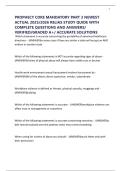
PROPHECY CORE MANDATORY PART 3 NEWEST
ACTUAL 2025/2026 RELIAS STUDY QUIDE WITH
COMPLETE QUESTIONS AND ANSWERS/
VERIFIED/GRADED A+/ ACCURATE SOLUTIONS
Which statement is accurate concerning the portability of advanced healthcare
directives - (ANSWER)In some cases if laws are similar a state will accept an AHD
written in another state
Which of the following statements is NOT accurate regarding signs of abuse -
(ANSWER)Victims of physical abuse will always have visible cuts or bruises
Hostile work environment sexual harassment involves harassment by -
(ANSWER)All of the above; direct supervisor, vendor, subordinate
Workplace violence is defined as threats, physical assaults, muggings and -
(ANSWER)bullying
Which of the following statements is accurate - (ANSWER)workplace violence can
affect trust in management or coworkers
Which of the following statements is accurate concerning restraints - (ANSWER)a
belt restraint placed over the patients chest may restrict breathing
When caring for victims of abuse you should - (ANSWER)touch them only with
their permission
, 2
The type of abuse that involves intimidating ridiculing or degrading someone is
called - (ANSWER)psychological abuse
When caring for terminally ill patients you should - (ANSWER)consider that larger
doses of analgesia may be needed because of disease progression
Healthcare professionals are required to report suspected cases of child and elder
abuse - (ANSWER)In all states
If you suspect child abuse which of the following is a correct action to take -
(ANSWER)Get permission from the state agency before letting a child leave with
the caregiver
Which of the following is true about opioid use - (ANSWER)patients may develop
a tolerance for opioids over time and may need higher dosages for pain relief
Gender harassment the most common type of sexual harassment involves -
(ANSWER)unwelcome obscene jokes
Advance healthcare directives commonly cover - (ANSWER)ALL of the Above:
when a person would or would not want life prolonged, decisions about organ
donation, who can make healthcare decisions when person unable to do so
PROPHECY CORE MANDATORY PART 3 NEWEST
ACTUAL 2025/2026 RELIAS STUDY QUIDE WITH
COMPLETE QUESTIONS AND ANSWERS/
VERIFIED/GRADED A+/ ACCURATE SOLUTIONS
Which statement is accurate concerning the portability of advanced healthcare
directives - (ANSWER)In some cases if laws are similar a state will accept an AHD
written in another state
Which of the following statements is NOT accurate regarding signs of abuse -
(ANSWER)Victims of physical abuse will always have visible cuts or bruises
Hostile work environment sexual harassment involves harassment by -
(ANSWER)All of the above; direct supervisor, vendor, subordinate
Workplace violence is defined as threats, physical assaults, muggings and -
(ANSWER)bullying
Which of the following statements is accurate - (ANSWER)workplace violence can
affect trust in management or coworkers
Which of the following statements is accurate concerning restraints - (ANSWER)a
belt restraint placed over the patients chest may restrict breathing
When caring for victims of abuse you should - (ANSWER)touch them only with
their permission
, 2
The type of abuse that involves intimidating ridiculing or degrading someone is
called - (ANSWER)psychological abuse
When caring for terminally ill patients you should - (ANSWER)consider that larger
doses of analgesia may be needed because of disease progression
Healthcare professionals are required to report suspected cases of child and elder
abuse - (ANSWER)In all states
If you suspect child abuse which of the following is a correct action to take -
(ANSWER)Get permission from the state agency before letting a child leave with
the caregiver
Which of the following is true about opioid use - (ANSWER)patients may develop
a tolerance for opioids over time and may need higher dosages for pain relief
Gender harassment the most common type of sexual harassment involves -
(ANSWER)unwelcome obscene jokes
Advance healthcare directives commonly cover - (ANSWER)ALL of the Above:
when a person would or would not want life prolonged, decisions about organ
donation, who can make healthcare decisions when person unable to do so