

Escrito por estudiantes que aprobaron Inmediatamente disponible después del pago Leer en línea o como PDF ¿Documento equivocado? Cámbialo gratis 4,6 TrustPilot
logo-home
Document preview thumbnail
Vista previa 2 fuera de 14 páginas
Examen

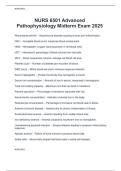
NURS 6501 Advanced Pathophysiology Midterm Exam 2025

Document preview thumbnail
Vista previa 2 fuera de 14 páginas

NURS 6501 Advanced Pathophysiology Midterm Exam 2025 Rheumatoid arthritis - -Autoimmune disorder causing chronic joint inflammation. CBC - -Complete blood count; measures blood components. HGB - -Hemoglobin; oxygen-carrying protein in red blood cells. HCT - -Hematocrit; percentage of blood volume from red cells. MCV - -Mean corpuscular volume; average red blood cell size. Platelet count - -Number of platelets per microliter of blood. WBC count - -White blood cell count; immune response indicator. Serum haptoglobin - -Protein that binds free hemoglobin in blood. Serum iron concentration - -Amount of iron in serum, measured in micrograms. Total iron binding capacity - -Maximum iron that can bind to transferrin. Percent saturation - -Percentage of transferrin saturated with iron. Serum ferritin concentration - -Indicator of stored iron in the body. Reticulocyte concentration - -Percentage of immature red blood cells in blood. Anemia of chronic disease - -Anemia due to chronic inflammation or illness. Acute blood loss anemia - -Anemia resulting from sudden blood loss. Iron deficiency anemia - -Anemia caused by insufficient iron for hemoglobin. Overwhelming bacterial infection - -Severe infection leading to systemic inflammatory response. Aplastic anemia - -Failure of bone marrow to produce blood cells. Sickle cells - -Abnormally shaped red blood cells in sickle cell disease. NURS 6501 NURS 6501 NURS 6501 Left ventricular hypertrophy - -Thickening of heart's left ventricle due to pressure. Aortic stenosis - -Narrowing of the aortic valve affecting blood flow. Aortic dissection - -Tear in the aorta's inner layer causing pain. Defibrillation - -Electrical shock to restore normal heart rhythm. Tachycardia - -Heart rate exceeding 100 beats per minute. AV Dissociation - -Lack of coordination between atrial and ventricular contractions. Wide Complex Tachycardia - -Tachycardia with QRS duration over 120 ms. Idiopathic Dilated Cardiomyopathy - -Heart muscle disease with unknown cause, leading to dilation. Ejection Fraction - -Percentage of blood pumped from the heart per beat. Bradycardia - -Heart rate below 60 beats per minute. Blocked Pathway at AV Node - -Interruption of electrical signals at the atrioventricular node. Aortic Stenosis - -Narrowing of the aortic valve, restricting blood flow. Acute Lymphoblastic Leukemia (ALL) - -Cancer of the blood affecting lymphoid cells. Hematocrit (Hct) - -Percentage of blood volume occupied by red blood cells. Microcytic Anemia - -Anemia characterized by small, hypochromic red blood cells. Peripheral Blood Smear - -Microscopic examination of blood to assess cell types. TdT Positive - -Terminal deoxynucleotidyl transferase positivity indicates lymphoid lineage. HgB - -Hemoglobin concentration in blood, indicating oxygen-carrying capacity. Platelet Count - -Number of platelets in a given volume of blood. Flow Cytometry - -Technique to analyze cell characteristics using fluorescent markers. Reticulocyte Count - -Measurement of young red blood cells in circulation. Hypochromic Cells - -Red blood cells with reduced hemoglobin content. NURS 6501 Maxillofacial Deformities - -Abnormalities in facial structure often due to anemia. Echocardiogram - -Ultrasound imaging to assess heart structure and function. Chest X-ray - -Radiographic imaging to visualize heart and lung conditions. Coronary Artery Disease - -Narrowing of coronary arteries due to plaque buildup. Syncopal Episode - -Temporary loss of consciousness due to decreased blood flow. Erythrocyte membrane fragility - -Increased susceptibility to rupture under stress. Hemoglobin F synthesis - -Reduced production of fetal hemoglobin in adults. Microcytic anemia - -Anemia characterized by smaller than normal red blood cells. Hypochromic anemia - -Anemia with reduced hemoglobin content in red blood cells. Gastrointestinal blood loss - -Loss of blood from the digestive tract. Prothrombin time (PT) - -Test measuring time for blood to clot. Partial thromboplastin time (PTT) - -Test assessing the intrinsic pathway of coagulation. Template bleeding time - -Test measuring time for bleeding to stop. Vitamin C deficiency - -Condition leading to scurvy and bleeding issues. Von Willebrand disease - -Genetic disorder affecting blood clotting ability. Platelet aggregation - -Clumping of platelets to form a blood clot. Iron deficiency anemia - -Anemia due to insufficient iron for hemoglobin. Acute myocardial infarction - -Heart attack caused by blocked blood flow. Ejection fraction - -Percentage of blood pumped out of the heart. Pulmonary edema - -Fluid accumulation in the lungs causing breathlessness. Increased hydrostatic pressure - -Elevated pressure in blood vessels causing fluid leakage. Tetralogy of Fallot - -Congenital heart defect with four anatomical abnormalities. NURS 6501 NURS 6501 NURS 6501 Pulmonary stenosis - -Narrowing of the outflow tract from the right ventricle. Chronic renal failure - -Gradual loss of kidney function over time. Macronodular cirrhosis - -Liver disease characterized by large nodules. Beta thalassemia - -Genetic disorder reducing hemoglobin production. Pernicious anemia - -Anemia due to vitamin B12 absorption issues. Fibrinogen level - -Measure of a protein essential for blood clotting. Degree of Pulmonary Stenosis - -Severity of narrowing in the pulmonary artery. Acute Shortness of Breath (SOB) - -Sudden difficulty in breathing, often requiring immediate care. Respiratory Alkalosis - -Condition caused by decreased carbon dioxide levels. Metabolic Alkalosis - -Increase in blood pH due to bicarbonate retention. Syndrome of Inappropriate Anti-diuretic Hormone (SIADH) - -Excessive release of ADH leading to water retention. Asthma Diagnosis Indicators - -Symptoms include wheezing and improved FEV1 after bronchodilator. Typical Tuberculosis Symptoms - -Common signs include weight loss and night sweats. Chest X-Ray - -Initial imaging test for respiratory symptoms evaluation. Restrictive Lung Disease - -Characterized by decreased lung expansion and compliance. Pulmonary Function Test (PFT) - -Measures lung volume, capacity, and flow rates. Oxygen Saturation - -Percentage of oxygen in the blood, normal is 95-100%. Vital Signs - -Key indicators of health: temperature, pulse, respiration, blood pressure. Arterial Blood Gas (ABG) - -Test measuring pH, oxygen, and carbon dioxide in blood. Hypoxemia - -Low oxygen levels in the blood, indicated by PaO2. Hypercapnia - -Elevated carbon dioxide levels in the blood. NURS 6501 NURS 6501 Chronic Obstructive Pulmonary Disease (COPD) - -Progressive lung disease causing breathing difficulties. Bronchodilator - -Medication that relaxes and opens airways in lungs. WBC Count - -Indicator of immune response, normal range is 4,000-11,000/mm3. Hemoptysis - -Coughing up blood, often associated with lung disease. Fever - -Elevated body temperature, often indicating infection. Cough with Purulent Sputum - -Cough producing thick, yellow or green mucus. Lung Compliance - -Measure of lung's ability to stretch and expand. Diastolic Congestive Heart Failure - -Heart's inability to fill properly during diastole. COPD - -Chronic obstructive pulmonary disease affecting airflow. Dyspnea - -Difficulty in breathing or shortness of breath. Chest Radiograph - -X-ray imaging of the chest area. Abscess Formation - -Localized collection of pus within lung tissue. Community Acquired Pneumonia - -Pneumonia acquired outside of healthcare settings. Hospital Acquired Pneumonia - -Pneumonia occurring 48 hours after hospital admission. Decreased Chest Wall Compliance - -Reduced ability of the chest wall to expand. Mean Corpuscular Volume - -Average volume of red blood cells in a sample. GOLD Guidelines - -Global initiative for chronic obstructive lung disease. Complete H&P - -Comprehensive history and physical examination. Chronic Respiratory Acidosis - -Increased CO2 retention leading to acid-base imbalance. Coarse Breath Sounds - -Rough lung sounds indicating airway obstruction. Flattened Diaphragm - -Diaphragm position indicating lung hyperinflation. Productive Cough - -Cough producing mucus or phlegm. NURS 6501 Vital Signs - -Basic indicators of health: temperature, pulse, BP. WBC Count - -White blood cell count indicating infection or inflammation. Ejection Fraction - -Percentage of blood pumped from the heart. Oxygen Saturation - -Percentage of hemoglobin bound with oxygen. Cholecystectomy - -Surgical removal of the gallbladder. Acute Respiratory Acidosis - -Rapid increase in CO2 causing respiratory failure. Antibiotic Therapy - -Use of drugs to treat bacterial infections. Watery Diarrhea - -Loose stools often associated with gastrointestinal infections. C-Diff - -Clostridium difficile infection causing severe diarrhea. Bacillus cereus - -A bacterium causing foodborne illness. C-diff - -Clostridium difficile, causing severe diarrhea. Restrictive lung disease - -Limits lung expansion, reducing airflow. Chvostek sign - -Facial twitching indicating hypocalcemia. Pneumocystic pneumonia - -Common AIDS-related lung infection. CD4+ count - -200 cells/mm³ indicates AIDS diagnosis. Benign tumor - -Well differentiated, slow-growing, encapsulated. Hypertrophied left ventricle - -Thickened heart wall due to hypertension. Non-classic Hodgkin's lymphoma - -Characterized by lymphohistiocytic cells. Aspirin effect - -Inhibits platelet aggregation during clotting. Pneumonia causative organisms - -Treponema pallidum does not cause pneumonia. Acute bronchitis diagnosis - -Based on clinical presentation, not lab tests. Systemic lupus erythematosus - -Proteinuria and hematuria indicate kidney involvement. NURS 6501 NURS 6501 Variceal bleeding - -Severe bleeding from esophageal varices. Microcytic anemia - -Characterized by low MCV, often iron deficiency. Normocytic anemia - -Normal MCV, often due to chronic disease. Macrocytic anemia - -High MCV, often due to vitamin B12 deficiency. DIC risk patients - -High risk includes post-surgical and postpartum. Myocardial infarction diagnostics - -Includes ECG and cardiac enzyme tests. Hypocalcemia signs - -Includes Chvostek and Trousseau signs. Hypertension causes - -Common cause of left ventricular hypertrophy. AIDS common infections - -Pneumocystis pneumonia occurs in 80% of cases. Unstable Angina - -No EKG changes present in patients. Systemic Lupus Erythematosus - -Autoimmune disease causing joint pain and fatigue. SLE Teaching Plan - -Wear sunscreen and hats to prevent sun exposure. Proteinuria - -Presence of protein in urine indicating kidney issues. Hematuria - -Presence of blood in urine indicating possible injury. Mediastinal Mass - -Abnormal growth in the mediastinum on chest X-ray. Dilated Cardiomyopathy - -All four heart chambers are enlarged and dilated. Hypertrophic Cardiomyopathy - -Heart muscle thickening affecting normal function. Atrial Fibrillation - -Rapid chaotic impulses cause ineffective atrial quivering. Risk Factors for Atrial Fibrillation - -Valvular heart disease and hypertension increase risk. Leukocyte Count - -Normal range is approximately 4,500 to 11,000 cells/mcL. Troponins - -Cardiac biomarkers indicating heart muscle damage. CPK (Creatine Phosphokinase) - -Enzyme indicating muscle damage, including heart. Chest Pain Symptoms - -Can indicate serious conditions like heart attack. NURS 6501 NURS 6501 Shortness of Breath - -Common symptom in various cardiovascular conditions. Systolic Murmur - -Heart sound indicating possible valve issues. Irregular Heart Rate - -Can indicate arrhythmias or other cardiac issues. LVH (Left Ventricular Hypertrophy) - -Thickening of the heart's left ventricle muscle. Splenomegaly - -Enlarged spleen, often due to infe

Vista previa del contenido

NURS 6501


NURS 6501 Advanced
Pathophysiology Midterm Exam 2025
Rheumatoid arthritis - -Autoimmune disorder causing chronic joint inflammation.

CBC - -Complete blood count; measures blood components.

HGB - -Hemoglobin; oxygen-carrying protein in red blood cells.

HCT - -Hematocrit; percentage of blood volume from red cells.

MCV - -Mean corpuscular volume; average red blood cell size.

Platelet count - -Number of platelets per microliter of blood.

WBC count - -White blood cell count; immune response indicator.

Serum haptoglobin - -Protein that binds free hemoglobin in blood.

Serum iron concentration - -Amount of iron in serum, measured in micrograms.

Total iron binding capacity - -Maximum iron that can bind to transferrin.

Percent saturation - -Percentage of transferrin saturated with iron.

Serum ferritin concentration - -Indicator of stored iron in the body.

Reticulocyte concentration - -Percentage of immature red blood cells in blood.

Anemia of chronic disease - -Anemia due to chronic inflammation or illness.

Acute blood loss anemia - -Anemia resulting from sudden blood loss.

Iron deficiency anemia - -Anemia caused by insufficient iron for hemoglobin.

Overwhelming bacterial infection - -Severe infection leading to systemic inflammatory
response.

Aplastic anemia - -Failure of bone marrow to produce blood cells.

Sickle cells - -Abnormally shaped red blood cells in sickle cell disease.


NURS 6501

, NURS 6501


Left ventricular hypertrophy - -Thickening of heart's left ventricle due to pressure.

Aortic stenosis - -Narrowing of the aortic valve affecting blood flow.

Aortic dissection - -Tear in the aorta's inner layer causing pain.

Defibrillation - -Electrical shock to restore normal heart rhythm.

Tachycardia - -Heart rate exceeding 100 beats per minute.

AV Dissociation - -Lack of coordination between atrial and ventricular contractions.

Wide Complex Tachycardia - -Tachycardia with QRS duration over 120 ms.

Idiopathic Dilated Cardiomyopathy - -Heart muscle disease with unknown cause,
leading to dilation.

Ejection Fraction - -Percentage of blood pumped from the heart per beat.

Bradycardia - -Heart rate below 60 beats per minute.

Blocked Pathway at AV Node - -Interruption of electrical signals at the atrioventricular
node.

Aortic Stenosis - -Narrowing of the aortic valve, restricting blood flow.

Acute Lymphoblastic Leukemia (ALL) - -Cancer of the blood affecting lymphoid cells.

Hematocrit (Hct) - -Percentage of blood volume occupied by red blood cells.

Microcytic Anemia - -Anemia characterized by small, hypochromic red blood cells.

Peripheral Blood Smear - -Microscopic examination of blood to assess cell types.

TdT Positive - -Terminal deoxynucleotidyl transferase positivity indicates lymphoid
lineage.

HgB - -Hemoglobin concentration in blood, indicating oxygen-carrying capacity.

Platelet Count - -Number of platelets in a given volume of blood.

Flow Cytometry - -Technique to analyze cell characteristics using fluorescent markers.

Reticulocyte Count - -Measurement of young red blood cells in circulation.

Hypochromic Cells - -Red blood cells with reduced hemoglobin content.

NURS 6501

Información del documento

Subido en
3 de septiembre de 2025
Número de páginas
14
Escrito en
2025/2026
Tipo
Examen
Contiene
Preguntas y respuestas
$20.49

¿Documento equivocado? Cámbialo gratis Dentro de los 14 días posteriores a la compra y antes de descargarlo, puedes elegir otro documento. Puedes gastar el importe de nuevo.
Escrito por estudiantes que aprobaron
Inmediatamente disponible después del pago
Leer en línea o como PDF

Seller avatar
Los indicadores de reputación están sujetos a la cantidad de artículos vendidos por una tarifa y las reseñas que ha recibido por esos documentos. Hay tres niveles: Bronce, Plata y Oro. Cuanto mayor reputación, más podrás confiar en la calidad del trabajo del vendedor.
AlexScorer
2.5
(2)
Vendido
11
Seguidores
0
Artículos
1800
Última venta
2 semanas hace


Por qué los estudiantes eligen Stuvia

Creado por compañeros estudiantes, verificado por reseñas

Calidad en la que puedes confiar: escrito por estudiantes que aprobaron y evaluado por otros que han usado estos resúmenes.

¿No estás satisfecho? Elige otro documento

¡No te preocupes! Puedes elegir directamente otro documento que se ajuste mejor a lo que buscas.

Paga como quieras, empieza a estudiar al instante

Sin suscripción, sin compromisos. Paga como estés acostumbrado con tarjeta de crédito y descarga tu documento PDF inmediatamente.

Student with book image

“Comprado, descargado y aprobado. Así de fácil puede ser.”

Alisha Student

Preguntas frecuentes