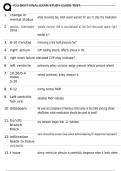
ICU BKAT FINAL EXAM STUDY GUIDE TEST.
1. change in
while receiving tpa, what would warrant for you to stop the medication
mental status
2. aortic stenosis systolic murmur that is ausculatated at the 2nd intercostal space, right
sternal
border is ?
3. 8-10 minutes removing a line hold pressure for?
4. right atrium CVP reading directly reflects presue in the
5. right heart failure elevated CVP may indicate?
6. left ventricle pulmonary artery occlusive wedge pressure reflects pressure where?
7. 10-20/0-4 normal pulmonary artery pressure is
mean
5-10
8. 6-12 mmhg normal PAOP
9. Left ventricle elevated PAOP indicates
fail- ure
10. diltizepam 68 year old complains of feeling a little funny in his chest and ecg shows
afib/flutter. what medication should be used to treat?
11. bundle qrs complex longer that .12 indicates
branch
block
care should be excercised when administering IV dopamine becuase?
12. infiltration
leads to tissue
necrosis
13. t wave strong ventricular stimulus is potentially dangerous when it lands where
1/
11
, ICU BKAT FINAL EXAM STUDY GUIDE TEST.
14. indication for use of external cardiac pacemaker includes
2/
11