Dysrhythmia-Hemodynamics Activity1
Name: __________________________________
H476 Dysrhythmia-Hemodynamics
Complete the following activity and bring a copy to class for discussion
Instructions: Circle or highlight the correct answer(s).
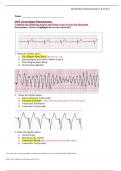
1. Name the rhythm above.
a. First Degree Heart Block (PR interval >.20)
b. Second degree heart block Mobitz Type II
c. Third Degree Heart Block
d. Normal Sinus Rhythm
2. Name the rhythm above.
a. Supraventricular Tachycardia
b. Torsades de Pointes (Big, Small, Big, Small pattern, check electrolytes)
c. Ventricular Fibrillation
d. Ventricular Tachycardia
3. Name the rhythm above.
a. Atrial Pacing
b. Idioventricular rhythm
c. Ventricular Pacing (pacer spike followed by wide QRS complex
d. Ventricular Tachycardia
This study source was downloaded by 1244232 from cliffsnotes.com on 08-06-2025 06:08:06 GMT -05:00
https://www.cliffsnotes.com//study-notes/2415235
, Dysrhythmia-Hemodynamics Activity2
4. Name the rhythm above.
a. First Degree Heart Block with Unifocal PVC’s
b. Normal Sinus Rhythm with PJC’s
c. Normal Sinus Rhythm with Multifocal PVC’s PVC’s are different looking
d. Sinus Bradycardia with PAC’s
5. Name the rhythm above.
a. First Degree Heart Block
b. Second Degree Heart Block Mobitz Type I (Wenckebach)
c. Second Degree Heart Block Mobitz Type II (More P waves then QRS & PR interval is normal
when followed by a QRS complex)
d. Third Degree Heart Block
6. What treatment should the nurse prepare for the above dysrhythmia in question 5?
a. Cardioversion
b. Lidocaine
c. Metoprolol (Lopressor)
d. Transcutaneous Pacing
This study source was downloaded by 1244232 from cliffsnotes.com on 08-06-2025 06:08:06 GMT -05:00
https://www.cliffsnotes.com//study-notes/2415235
Name: __________________________________
H476 Dysrhythmia-Hemodynamics
Complete the following activity and bring a copy to class for discussion
Instructions: Circle or highlight the correct answer(s).
1. Name the rhythm above.
a. First Degree Heart Block (PR interval >.20)
b. Second degree heart block Mobitz Type II
c. Third Degree Heart Block
d. Normal Sinus Rhythm
2. Name the rhythm above.
a. Supraventricular Tachycardia
b. Torsades de Pointes (Big, Small, Big, Small pattern, check electrolytes)
c. Ventricular Fibrillation
d. Ventricular Tachycardia
3. Name the rhythm above.
a. Atrial Pacing
b. Idioventricular rhythm
c. Ventricular Pacing (pacer spike followed by wide QRS complex
d. Ventricular Tachycardia
This study source was downloaded by 1244232 from cliffsnotes.com on 08-06-2025 06:08:06 GMT -05:00
https://www.cliffsnotes.com//study-notes/2415235
, Dysrhythmia-Hemodynamics Activity2
4. Name the rhythm above.
a. First Degree Heart Block with Unifocal PVC’s
b. Normal Sinus Rhythm with PJC’s
c. Normal Sinus Rhythm with Multifocal PVC’s PVC’s are different looking
d. Sinus Bradycardia with PAC’s
5. Name the rhythm above.
a. First Degree Heart Block
b. Second Degree Heart Block Mobitz Type I (Wenckebach)
c. Second Degree Heart Block Mobitz Type II (More P waves then QRS & PR interval is normal
when followed by a QRS complex)
d. Third Degree Heart Block
6. What treatment should the nurse prepare for the above dysrhythmia in question 5?
a. Cardioversion
b. Lidocaine
c. Metoprolol (Lopressor)
d. Transcutaneous Pacing
This study source was downloaded by 1244232 from cliffsnotes.com on 08-06-2025 06:08:06 GMT -05:00
https://www.cliffsnotes.com//study-notes/2415235