ENG1515/501/0/2020
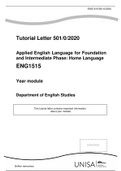
Tutorial Letter 501/0/2020
Applied English Language for Foundation
and Intermediate Phase: Home Language
ENG1515
Year module
Department of English Studies
This tutorial letter contains important information
about your module.
BARCODE
, Compilers
Trudie Westbrook
Eileen Donaldson
Editing
University of South Africa
Pretoria
© 2019 University of South Africa
All rights reserved
Printed and published by the University of
South Africa Muckleneuk, Pretoria
ENG1515/0/501
All rights reserved. No part of this Introduction and Scheme of Work may be reproduced in any form except with
the permission of the University of South Africa. Students who have enrolled for tuition may quote excerpts for
academic purposes.
2
, ENG1515/501/0/2020
CONTENTS
Page
1 PREFACE .................................................................................................................................... 8
2 OUTCOMES ................................................................................................................................. 9
2.1 Outcomes ..................................................................................................................................... 9
3 OVERVIEW OF THE COURSE .................................................................................................... 9
3.1 ENG1515: APPLIED ENGLISH LANGUAGE FOR FOUNDATION AND INTERMEDIATE PHASE
– HOME LANGUAGE ................................................................................................................... 9
3.2 Prescribed book(s) ...................................................................................................................... 10
3.3 Recommended book(s) ............................................................................................................... 10
4 UNIT 1: CHARACTERISTICS OF LANGUAGE ......................................................................... 11
4.1 INTRODUCTION ........................................................................................................................ 11
4.2 LANGUAGE: THE BIG PICTURE ............................................................................................... 12
4.3 LANGUAGE DEVELOPMENT .................................................................................................... 12
4.3.1 Important concepts ..................................................................................................................... 15
4.4 A BRIEF LOOK AT ENGLISH LANGUAGE ACQUISITION NAD LEARNING IN THE WORLD
AND SOUTH AFRICAN CONTEXTS ......................................................................................... 15
4.4.1 World English – history, geography, technology and power................................................. 15
4.4.2 English and the South African Context ................................................................................... 16
4.4.3 Purposeful use of language – varieties and appropriate forms and formats ....................... 18
4.4.4 Making critical language choices: conventions of field, register, format, style, tone,
coherence and cohesion .......................................................................................................... 21
4.4.5 Critical language choices: audience and purpose ................................................................. 24
4.4.6 Analysing language to gain critical literacy ............................................................................ 25
4.5 CONCLUSION............................................................................................................................ 27
4.6 REFERENCES ........................................................................................................................... 27
4.7 GLOSSARY................................................................................................................................ 28
4.8 SELF-ASSESSMENT ................................................................................................................. 28
5 UNIT 2: LANGUAGE ANALYSIS ............................................................................................... 30
5.1 INTRODUCTION ........................................................................................................................ 30
5.2 LANGUAGE STRUCTURES: SIGNS AND SYMBOLS – HOW SPEECH BECOMES WRITING30
5.3 TIME AND CULTURAL EFFECTS ON LANGUAGE .................................................................. 31
5.4 DEFINITIONS TO KNOW ........................................................................................................... 33
5.4.1 SPEECH AND SOUNDS: PHONOLOGY, PHONETICS AND PHONICS ................................... 35
5.4.2 Phonology ................................................................................................................................. 35
3
, 5.4.3 Phonetics .................................................................................................................................. 35
5.4.4 Phonics...................................................................................................................................... 38
5.4.5 Sound patterns: rhyme, alliteration, assonance, onomatopoeia and rhythm ....................... 39
5.4.6 Methods of teaching phonics................................................................................................... 39
5.5 STRUCTURAL NATURE OF WORDS – MORPHOLOGY AND MORPHEMES ......................... 40
5.5.1 Prefixes...................................................................................................................................... 40
5.5.2 Suffixes...................................................................................................................................... 41
5.6 PRAGMATICS ............................................................................................................................ 41
5.6.1 Syntax ........................................................................................................................................ 41
5.6.2 Lexical semantics – meaningful use of words in sentences ................................................. 43
5.6.3 Lexis for academic writing ....................................................................................................... 45
5.7 CONCLUSION............................................................................................................................ 46
5.8 REFERENCES ........................................................................................................................... 46
5.9 GLOSSARY................................................................................................................................ 46
5.10 SELF-ASSESSMENT ................................................................................................................. 46
6 UNIT 3: LISTENING SKILLS: PATTERNS AND LEVELS OF MEANING .................................. 48
6.1 INTRODUCTION ........................................................................................................................ 48
6.2 THE PURPOSE OF LISTENING ................................................................................................ 49
6.3 INFLUENCES ON THE PROCESS OF LISTENING ................................................................... 49
6.3.1 Discriminating sounds ............................................................................................................. 49
6.3.2 Recognising sounds, words and meaning.............................................................................. 51
6.3.3 Effects of culture....................................................................................................................... 51
6.3.4 Grammatical structures ............................................................................................................ 51
6.3.5 Context ...................................................................................................................................... 52
6.4 STRATEGIES AND MODES USED IN THE PROCESS OF LISTENING ................................... 52
6.5 CONTEXTS THAT INFLUENCE LISTENING AND MEANING ................................................... 53
6.5.1 Active Listening ........................................................................................................................ 53
6.5.2 Passive listening ....................................................................................................................... 54
6.6 LISTENING AND THE INFLUENCE OF SOUND ....................................................................... 55
6.6.1 Diction ....................................................................................................................................... 55
6.6.2 Pronunciation............................................................................................................................ 55
6.6.3 Syllabic stress, parts of speech and meaning ........................................................................ 56
6.6.4 Emphasis on words to indicate meaning ................................................................................ 56
6.6.5 Accents ...................................................................................................................................... 57
6.6.6 Sound that obscures meaning ................................................................................................. 57
4
Tutorial Letter 501/0/2020
Applied English Language for Foundation
and Intermediate Phase: Home Language
ENG1515
Year module
Department of English Studies
This tutorial letter contains important information
about your module.
BARCODE
, Compilers
Trudie Westbrook
Eileen Donaldson
Editing
University of South Africa
Pretoria
© 2019 University of South Africa
All rights reserved
Printed and published by the University of
South Africa Muckleneuk, Pretoria
ENG1515/0/501
All rights reserved. No part of this Introduction and Scheme of Work may be reproduced in any form except with
the permission of the University of South Africa. Students who have enrolled for tuition may quote excerpts for
academic purposes.
2
, ENG1515/501/0/2020
CONTENTS
Page
1 PREFACE .................................................................................................................................... 8
2 OUTCOMES ................................................................................................................................. 9
2.1 Outcomes ..................................................................................................................................... 9
3 OVERVIEW OF THE COURSE .................................................................................................... 9
3.1 ENG1515: APPLIED ENGLISH LANGUAGE FOR FOUNDATION AND INTERMEDIATE PHASE
– HOME LANGUAGE ................................................................................................................... 9
3.2 Prescribed book(s) ...................................................................................................................... 10
3.3 Recommended book(s) ............................................................................................................... 10
4 UNIT 1: CHARACTERISTICS OF LANGUAGE ......................................................................... 11
4.1 INTRODUCTION ........................................................................................................................ 11
4.2 LANGUAGE: THE BIG PICTURE ............................................................................................... 12
4.3 LANGUAGE DEVELOPMENT .................................................................................................... 12
4.3.1 Important concepts ..................................................................................................................... 15
4.4 A BRIEF LOOK AT ENGLISH LANGUAGE ACQUISITION NAD LEARNING IN THE WORLD
AND SOUTH AFRICAN CONTEXTS ......................................................................................... 15
4.4.1 World English – history, geography, technology and power................................................. 15
4.4.2 English and the South African Context ................................................................................... 16
4.4.3 Purposeful use of language – varieties and appropriate forms and formats ....................... 18
4.4.4 Making critical language choices: conventions of field, register, format, style, tone,
coherence and cohesion .......................................................................................................... 21
4.4.5 Critical language choices: audience and purpose ................................................................. 24
4.4.6 Analysing language to gain critical literacy ............................................................................ 25
4.5 CONCLUSION............................................................................................................................ 27
4.6 REFERENCES ........................................................................................................................... 27
4.7 GLOSSARY................................................................................................................................ 28
4.8 SELF-ASSESSMENT ................................................................................................................. 28
5 UNIT 2: LANGUAGE ANALYSIS ............................................................................................... 30
5.1 INTRODUCTION ........................................................................................................................ 30
5.2 LANGUAGE STRUCTURES: SIGNS AND SYMBOLS – HOW SPEECH BECOMES WRITING30
5.3 TIME AND CULTURAL EFFECTS ON LANGUAGE .................................................................. 31
5.4 DEFINITIONS TO KNOW ........................................................................................................... 33
5.4.1 SPEECH AND SOUNDS: PHONOLOGY, PHONETICS AND PHONICS ................................... 35
5.4.2 Phonology ................................................................................................................................. 35
3
, 5.4.3 Phonetics .................................................................................................................................. 35
5.4.4 Phonics...................................................................................................................................... 38
5.4.5 Sound patterns: rhyme, alliteration, assonance, onomatopoeia and rhythm ....................... 39
5.4.6 Methods of teaching phonics................................................................................................... 39
5.5 STRUCTURAL NATURE OF WORDS – MORPHOLOGY AND MORPHEMES ......................... 40
5.5.1 Prefixes...................................................................................................................................... 40
5.5.2 Suffixes...................................................................................................................................... 41
5.6 PRAGMATICS ............................................................................................................................ 41
5.6.1 Syntax ........................................................................................................................................ 41
5.6.2 Lexical semantics – meaningful use of words in sentences ................................................. 43
5.6.3 Lexis for academic writing ....................................................................................................... 45
5.7 CONCLUSION............................................................................................................................ 46
5.8 REFERENCES ........................................................................................................................... 46
5.9 GLOSSARY................................................................................................................................ 46
5.10 SELF-ASSESSMENT ................................................................................................................. 46
6 UNIT 3: LISTENING SKILLS: PATTERNS AND LEVELS OF MEANING .................................. 48
6.1 INTRODUCTION ........................................................................................................................ 48
6.2 THE PURPOSE OF LISTENING ................................................................................................ 49
6.3 INFLUENCES ON THE PROCESS OF LISTENING ................................................................... 49
6.3.1 Discriminating sounds ............................................................................................................. 49
6.3.2 Recognising sounds, words and meaning.............................................................................. 51
6.3.3 Effects of culture....................................................................................................................... 51
6.3.4 Grammatical structures ............................................................................................................ 51
6.3.5 Context ...................................................................................................................................... 52
6.4 STRATEGIES AND MODES USED IN THE PROCESS OF LISTENING ................................... 52
6.5 CONTEXTS THAT INFLUENCE LISTENING AND MEANING ................................................... 53
6.5.1 Active Listening ........................................................................................................................ 53
6.5.2 Passive listening ....................................................................................................................... 54
6.6 LISTENING AND THE INFLUENCE OF SOUND ....................................................................... 55
6.6.1 Diction ....................................................................................................................................... 55
6.6.2 Pronunciation............................................................................................................................ 55
6.6.3 Syllabic stress, parts of speech and meaning ........................................................................ 56
6.6.4 Emphasis on words to indicate meaning ................................................................................ 56
6.6.5 Accents ...................................................................................................................................... 57
6.6.6 Sound that obscures meaning ................................................................................................. 57
4