DNA CODE OF LIFE
There are two different types of nucleic acids namely DNA and RNA.
DNA stands for deoxyribonucleic acids and RNA stands for Ribonucleic acid.
The two nucleic acids are found in the nucleus where DNA makes up the
genes that are found in the chromosome and RNA is formed in the nucleus
but functions in the cytoplasm.
Structure of a Nucleotide
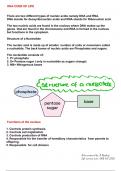
The nucleic acid is made up of smaller number of units or monomers called
a nucleotide. The back bones of nucleic acids are Phosphates and sugars.
The nucleotide consists of:
1. P= phosphate
2. S= Pentose sugar ( only in nucleotide as sugars change)
3. NB= Nitrogenous bases
Functions of the nucleus
1. Controls protein synthesis.
2. Controls cell metabolism
3. Controls production of RNA
4. Responsible for the transfer of hereditary characteristics from parents to
offspring.
5. Responsible for cell division
Notes prepared by: N Ngabaza
Life sciences tutor: 068 341 2728
, STRUCTURE OF DNA
Double stranded structure Double helix structure
DNA is double helix or double stranded.
It consists of four nitrogenous bases namely: Adenine, Cytosine, Guanine
and Thymine.
Adenine's complimentary base is Thymine (A=T) and Cytosine's
complimentary base is Guanine ( G=C)
The type of sugar found in DNA is called Deoxyribose sugar.
DNA molecule/ strands are joined together by a weak hydrogen bond.
The hydrogen bonds are weak so as to allow the DNA strands to seperate
during DNA replication.
So if the bond is strong it means DNA wont be able to replicate itself
Notes prepared by: N Ngabaza
Life sciences tutor: 068 341 2728
There are two different types of nucleic acids namely DNA and RNA.
DNA stands for deoxyribonucleic acids and RNA stands for Ribonucleic acid.
The two nucleic acids are found in the nucleus where DNA makes up the
genes that are found in the chromosome and RNA is formed in the nucleus
but functions in the cytoplasm.
Structure of a Nucleotide
The nucleic acid is made up of smaller number of units or monomers called
a nucleotide. The back bones of nucleic acids are Phosphates and sugars.
The nucleotide consists of:
1. P= phosphate
2. S= Pentose sugar ( only in nucleotide as sugars change)
3. NB= Nitrogenous bases
Functions of the nucleus
1. Controls protein synthesis.
2. Controls cell metabolism
3. Controls production of RNA
4. Responsible for the transfer of hereditary characteristics from parents to
offspring.
5. Responsible for cell division
Notes prepared by: N Ngabaza
Life sciences tutor: 068 341 2728
, STRUCTURE OF DNA
Double stranded structure Double helix structure
DNA is double helix or double stranded.
It consists of four nitrogenous bases namely: Adenine, Cytosine, Guanine
and Thymine.
Adenine's complimentary base is Thymine (A=T) and Cytosine's
complimentary base is Guanine ( G=C)
The type of sugar found in DNA is called Deoxyribose sugar.
DNA molecule/ strands are joined together by a weak hydrogen bond.
The hydrogen bonds are weak so as to allow the DNA strands to seperate
during DNA replication.
So if the bond is strong it means DNA wont be able to replicate itself
Notes prepared by: N Ngabaza
Life sciences tutor: 068 341 2728