
• ¿Documento equivocado? Cámbialo gratis
  • Escrito por estudiantes que aprobaron
  • Inmediatamente disponible después del pago
  • Leer en línea o como PDF
Vender
¿Dónde estudias?
Tu idioma
Document preview thumbnail
Vista previa 3 fuera de 17 páginas
Examen

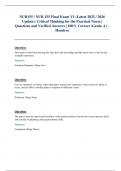
NUR155 / NUR 155 Final Exam V1 (Latest 2025 / 2026 Update): Critical Thinking for the Practical Nurse | Questions and Verified Answers | 100% Correct (Grade A) – Hondros

Document preview thumbnail
Vista previa 3 fuera de 17 páginas

NUR155 / NUR 155 Final Exam V1 (Latest 2025 / 2026 Update): Critical Thinking for the Practical Nurse | Questions and Verified Answers | 100% Correct (Grade A) – Hondros . Question: New grads in their first nursing job, they have the knowledge and the know how to, but not the in-depth experience Answer: Advanced beginner (Stage two) Question: Can see situations as wholes rather than parts, learns from experience what events are likely to occur, and are able to modify plans in response to different events. Answer: Proficient (Stage Four) Question: The nurses lack the speed and flexibility of the proficient nurse, but do have some mastery skills and can rely on planning and organizational skills. Answer: Competent (Stage Three) Question: Nurses that are able to recognize demands and predict what will happen in most if not all situations before they happen. Gained from having many years of experience in the nursing field. Answer: Expert (Stage Five) Question: The nursing student in the first year of clinical Answer: Education. Novice (Stage one) Question: Define S W I P E Answer: State your name, Wash hands, Identify PT (2 Identifiers), Provide Privacy, Explain what you are doing Question: Define B R N C O W Answer: Bed Rails Safe position/Needs Call light within reach Open door Wash hands Question: Is used to make clinical judgements. Based on research to develop or update policies and procedures in medical facilities Answer: Evidence Based Practice Question: Assessment Tool - An overall assessment tool of older adults Answer: SPICES Question: What is the definition of S In (S)PICES Answer: Sleep Disorders Question: What is the definition of P in S(P)ICES Answer: Problems with eating or feeding Question: What is the definition of I in SP(I)CES Answer: Incontinence Question: What is the definition of C in SPI(C)ES Answer: Confusion Question: What is the definition of E in SPIC(E)S Answer: Evidence of falls Question: What is the definition of S in SPICE(S) Answer: Skin Breakdown Question: What does OPQRSTUV stand for? Answer: Onset Provoking, Quality, Region, Severity, Timing Understanding Value Question: Nurse Practice Act (NPA) Answer: Defines nursing practice and sets standards for nurses Question: Epworth Sleepiness Scale Answer: Determines how likely PT will Fall asleep in a given scenario, 0-3 scale. Score of 9or is high index for sleep. Question: There are four sequential clinical reasoning processes that Tanner's model identified: Answer: Noticing. What do you notice that is relevant? Interpreting. What does the clinical data that you noticed mean? Responding. How will you respond based on your interpretation of relevant clinical data? Reflecting. What is your evaluation of how the patient responded? Was it expected or not? Question: Nursing incident report Answer: A nursing incident report is a kind of report that is filled out by nurses or anyone in the health care or medical field. Question: HIPAA Answer: Health Insurance Portability and Accountability Act Question: What does HIPAA protect? Answer: designed to protect privacy and to regulate the behavior of medical personnel who have access to medical information or witness medical procedures Question: What is the first step in the nursing process Answer: Assessment: collectives subjective (interview) & objective information relating to clients current situation - qualitative vs quantitative measurements - making patterns and cues to figure out what the issue is Question: NAPNES Answer: National Association for Practical Nurse Education and Service Question: NALPN Answer: National Association of Licensed Practical Nurses Question: clinical judgement Answer: an interpretation or conclusion about a patient's needs, concerns, or health problems, and/or the decision to take action (or not), use or modify standard approaches, or improvise new ones as deemed appropriate by the patient's response Question: clinical reasoning Answer: a specific term usually referring to ways of thinking about patient care issues (determining, preventing, and managing patient problems); for reasoning about other clinical issues (e.g., teamwork, collaboration, and streamlining work flow); nurses usually use critical thinking Question: Define the term "Noticing" in the Tanners model of clinical judgement Answer: What do you notice about the patient that could be relevant to their care? Question: Caputi clinical judgement framework Answer: Getting the information Making meaning of the information Determine actions to take Taking action Evaluating outcomes and your thinking Question: What are all of the steps in the first step of "Getting the information" Answer: Determining important information to collect Scanning the environment Identifying signs and symptoms Assessing systematically and comprehensively Ensuring accurate information Question: Define "Determining important information to collect" Answer: Collecting data that will affect the plan of initial care of the patient Question: Define "Scanning the Environment" Answer: To quickly look over a location (Immediate surroundings) Question: Define "Identifying Signs and symptoms" Answer: Represent subjective and objective data collected in a situation. Signs-Objective Symptoms-Subjective Question: Define: Assessing Systematically and Comprehensively Answer: Making sure all information about a patient is gathered, so the nurse can plan necessary care for the patient. The ability to look beyond the obvious. Question: Define "Ensuring accurate information" Answer: Ensuring all collect data is accurate. Ensure that all equipment is working properly, if blood was collected make sure it was done in the correct way to ensure accurate results. (O) Onset When did the pain start (P) Palliation/Provocation What makes the pain Better/Worse (Q) Quality what does the symptom fee like? (R) Region Question: Where is the pain? Does it radiate or move? Answer: (S) Severity Rate pain on a scale 0-10 (T) Timing How long does the pain last? Is the pain constant or intermittent? (U) Understanding Question: What do you believe is causing the pain? Answer: How is the pain impacting you and your family? (V) Value What is an acceptable level for your pain? Any other symptoms related to the pain? Question: Define Critical thinking in your own words. Answer: The ability to evaluate information Question: just culture Answer: refers to an organization's commitment to accountability and a focus supporting universal safety in health care Question: NALPN Answer: National Association of licensed practical nursing Question: Nursing Process Answer: Assessment Diagnosis Planning Implementation Evaluation Question: Cultural and personal bias Answer: Having bias against a certain race, religion, socioeconomic status Question: Skin risk assessment Answer: data from thorough skin assessment on admission; evaluation of risk factors for skin breakdown; diagrams showing areas of redness, breaks in the skin, or pressure ulcers Question: Fall Risk Assessment Answer: Information regarding the patient's potential fall risk; particularly used for frail, elderly, or patients with neuromuscular impairments Question: ISBAR Answer: Identify Situation Background Assessment Recommendation Question: Match Tanner clinical judgement steps to Caputi Answer: 1)Noticing 2)Interpreting 3)No step in the tanner model to go along with this step in Caputi method 4)Responding 5)Reflecting 1)Getting the information 2)Making meaning of the information 3)Determining actions to take 4)Taking action 5)Evaluating outcomes and your thinking Question: Match Caputi Clinical judgement with NCSBS clinical judgement model Answer: 1)Getting the information 2)Making meaning of the information 3)Determining actions to take 4)Determining actions to take 5)Taking action 6)Evaluating outcomes and your thinking 1)Recognize cues 2)analyze cues 3)Prioritize hypothesis 4)generate solutions 5)take actions 6)Evaluate outcomes Question: What are the 9 Caputi steps in "making meaning of the information" Answer: Clustering related information Identifying assumptions recognizing inconsistencies Distinguishing relevant from irrelevant information Judging how much ambiguity is acceptable Comparing and contrasting Predicting potential complications Collaborating with healthcare team members Determining patient care needs/healthcare environment issues Question: What are the 3 caputi steps in "Determining actions to take" Answer: Selecting interventions Managing potential complications Setting priorities Question: What are the 4 caputi steps in "Taking action" Answer: Determining how to implement planned interventions Delegating Communicating Teaching others Question: What are the 2 caputi steps in "Evaluating outcomes and your thinking" Answer: Evaluating data Evaluating and correcting thinking

Vista previa del contenido

NUR155 / NUR 155 Final Exam V1 (Latest
Update): Critical Thinking for the Practical Nurse |
Questions and Verified Answers | 100% Correct (Grade A) –
Hondros
.

Question:
New grads in their first nursing job, they have the knowledge and the know how to, but not the
in-depth experience

Answer:
Advanced beginner (Stage two)


Question:
Can see situations as wholes rather than parts, learns from experience what events are likely to
occur, and are able to modify plans in response to different events.

Answer:
Proficient (Stage Four)


Question:
The nurses lack the speed and flexibility of the proficient nurse, but do have some mastery skills
and can rely on planning and organizational skills.

Answer:
Competent (Stage Three)

,Question:
Nurses that are able to recognize demands and predict what will happen in most if not all
situations before they happen. Gained from having many years of experience in the nursing field.

Answer:
Expert (Stage Five)


Question:
The nursing student in the first year of clinical

Answer:
Education.
Novice (Stage one)


Question:
Define S W I P E

Answer:
State your name, Wash hands, Identify PT (2 Identifiers), Provide Privacy, Explain what you are
doing


Question:
Define B R N C O W

Answer:
Bed

, Rails Safe position/Needs


Call light within reach


Open door


Wash hands


Question:
Is used to make clinical judgements. Based on research to develop or update policies and
procedures in medical facilities

Answer:
Evidence Based Practice


Question:
Assessment Tool - An overall assessment tool of older adults

Answer:
SPICES


Question:
What is the definition of S In (S)PICES

Información del documento

Subido en
21 de junio de 2025
Número de páginas
17
Escrito en
2024/2025
Tipo
Examen
Contiene
Preguntas y respuestas
$11.49

¿Documento equivocado? Cámbialo gratis Dentro de los 14 días posteriores a la compra y antes de descargarlo, puedes elegir otro documento. Puedes gastar el importe de nuevo.
Escrito por estudiantes que aprobaron
Inmediatamente disponible después del pago
Leer en línea o como PDF

Seller avatar
Los indicadores de reputación están sujetos a la cantidad de artículos vendidos por una tarifa y las reseñas que ha recibido por esos documentos. Hay tres niveles: Bronce, Plata y Oro. Cuanto mayor reputación, más podrás confiar en la calidad del trabajo del vendedor.
ScholarVaultPRO
4.0
(705)
Vendido
3622
Seguidores
2870
Artículos
9449
Última venta
4 días hace


Por qué los estudiantes eligen Stuvia

Creado por compañeros estudiantes, verificado por reseñas

Calidad en la que puedes confiar: escrito por estudiantes que aprobaron y evaluado por otros que han usado estos resúmenes.

¿No estás satisfecho? Elige otro documento

¡No te preocupes! Puedes elegir directamente otro documento que se ajuste mejor a lo que buscas.

Paga como quieras, empieza a estudiar al instante

Sin suscripción, sin compromisos. Paga como estés acostumbrado con tarjeta de crédito y descarga tu documento PDF inmediatamente.

Student with book image

“Comprado, descargado y aprobado. Así de fácil puede ser.”

Alisha Student

Preguntas frecuentes