

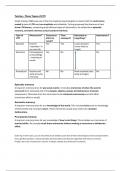
Tulving – Three Types of LTM
Endel Tulving (1985) was one of the first cognitive psychologists to realise that the multi-store
model’s view of LTM was too simplistic and inflexible. Tulving proposed that there are in fact
three LTM stores, containing quite different types of information. He called them episodic
memory, semantic memory and procedural memory.
Type of Memory for? Conscious Time Resistant to Interwoven?
LTM effort to stamped? forgetting?
recall?
Episodic Events/ Yes Yes Least resistant Yes
“episodes” in (more likely to
our own life forget)
Semantic Factual/gener Yes No No
al knowledge
– meaning of
words
Procedural Actions and No No Most resistant (less No
skills (muscle likely to forget)
memory)
Episodic memory
A long term memory store for personal events. It includes memories of when the events
occurred (time stamped) and of the people, objects, places and behaviours involved
(interwoven). Memories from this store have to be retrieved consciously and with effort
(conscious effort to recall).
Semantic memory
A long term memory store for our knowledge of the world. This includes facts and our knowledge
of what words and concepts mean. These memories usually also need to be recalled
deliberately.
Procedural memory
A long term memory store for our knowledge of how to do things. This includes our memories of
learned skills. We usually recall these memories without making a conscious or deliberate
effort.
Exam tip: In the exam, you are very likely to be asked to pick two of these stores/types and to compare them.
If you get this question, choose episodic and procedural as they are opposites and easy to contrast.
Finally, don’t use ‘memory for’ column. Instead, choose any of the last 4 columns.
Endel Tulving (1985) was one of the first cognitive psychologists to realise that the multi-store
model’s view of LTM was too simplistic and inflexible. Tulving proposed that there are in fact
three LTM stores, containing quite different types of information. He called them episodic
memory, semantic memory and procedural memory.
Type of Memory for? Conscious Time Resistant to Interwoven?
LTM effort to stamped? forgetting?
recall?
Episodic Events/ Yes Yes Least resistant Yes
“episodes” in (more likely to
our own life forget)
Semantic Factual/gener Yes No No
al knowledge
– meaning of
words
Procedural Actions and No No Most resistant (less No
skills (muscle likely to forget)
memory)
Episodic memory
A long term memory store for personal events. It includes memories of when the events
occurred (time stamped) and of the people, objects, places and behaviours involved
(interwoven). Memories from this store have to be retrieved consciously and with effort
(conscious effort to recall).
Semantic memory
A long term memory store for our knowledge of the world. This includes facts and our knowledge
of what words and concepts mean. These memories usually also need to be recalled
deliberately.
Procedural memory
A long term memory store for our knowledge of how to do things. This includes our memories of
learned skills. We usually recall these memories without making a conscious or deliberate
effort.
Exam tip: In the exam, you are very likely to be asked to pick two of these stores/types and to compare them.
If you get this question, choose episodic and procedural as they are opposites and easy to contrast.
Finally, don’t use ‘memory for’ column. Instead, choose any of the last 4 columns.

