Work Study
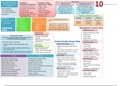
Advantages of efficient Operations Customer / Client
and effective operations management objectives Expectations / Needs Method Study Work Measurement
management The development and Determining how long it
•Do things right first time •Higher quality
application of easier and takes a trained and qualified
•Cost reduction •Do things cost effectively •Lower cost
more effective methods to worker to perform a specific
•Increased revenue •Do things fast •Shorter lead time perform tasks and in so task at a fixed level of
•Less capital investment •Change things quickly •Greater adaptability doing reduce costs performance
•Innovation •Do things right every time •Lower variability
•Do things better •Better service Components of Products / Services
Concept Package Process
Material Resources Characteristics
Transformation
Input
Output
Four V’s of operation processes
Customer / Client Required •Volume of output Combination Necessary to
Expected
•Human •Variety of output / Bundle of create
Information Benefits
Resources High volume = Low variety, low services package
•Variation of
•Equipment / output variation, low visibility, low cost
Facilities •Visibility of Low volume = high variety, high
•Technology output variation, high visibility, high cost
Project Processes
Breakthrough •Highly individual & unique
Improvement •Large scale
Planning and Control: •Low volume
•Dramatic, large-scale
activities to reconcile supply and demand in terms
of VOLUME, TIMING and QUALITY changes •High variety
•BPR: Business Process Re- •Example: construction
To reconcile volume and timing: engineering Jobbing Processes
• Loading of tasks: volume allocated to work Professional Services
Continuous •Small scale
centre Improvement •High client contact (often one-to- •Low volume
• Sequencing of tasks: sequence in which tasks •Kaizen Improvement one) •Example: Goldsmith
must be performed •Low volume (one person at a time)
•Small, incremental changes Batch Processes
• Schedule of tasks: roster of start time / end time •PDCA: plan, do, check, act •High variety (each client unique)
•Example: doctor •Limited range of products
Service Shop •Production done in batches
Products Services
•Example: appliances
•Produced by manufacturer •Produced by service provider •Fair amount of client contact Mass Processes
•Physically tangible / durable •Intangible / perishable •Higher volume than professional
services •High volume
•Output kept in stock •Output not kept in stock
•Lower variety than professional •Low variety
•Little customer contact •Plenty of client contact service (somewhat standardised) •Some variety, but repetitive
•Manufactured before use •Provision and consumption simultaneous •Example: bank / hotel process
•Long response time •Short response time Mass Services •Example: car manufacturer
•Local and international markets •Mainly local markets Continous Processes
•Large production facilities •Small service-provision facility •Limited client contact
•Capital-intensive production •Labour intensive •High volume – equipment oriented •Huge volume
•Quality easily measurable •Quality difficult to measure •Variety low – service standardised •Little variety
•Example: airways •Example: wheat mill
, Types of Performance Capacity Planning & Control
Operations Design Standards Obtain Quantitative Data on the expected demand
•Historical performance standards and Required Capacity to satisfy the expected
•Target performance standards demand by:
Product Design Process Design •Competitors’ performance standards • Determine total demand and required capacity;
•Absolute performance standards • Identify alternative capacity plans
Generation of concept • Level-Capacity Plan: constant capacity
Supply Network Design
/ idea levels, ignore demand fluctuations
Breakthrough • Chase-demand Plan: capacity levels
Manufacturing / Improvement
Screening Process adjusted to meet demand
Service Layout •Dramatic, large-scale changes • Demand-management Plan: demand
•BPR: Business Process Re- adjusted to suit available capacity
Preliminary Design Fixed-position
(product cannot move – engineering • Choose the most suitable approach to capacity
Evaluation & building) planning and control
Improvement Continuous Improvement
Process Techniques used during capacity planning and
Prototype & Final (grouped by operation •Kaizen Improvement
together – wooden control
Design •Small, incremental changes
furniture) • Moving-average demand-forecasting technique
•PDCA: plan, do, check, act • Cumulative representations technique
The operations Product
manager must: (production line car)
• Foresee how
Cellular / hybrid TQM: Total Quality Management
technology can
(apartment store) • A management philosophy; Systems
improve a process
• Aimed at customer need satisfaction;
• Decide which Process Technology •Integration of TQM in overall
• By means of high-quality products / business strategy
technology to use Application
services;
• Integrate the new Job Design & Work • It shifts the responsibility for quality Commitment
technology with Organisation from the operations management to •Top management’s and
existing operation
the entire business employee’s support and
activities involvement
Types of Failures
• Continually monitor
the performance of •Design failures Teams
Quality Planning & Control Steps:
technology •Facility failures •Teamwork in the
• Define quality characteristics of product / service
• Upgrade / replace •Staff failures • Functionality (performance ability) improvement initiatives
the technology •Supplier failures • Appearance (aesthetic attractiveness)
when necessary •Customer / client failures Communication
• Reliability (continuous performance capability)
•Feedback on quality successes
• Durability (total life expectancy)
achieved
• Serviceability (reparability)
Where in the operations process should quality be checked? • Contact (convenience of interaction) Culture
• Beginning of process – preventive control • Measure quality characteristics of product / service •Creation of quality awareness
• During the process – in-time control • Set standards for each quality characteristic
• After the process – reactive control • Control quality against the set standards Techniques / methods
Should each individual product be checked? • Identify and rectify causes of poor quality •Training of employees on
How should the inspection be conducted? • Improve quality continuously quality techniques / methods
Advantages of efficient Operations Customer / Client
and effective operations management objectives Expectations / Needs Method Study Work Measurement
management The development and Determining how long it
•Do things right first time •Higher quality
application of easier and takes a trained and qualified
•Cost reduction •Do things cost effectively •Lower cost
more effective methods to worker to perform a specific
•Increased revenue •Do things fast •Shorter lead time perform tasks and in so task at a fixed level of
•Less capital investment •Change things quickly •Greater adaptability doing reduce costs performance
•Innovation •Do things right every time •Lower variability
•Do things better •Better service Components of Products / Services
Concept Package Process
Material Resources Characteristics
Transformation
Input
Output
Four V’s of operation processes
Customer / Client Required •Volume of output Combination Necessary to
Expected
•Human •Variety of output / Bundle of create
Information Benefits
Resources High volume = Low variety, low services package
•Variation of
•Equipment / output variation, low visibility, low cost
Facilities •Visibility of Low volume = high variety, high
•Technology output variation, high visibility, high cost
Project Processes
Breakthrough •Highly individual & unique
Improvement •Large scale
Planning and Control: •Low volume
•Dramatic, large-scale
activities to reconcile supply and demand in terms
of VOLUME, TIMING and QUALITY changes •High variety
•BPR: Business Process Re- •Example: construction
To reconcile volume and timing: engineering Jobbing Processes
• Loading of tasks: volume allocated to work Professional Services
Continuous •Small scale
centre Improvement •High client contact (often one-to- •Low volume
• Sequencing of tasks: sequence in which tasks •Kaizen Improvement one) •Example: Goldsmith
must be performed •Low volume (one person at a time)
•Small, incremental changes Batch Processes
• Schedule of tasks: roster of start time / end time •PDCA: plan, do, check, act •High variety (each client unique)
•Example: doctor •Limited range of products
Service Shop •Production done in batches
Products Services
•Example: appliances
•Produced by manufacturer •Produced by service provider •Fair amount of client contact Mass Processes
•Physically tangible / durable •Intangible / perishable •Higher volume than professional
services •High volume
•Output kept in stock •Output not kept in stock
•Lower variety than professional •Low variety
•Little customer contact •Plenty of client contact service (somewhat standardised) •Some variety, but repetitive
•Manufactured before use •Provision and consumption simultaneous •Example: bank / hotel process
•Long response time •Short response time Mass Services •Example: car manufacturer
•Local and international markets •Mainly local markets Continous Processes
•Large production facilities •Small service-provision facility •Limited client contact
•Capital-intensive production •Labour intensive •High volume – equipment oriented •Huge volume
•Quality easily measurable •Quality difficult to measure •Variety low – service standardised •Little variety
•Example: airways •Example: wheat mill
, Types of Performance Capacity Planning & Control
Operations Design Standards Obtain Quantitative Data on the expected demand
•Historical performance standards and Required Capacity to satisfy the expected
•Target performance standards demand by:
Product Design Process Design •Competitors’ performance standards • Determine total demand and required capacity;
•Absolute performance standards • Identify alternative capacity plans
Generation of concept • Level-Capacity Plan: constant capacity
Supply Network Design
/ idea levels, ignore demand fluctuations
Breakthrough • Chase-demand Plan: capacity levels
Manufacturing / Improvement
Screening Process adjusted to meet demand
Service Layout •Dramatic, large-scale changes • Demand-management Plan: demand
•BPR: Business Process Re- adjusted to suit available capacity
Preliminary Design Fixed-position
(product cannot move – engineering • Choose the most suitable approach to capacity
Evaluation & building) planning and control
Improvement Continuous Improvement
Process Techniques used during capacity planning and
Prototype & Final (grouped by operation •Kaizen Improvement
together – wooden control
Design •Small, incremental changes
furniture) • Moving-average demand-forecasting technique
•PDCA: plan, do, check, act • Cumulative representations technique
The operations Product
manager must: (production line car)
• Foresee how
Cellular / hybrid TQM: Total Quality Management
technology can
(apartment store) • A management philosophy; Systems
improve a process
• Aimed at customer need satisfaction;
• Decide which Process Technology •Integration of TQM in overall
• By means of high-quality products / business strategy
technology to use Application
services;
• Integrate the new Job Design & Work • It shifts the responsibility for quality Commitment
technology with Organisation from the operations management to •Top management’s and
existing operation
the entire business employee’s support and
activities involvement
Types of Failures
• Continually monitor
the performance of •Design failures Teams
Quality Planning & Control Steps:
technology •Facility failures •Teamwork in the
• Define quality characteristics of product / service
• Upgrade / replace •Staff failures • Functionality (performance ability) improvement initiatives
the technology •Supplier failures • Appearance (aesthetic attractiveness)
when necessary •Customer / client failures Communication
• Reliability (continuous performance capability)
•Feedback on quality successes
• Durability (total life expectancy)
achieved
• Serviceability (reparability)
Where in the operations process should quality be checked? • Contact (convenience of interaction) Culture
• Beginning of process – preventive control • Measure quality characteristics of product / service •Creation of quality awareness
• During the process – in-time control • Set standards for each quality characteristic
• After the process – reactive control • Control quality against the set standards Techniques / methods
Should each individual product be checked? • Identify and rectify causes of poor quality •Training of employees on
How should the inspection be conducted? • Improve quality continuously quality techniques / methods