

1
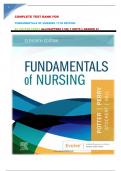
COMPLETE TEST BANK FOR
FUNDAMENTALS OF NURSING 11TH EDITION
BY POTTER PERRY ALLCHAPTERS 1-50|| 7 UNITS || GRADED A+
,2
table of contents
chapter 01: nursing today ......................................................................................................................... 4
chapter 02: health care delivery system ................................................................................................. 16
chapter 03: community-based nursing practice ..................................................................................... 28
chapter 04: theoretical foundations of nursing practice ........................................................................ 40
chapter 05: evidence-based practice ...................................................................................................... 51
chapter 06: health and wellness ............................................................................................................. 63
chapter 07: caring in nursing practice .................................................................................................... 75
chapter 08: caring for patients with chronic illness................................................................................ 85
chapter 09: cultural competence............................................................................................................ 95
chapter 10: family dynamics ................................................................................................................. 108
chapter 11: developmental theories .................................................................................................... 118
chapter 12: conception through adolescence ...................................................................................... 129
chapter 13: young and middle adults ................................................................................................... 144
chapter 14: older adults ........................................................................................................................ 156
chapter 15: critical thinking and clinical judgment ............................................................................... 171
chapter 16: nursing assessment ........................................................................................................... 182
chapter 17: analysis and nursing diagnosis........................................................................................... 194
chapter 18: planning and outcomes identification in nursing care ...................................................... 205
chapter 19: implementing nursing care ................................................................................................ 218
chapter 20: evaluation .......................................................................................................................... 231
chapter 21: managing patient care ....................................................................................................... 243
chapter 22: ethics and values ............................................................................................................... 255
chapter 23: legal implications in nursing practice ................................................................................ 266
chapter 24: communication .................................................................................................................. 279
chapter 25: patient education .............................................................................................................. 295
chapter 26: informatics and documentation ........................................................................................ 313
chapter 27: patient safety and quality .................................................................................................. 331
chapter 28: infection prevention and control....................................................................................... 355
chapter 29: vital signs ........................................................................................................................... 381
chapter 30: health assessment and physical examination ................................................................... 408
chapter 31: medication administration ................................................................................................ 432
,3
chapter 32: complementary, alternative, and integrative therapies ................................................... 458
chapter 33: self-concept ....................................................................................................................... 471
chapter 34: sexuality ............................................................................................................................. 483
chapter 35: spiritual health ................................................................................................................... 496
chapter 36: loss and grief...................................................................................................................... 508
chapter 37: stress and coping ............................................................................................................... 520
chapter 38: activity and exercise .......................................................................................................... 532
chapter 39: immobility.......................................................................................................................... 551
chapter 40: hygiene .............................................................................................................................. 576
chapter 41: oxygenation ....................................................................................................................... 603
chapter 42: fluid, electrolyte, acid-base balance .................................................................................. 632
chapter 43: sleep................................................................................................................................... 657
chapter 44: pain management.............................................................................................................. 675
chapter 45: nutrition ............................................................................................................................. 696
chapter 46: urinary elimination ............................................................................................................ 719
chapter 47: bowel elimination .............................................................................................................. 743
chapter 48: skin integrity and wound care ........................................................................................... 764
chapter 49: sensory alterations ............................................................................................................ 793
chapter 50: perioperative nursing care ................................................................................................ 809
,4
Unit 1. Nursing and the health care environment
Chapter 01: nursing today
Potter: fundamentals of nursing, 11th edition
Multiple choice
1. Which nurse most likely kept records on sanitation techniques and the effects on health?
A. Florence nightingale
B. Mary nutting
C. Clara barton
D. Lillian wald
Ans:> a
Nightingale was the first practicing nurse epidemiologist. Her statistical analyses connected poor
sanitation with cholera and dysentery. Mary nutting, clara barton, and lillian wald came after
nightingale, each contributing to the nursing profession in her own way. Mary nutting was instrumental
in moving nursing education into universities. Clara barton founded the american red cross. Lillian wald
helped open the henry street settlement.
Dif:understand (comprehension)
Obj:discuss the influence of social, historical, political, and economic changes on nursing practices.
Top: evaluation msc: health promotion and maintenance
2. The nurse prescribes strategies and alternatives to attain expected outcome. Which standard of
nursing practice is the nurse following?
A. Assessment
B. Diagnosis
C. Planning
D. Implementation
Ans:> c
In planning, the registered nurse develops a plan that prescribes strategies and alternatives to attain
expected outcomes. During assessment, the registered nurse collects comprehensive data pertinent to
the patient’s health and/or the situation. In diagnosis, the registered nurse analyzes the assessment
,5
data to determine the diagnoses or issues. During implementation, the registered nurse implements
(carries out) the identified plan.
Dif:understand (comprehension)
Obj:discuss the development of professional nursing roles. Top: planning msc: management of care
3. An experienced medical-surgical nurse chooses to work in obstetrics. Which level of proficiency
is the nurse upon initial transition to the obstetrical floor?
A. Novice
B. Proficient
C. Competent
D. Advanced beginner
Ans:> a
A beginning nursing student or any nurse entering a situation in which there is no previous level of
experience (e.g., an experienced operating room nurse chooses to now practice in home health) is an
example of a novice nurse. A proficient nurse perceives a patient’s clinical situation as a whole, is able to
assess an entire situation, and can readily transfer knowledge gained from multiple previous
experiences to a situation. A competent nurse understands the organization and specific care required
by the type of patients (e.g., surgical, oncology, or orthopedic patients). This nurse is a competent
practitioner who is able to anticipate nursing care and establish long-range goals. A nurse who has had
some level of experience with the situation is an advanced beginner. This experience may only be
observational in nature, but the nurse is able to identify meaningful aspects or principles of nursing care.
Dif:apply (application)
Obj:discuss the development of professional nursing roles. Top: evaluation msc: management of
care
4. A nurse assesses a patient’s fluid status and decides that the patient needs to drink more fluids.
The nurse then encourages the patient to drink more fluids. Which concept is the nurse demonstrating?
A. Licensure
B. Autonomy
C. Certification
D. Accountability
, 6
Ans:> b
Autonomy is an essential element of professional nursing that involves the initiation of independent
nursing interventions without medical orders. To obtain licensure in the united states, the rn candidate
must pass the nclex-rn . Beyond the nclex-rn , the nurse may choose to work toward certification in a
specific area of nursing practice. Accountability means that you are responsible, professionally and
legally, for the type and quality of nursing care provided.
Dif:apply (application)
Obj:discuss the roles and career opportunities for nurses. Top: implementation msc: management
of care
5. A nurse prepares the budget and policies for an intensive care unit. Which role is the nurse
implementing?
A. Educator
B. Manager
C. Advocate
D. Caregiver
Ans:> b
A manager coordinates the activities of members of the nursing staff in delivering nursing care and has
personnel, policy, and budgetary responsibility for a specific nursing unit or facility. As an educator, you
explain concepts and facts about health, describe the reason for routine care activities, demonstrate
procedures such as self-care activities, reinforce learning or patient behavior, and evaluate the patient’s
progress in learning. As a patient advocate, you protect your patient’s human and legal rights and
provide assistance in asserting these rights if the need arises. As a caregiver, you help patients maintain
and regain health, manage disease and symptoms, and attain a maximal level function and
independence through the healing process.
Dif:apply (application)
Obj:discuss the roles and career opportunities for nurses. Top: implementation msc: management
of care
6. The nurse has been working in the clinical setting for several years as an advanced practice
nurse. However, the nurse has a strong desire to pursue research and theory development. To fulfill this
desire, which program should the nurse attend?
A. Doctor of nursing science degree (dnsc)
COMPLETE TEST BANK FOR
FUNDAMENTALS OF NURSING 11TH EDITION
BY POTTER PERRY ALLCHAPTERS 1-50|| 7 UNITS || GRADED A+
,2
table of contents
chapter 01: nursing today ......................................................................................................................... 4
chapter 02: health care delivery system ................................................................................................. 16
chapter 03: community-based nursing practice ..................................................................................... 28
chapter 04: theoretical foundations of nursing practice ........................................................................ 40
chapter 05: evidence-based practice ...................................................................................................... 51
chapter 06: health and wellness ............................................................................................................. 63
chapter 07: caring in nursing practice .................................................................................................... 75
chapter 08: caring for patients with chronic illness................................................................................ 85
chapter 09: cultural competence............................................................................................................ 95
chapter 10: family dynamics ................................................................................................................. 108
chapter 11: developmental theories .................................................................................................... 118
chapter 12: conception through adolescence ...................................................................................... 129
chapter 13: young and middle adults ................................................................................................... 144
chapter 14: older adults ........................................................................................................................ 156
chapter 15: critical thinking and clinical judgment ............................................................................... 171
chapter 16: nursing assessment ........................................................................................................... 182
chapter 17: analysis and nursing diagnosis........................................................................................... 194
chapter 18: planning and outcomes identification in nursing care ...................................................... 205
chapter 19: implementing nursing care ................................................................................................ 218
chapter 20: evaluation .......................................................................................................................... 231
chapter 21: managing patient care ....................................................................................................... 243
chapter 22: ethics and values ............................................................................................................... 255
chapter 23: legal implications in nursing practice ................................................................................ 266
chapter 24: communication .................................................................................................................. 279
chapter 25: patient education .............................................................................................................. 295
chapter 26: informatics and documentation ........................................................................................ 313
chapter 27: patient safety and quality .................................................................................................. 331
chapter 28: infection prevention and control....................................................................................... 355
chapter 29: vital signs ........................................................................................................................... 381
chapter 30: health assessment and physical examination ................................................................... 408
chapter 31: medication administration ................................................................................................ 432
,3
chapter 32: complementary, alternative, and integrative therapies ................................................... 458
chapter 33: self-concept ....................................................................................................................... 471
chapter 34: sexuality ............................................................................................................................. 483
chapter 35: spiritual health ................................................................................................................... 496
chapter 36: loss and grief...................................................................................................................... 508
chapter 37: stress and coping ............................................................................................................... 520
chapter 38: activity and exercise .......................................................................................................... 532
chapter 39: immobility.......................................................................................................................... 551
chapter 40: hygiene .............................................................................................................................. 576
chapter 41: oxygenation ....................................................................................................................... 603
chapter 42: fluid, electrolyte, acid-base balance .................................................................................. 632
chapter 43: sleep................................................................................................................................... 657
chapter 44: pain management.............................................................................................................. 675
chapter 45: nutrition ............................................................................................................................. 696
chapter 46: urinary elimination ............................................................................................................ 719
chapter 47: bowel elimination .............................................................................................................. 743
chapter 48: skin integrity and wound care ........................................................................................... 764
chapter 49: sensory alterations ............................................................................................................ 793
chapter 50: perioperative nursing care ................................................................................................ 809
,4
Unit 1. Nursing and the health care environment
Chapter 01: nursing today
Potter: fundamentals of nursing, 11th edition
Multiple choice
1. Which nurse most likely kept records on sanitation techniques and the effects on health?
A. Florence nightingale
B. Mary nutting
C. Clara barton
D. Lillian wald
Ans:> a
Nightingale was the first practicing nurse epidemiologist. Her statistical analyses connected poor
sanitation with cholera and dysentery. Mary nutting, clara barton, and lillian wald came after
nightingale, each contributing to the nursing profession in her own way. Mary nutting was instrumental
in moving nursing education into universities. Clara barton founded the american red cross. Lillian wald
helped open the henry street settlement.
Dif:understand (comprehension)
Obj:discuss the influence of social, historical, political, and economic changes on nursing practices.
Top: evaluation msc: health promotion and maintenance
2. The nurse prescribes strategies and alternatives to attain expected outcome. Which standard of
nursing practice is the nurse following?
A. Assessment
B. Diagnosis
C. Planning
D. Implementation
Ans:> c
In planning, the registered nurse develops a plan that prescribes strategies and alternatives to attain
expected outcomes. During assessment, the registered nurse collects comprehensive data pertinent to
the patient’s health and/or the situation. In diagnosis, the registered nurse analyzes the assessment
,5
data to determine the diagnoses or issues. During implementation, the registered nurse implements
(carries out) the identified plan.
Dif:understand (comprehension)
Obj:discuss the development of professional nursing roles. Top: planning msc: management of care
3. An experienced medical-surgical nurse chooses to work in obstetrics. Which level of proficiency
is the nurse upon initial transition to the obstetrical floor?
A. Novice
B. Proficient
C. Competent
D. Advanced beginner
Ans:> a
A beginning nursing student or any nurse entering a situation in which there is no previous level of
experience (e.g., an experienced operating room nurse chooses to now practice in home health) is an
example of a novice nurse. A proficient nurse perceives a patient’s clinical situation as a whole, is able to
assess an entire situation, and can readily transfer knowledge gained from multiple previous
experiences to a situation. A competent nurse understands the organization and specific care required
by the type of patients (e.g., surgical, oncology, or orthopedic patients). This nurse is a competent
practitioner who is able to anticipate nursing care and establish long-range goals. A nurse who has had
some level of experience with the situation is an advanced beginner. This experience may only be
observational in nature, but the nurse is able to identify meaningful aspects or principles of nursing care.
Dif:apply (application)
Obj:discuss the development of professional nursing roles. Top: evaluation msc: management of
care
4. A nurse assesses a patient’s fluid status and decides that the patient needs to drink more fluids.
The nurse then encourages the patient to drink more fluids. Which concept is the nurse demonstrating?
A. Licensure
B. Autonomy
C. Certification
D. Accountability
, 6
Ans:> b
Autonomy is an essential element of professional nursing that involves the initiation of independent
nursing interventions without medical orders. To obtain licensure in the united states, the rn candidate
must pass the nclex-rn . Beyond the nclex-rn , the nurse may choose to work toward certification in a
specific area of nursing practice. Accountability means that you are responsible, professionally and
legally, for the type and quality of nursing care provided.
Dif:apply (application)
Obj:discuss the roles and career opportunities for nurses. Top: implementation msc: management
of care
5. A nurse prepares the budget and policies for an intensive care unit. Which role is the nurse
implementing?
A. Educator
B. Manager
C. Advocate
D. Caregiver
Ans:> b
A manager coordinates the activities of members of the nursing staff in delivering nursing care and has
personnel, policy, and budgetary responsibility for a specific nursing unit or facility. As an educator, you
explain concepts and facts about health, describe the reason for routine care activities, demonstrate
procedures such as self-care activities, reinforce learning or patient behavior, and evaluate the patient’s
progress in learning. As a patient advocate, you protect your patient’s human and legal rights and
provide assistance in asserting these rights if the need arises. As a caregiver, you help patients maintain
and regain health, manage disease and symptoms, and attain a maximal level function and
independence through the healing process.
Dif:apply (application)
Obj:discuss the roles and career opportunities for nurses. Top: implementation msc: management
of care
6. The nurse has been working in the clinical setting for several years as an advanced practice
nurse. However, the nurse has a strong desire to pursue research and theory development. To fulfill this
desire, which program should the nurse attend?
A. Doctor of nursing science degree (dnsc)

