
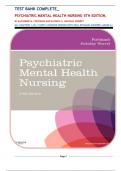
TEST BANK COMPLETE_
PSYCHIATRIC MENTAL HEALTH NURSING 5TH EDITION,
BY KATHERINE M. FORTINASH AND PATRICIA A. HOLODAY WORRET
ALL CHAPTERS 1-30| 7 UNITS| UPDATED VERSION WITH WELL DETAILED ANSWERS| GRADE A+
Page 1
,part i: foundations for psychiatric mental health nursing ------------------------------------------------------------------ 3
chapter 01: psychiatric nursing: theory, principles, and trends ----------------------------------------------------------------------- 3
chapter 02: nursing practice in the clinical setting --------------------------------------------------------------------------- 8
chapter 03: the nursing process and standards of practice ---------------------------------------------------------- 12
chapter 04: therapeutic communication: interviews and interventions ---------------------------------------------- 20
part ii: biologic and psychosocial principles for mental health nursing ----------------------------------------------- 32
chapter 05: adaptation to stress ----------------------------------------------------------------------------------------------------- 32
chapter 06: neurobiology in mental health and mental disorder ------------------------------------------------- 36
chapter 07: human development across the life span ------------------------------------------------------------------- 43
chapter 08: culture, ethnicity, and spirituality: a global perspective ---------------------------------------------------- 53
chapter 09: legal and ethical aspects in clinical practice ----------------------------------------------------------------- 60
part iii: psychiatric disorders -------------------------------------------------------------------------------------------------- 67
chapter 10: anxiety and related disorders ----------------------------------------------------------------------------------------- 67
chapter 11: somatoform, factitious, and dissociative disorders ---------------------------------------------------- 79
chapter 12: mood disorders: depression, bipolar, and adjustment disorders ------------------------------ 87
chapter 13: schizophrenia and other psychotic disorders ------------------------------------------------------------ 102
chapter 14: personality disorders -------------------------------------------------------------------------------------------------- 116
chapter 15: substance-related disorders and addictive behaviors --------------------------------------------- 126
chapter 16: cognitive disorders: delirium, dementia, and amnestic disorders --------------------------- 135
chapter 17: disorders of infancy, childhood, and adolescence ------------------------------------------------------ 147
chapter 18: eating disorders: anorexia nervosa and bulimia nervosa---------------------------------------- 157
chapter 19: sleep disorders: dyssomnias and parasomnias ---------------------------------------------------------- 169
chapter 20: sexual disorders: sexual dysfunctions and paraphilias -------------------------------------------- 176
part iv: crisis and psychiatric emergencies ---------------------------------------------------------------------------------- 183
chapter 21: crisis: theory and intervention------------------------------------------------------------------------------------- 183
chapter 22: suicide prevention and intervention --------------------------------------------------------------------------- 193
chapter 23: violence: anger, abuse, and aggression ---------------------------------------------------------------------- 201
chapter 24: forensic nursing in clinical practice -------------------------------------------------------------------------------- 213
part v: therapeutic interventions ---------------------------------------------------------------------------------------------- 219
chapter 25: psychopharmacology ---------------------------------------------------------------------------------------------------- 219
chapter 26: therapies: theory and clinical practice ------------------------------------------------------------------------- 231
chapter 27: complementary and alternative therapies ----------------------------------------------------------------- 247
part vi: nursing interventions with special populations ----------------------------------------------------------------- 256
chapter 28: grief: in loss and death ----------------------------------------------------------------------------------------------- 256
chapter 29: emotional and mental responses to medical illness ------------------------------------------------------ 269
part vii: nursing interventions in the home and community ----------------------------------------------------------- 280
chapter 30: community mental health nursing for patients with severe and persistent mental
illness ---------------------------------------------------------------------------------------------------------------------------------------------- 280
Page 2
, Part i: foundations for psychiatric mental health nursing
Chapter 01: psychiatric nursing: theory, principles, and trends
Multiple choice
1. Which understanding is the basis for the nursing actions focused on minimizing
mental health promotion of families with chronically mentally ill members?
A. Family members are at an increased risk for mental illness.
B. The mental health care system is not prepared to deal with family crises.
C. Family members are seldom prepared to cope with a chronically ill individual.
D The chronically mentally ill receive care best when delivered in a formal setting.
.
Ans: a
When families live with a dominant member who has a persistent and severe mental
disorder the outcomes are often expressed as family members who are at increased riskifor
physical and mental illnesses. The remaining options are not necessarily true.
Dif: cognitive level: application ref: page 3
2. Which nursing activity shows the nurse actively engaged in the primary prevention
ofmental disorders?
A. Providing a patient, whose depression is well managed, with medication on tim
B. Making regular follow-up visits to a new mother at risk for post-partum
depression
C. Providing the family of a patient, diagnosed with depression, information on
suicide prevention
D Assisting a patient who has obsessive compulsive tendencies prepare and
. practice for a job interview
Ans: b
Primary prevention helps to reduce the occurrence of mental disorders by staying
involved with a patient. Providing medication and information on existing illnesses are
examples of secondary prevention which helps to reduce the prevalence of mental
disorders. Assisting a mentally ill patient with preparation for a job interview is tertiary
prevention since it involves rehabilitation.
Dif: cognitive level: application ref: page 4
3. Which intervention reflects attention being focused on the patient‘s intentions
regarding his diagnosis of severe depression?
A. Being placed on suicide precautions
B. Encouraging visits by his family members
C. Receiving a combination of medications to address his emotional needs
D Being asked to decide where he will attend his prescribed therapy sessions
.
Ans: d
A primary factor in patient treatment includes consideration of the patient‘s intentions
regarding his or her own care. Patients are central to the process that determines their
care as their abilities allow. Under the guidance of pmh nurses and other mental health
personnel, patients are encouraged to make decisions and to actively engage in their
own treatment plans to meet their needs. The remaining options are focused on
specificsof the determined plan of care.
Dif: cognitive level: application ref: page 5
Page 3
, 4. When a patient‘s family asks why their chronically mentally ill adult child is being
discharged to a community-based living facility, the nurse responds:
A. ―it is a way to meet the need for social support.‖
B. ―it is too expensive to keep stabilized patients in acute care settings.‖
C. ―this type of facility will provide the specialized care that is needed.‖
D ―being out in the community will help provide hope and purpose for living.‖
.
Ans: d
Hospitalization may be necessary for acute care, but, when patients are stabilized, they
move into community-based, patient-centered settings or are discharged home with
continued outpatient treatment in the community. Concentrated efforts are made to
reduce the patient‘s sick role by providing opportunities for the development of a
purposeful life and instilling hope for each patient‘s future. Although social support is
important, such a living arrangement is not the only way to achieve it. Although acute
care is expensive, it is not the major concern when determining long-term care options.
Community-based facilities are not the only option for specialized care.
Dif: cognitive level: application ref: page 5
5. what is the best explanation to offer when the mother of a chronically ill teenage
patient asks, ―under what circumstances would he be considered incompetent?‖
a. ―When you can provide the court with enough evidence to show that he is not
able to care for himself safely.‖
b. ―It is not likely that someone his age would be determined to be incompetent
regardless of his mental condition.‖
c. ―He would have to engage in behavior that would result in harm to himself or to
someone else; like you or his siblings.‖
d. ―If the illness becomes so severe that his judgment is impaired to the point whe Re
the decisions he makes are harmful to himself or to others.‖
Ans: d
When a person is unable to cognitively process information or to make decisions about
his or her own welfare, the person may be determined to be mentally incompetent.
Providing self-care is not the only criteria considered. Age is not a factor considered. The
decision is often based on the potential for such behavior.
Dif: cognitive level: application ref: page 6
6. Which psychiatric nursing intervention shows an understanding of integrated care?
a. A chronically abused woman is assessed for anxiety.
b. A manic patient is taken to the gym to use the exercise equipment.
c. The older adult diagnosed with depression is monitored for suicidal ideations.
d. A teenager who refuses to obey the unit‘s rules is not allow to play video game s.
Ans: a
The majority of health disciplines now recognize that mental disorders and physical
Illnesses are closely linked. The presence of a mental disorder increases the risk for the
development of physical illnesses and vice versa. Assessing a chronically abused
individual for anxiety call should attention to the psychiatric disorder that could develop
from the abuse. The remaining options show interventions that are appropriate for the
mental disorder.
Dif: cognitive level: application ref: page 6
7. What reason does the nurse give the patient for the emphasis and attention being
Page
4
PSYCHIATRIC MENTAL HEALTH NURSING 5TH EDITION,
BY KATHERINE M. FORTINASH AND PATRICIA A. HOLODAY WORRET
ALL CHAPTERS 1-30| 7 UNITS| UPDATED VERSION WITH WELL DETAILED ANSWERS| GRADE A+
Page 1
,part i: foundations for psychiatric mental health nursing ------------------------------------------------------------------ 3
chapter 01: psychiatric nursing: theory, principles, and trends ----------------------------------------------------------------------- 3
chapter 02: nursing practice in the clinical setting --------------------------------------------------------------------------- 8
chapter 03: the nursing process and standards of practice ---------------------------------------------------------- 12
chapter 04: therapeutic communication: interviews and interventions ---------------------------------------------- 20
part ii: biologic and psychosocial principles for mental health nursing ----------------------------------------------- 32
chapter 05: adaptation to stress ----------------------------------------------------------------------------------------------------- 32
chapter 06: neurobiology in mental health and mental disorder ------------------------------------------------- 36
chapter 07: human development across the life span ------------------------------------------------------------------- 43
chapter 08: culture, ethnicity, and spirituality: a global perspective ---------------------------------------------------- 53
chapter 09: legal and ethical aspects in clinical practice ----------------------------------------------------------------- 60
part iii: psychiatric disorders -------------------------------------------------------------------------------------------------- 67
chapter 10: anxiety and related disorders ----------------------------------------------------------------------------------------- 67
chapter 11: somatoform, factitious, and dissociative disorders ---------------------------------------------------- 79
chapter 12: mood disorders: depression, bipolar, and adjustment disorders ------------------------------ 87
chapter 13: schizophrenia and other psychotic disorders ------------------------------------------------------------ 102
chapter 14: personality disorders -------------------------------------------------------------------------------------------------- 116
chapter 15: substance-related disorders and addictive behaviors --------------------------------------------- 126
chapter 16: cognitive disorders: delirium, dementia, and amnestic disorders --------------------------- 135
chapter 17: disorders of infancy, childhood, and adolescence ------------------------------------------------------ 147
chapter 18: eating disorders: anorexia nervosa and bulimia nervosa---------------------------------------- 157
chapter 19: sleep disorders: dyssomnias and parasomnias ---------------------------------------------------------- 169
chapter 20: sexual disorders: sexual dysfunctions and paraphilias -------------------------------------------- 176
part iv: crisis and psychiatric emergencies ---------------------------------------------------------------------------------- 183
chapter 21: crisis: theory and intervention------------------------------------------------------------------------------------- 183
chapter 22: suicide prevention and intervention --------------------------------------------------------------------------- 193
chapter 23: violence: anger, abuse, and aggression ---------------------------------------------------------------------- 201
chapter 24: forensic nursing in clinical practice -------------------------------------------------------------------------------- 213
part v: therapeutic interventions ---------------------------------------------------------------------------------------------- 219
chapter 25: psychopharmacology ---------------------------------------------------------------------------------------------------- 219
chapter 26: therapies: theory and clinical practice ------------------------------------------------------------------------- 231
chapter 27: complementary and alternative therapies ----------------------------------------------------------------- 247
part vi: nursing interventions with special populations ----------------------------------------------------------------- 256
chapter 28: grief: in loss and death ----------------------------------------------------------------------------------------------- 256
chapter 29: emotional and mental responses to medical illness ------------------------------------------------------ 269
part vii: nursing interventions in the home and community ----------------------------------------------------------- 280
chapter 30: community mental health nursing for patients with severe and persistent mental
illness ---------------------------------------------------------------------------------------------------------------------------------------------- 280
Page 2
, Part i: foundations for psychiatric mental health nursing
Chapter 01: psychiatric nursing: theory, principles, and trends
Multiple choice
1. Which understanding is the basis for the nursing actions focused on minimizing
mental health promotion of families with chronically mentally ill members?
A. Family members are at an increased risk for mental illness.
B. The mental health care system is not prepared to deal with family crises.
C. Family members are seldom prepared to cope with a chronically ill individual.
D The chronically mentally ill receive care best when delivered in a formal setting.
.
Ans: a
When families live with a dominant member who has a persistent and severe mental
disorder the outcomes are often expressed as family members who are at increased riskifor
physical and mental illnesses. The remaining options are not necessarily true.
Dif: cognitive level: application ref: page 3
2. Which nursing activity shows the nurse actively engaged in the primary prevention
ofmental disorders?
A. Providing a patient, whose depression is well managed, with medication on tim
B. Making regular follow-up visits to a new mother at risk for post-partum
depression
C. Providing the family of a patient, diagnosed with depression, information on
suicide prevention
D Assisting a patient who has obsessive compulsive tendencies prepare and
. practice for a job interview
Ans: b
Primary prevention helps to reduce the occurrence of mental disorders by staying
involved with a patient. Providing medication and information on existing illnesses are
examples of secondary prevention which helps to reduce the prevalence of mental
disorders. Assisting a mentally ill patient with preparation for a job interview is tertiary
prevention since it involves rehabilitation.
Dif: cognitive level: application ref: page 4
3. Which intervention reflects attention being focused on the patient‘s intentions
regarding his diagnosis of severe depression?
A. Being placed on suicide precautions
B. Encouraging visits by his family members
C. Receiving a combination of medications to address his emotional needs
D Being asked to decide where he will attend his prescribed therapy sessions
.
Ans: d
A primary factor in patient treatment includes consideration of the patient‘s intentions
regarding his or her own care. Patients are central to the process that determines their
care as their abilities allow. Under the guidance of pmh nurses and other mental health
personnel, patients are encouraged to make decisions and to actively engage in their
own treatment plans to meet their needs. The remaining options are focused on
specificsof the determined plan of care.
Dif: cognitive level: application ref: page 5
Page 3
, 4. When a patient‘s family asks why their chronically mentally ill adult child is being
discharged to a community-based living facility, the nurse responds:
A. ―it is a way to meet the need for social support.‖
B. ―it is too expensive to keep stabilized patients in acute care settings.‖
C. ―this type of facility will provide the specialized care that is needed.‖
D ―being out in the community will help provide hope and purpose for living.‖
.
Ans: d
Hospitalization may be necessary for acute care, but, when patients are stabilized, they
move into community-based, patient-centered settings or are discharged home with
continued outpatient treatment in the community. Concentrated efforts are made to
reduce the patient‘s sick role by providing opportunities for the development of a
purposeful life and instilling hope for each patient‘s future. Although social support is
important, such a living arrangement is not the only way to achieve it. Although acute
care is expensive, it is not the major concern when determining long-term care options.
Community-based facilities are not the only option for specialized care.
Dif: cognitive level: application ref: page 5
5. what is the best explanation to offer when the mother of a chronically ill teenage
patient asks, ―under what circumstances would he be considered incompetent?‖
a. ―When you can provide the court with enough evidence to show that he is not
able to care for himself safely.‖
b. ―It is not likely that someone his age would be determined to be incompetent
regardless of his mental condition.‖
c. ―He would have to engage in behavior that would result in harm to himself or to
someone else; like you or his siblings.‖
d. ―If the illness becomes so severe that his judgment is impaired to the point whe Re
the decisions he makes are harmful to himself or to others.‖
Ans: d
When a person is unable to cognitively process information or to make decisions about
his or her own welfare, the person may be determined to be mentally incompetent.
Providing self-care is not the only criteria considered. Age is not a factor considered. The
decision is often based on the potential for such behavior.
Dif: cognitive level: application ref: page 6
6. Which psychiatric nursing intervention shows an understanding of integrated care?
a. A chronically abused woman is assessed for anxiety.
b. A manic patient is taken to the gym to use the exercise equipment.
c. The older adult diagnosed with depression is monitored for suicidal ideations.
d. A teenager who refuses to obey the unit‘s rules is not allow to play video game s.
Ans: a
The majority of health disciplines now recognize that mental disorders and physical
Illnesses are closely linked. The presence of a mental disorder increases the risk for the
development of physical illnesses and vice versa. Assessing a chronically abused
individual for anxiety call should attention to the psychiatric disorder that could develop
from the abuse. The remaining options show interventions that are appropriate for the
mental disorder.
Dif: cognitive level: application ref: page 6
7. What reason does the nurse give the patient for the emphasis and attention being
Page
4

