
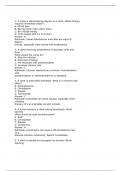
1. A nurse is administering digoxin to a client. Which finding
requires immediate action?
A. HR 62 bpm
B. Blurred vision with yellow halos
C. BP 140/88 mmHg
D. Urine output 400 mL in 8 hours
Answer: B
Rationale: Visual disturbances and halos are signs of
digoxin
toxicity, especially when paired with bradycardia.
2. A client receiving amphotericin B develops chills and
fever.
What should the nurse do?
A. Stop the infusion
B. Document findings
C. Pre-medicate with acetaminophen
D. Increase infusion rate
Answer: C
Rationale: Infusion reactions are common. Premedication
with
acetaminophen or diphenhydramine is standard.
3. A client is prescribed exenatide. What is a common side
effect?
A. Hyperglycemia
B. Constipation
C. Nausea
D. Tachycardia
Answer: C
Rationale: Exenatide can cause nausea, especially when
initiating
therapy. It’s an injectable incretin mimetic.
4. A nurse monitors a client taking lamotrigine. What
adverse
effect should prompt discontinuation?
A. Rash
B. Constipation
C. Nausea
D. Drowsiness
Answer: A
Rationale: Lamotrigine can cause a life-threatening rash
(e.g.,
Stevens-Johnson syndrome). Report immediately.
5. A client is started on lorazepam for anxiety. Which
teaching
, point is essential?
A. “Avoid grapefruit juice.”
B. “Take with NSAIDs.”
C. “Do not stop abruptly.”
D. “It may take weeks to work.”
Answer: C
Rationale: Benzodiazepines must be tapered to prevent
withdrawal symptoms and seizures.
6. A client with COPD is on prednisone. Which instruction
is
appropriate?
A. Stop taking it once symptoms resolve
B. Take on an empty stomach
C. Report black tarry stools
D. Avoid potassium-rich foods
Answer: C
Rationale: Corticosteroids increase the risk for GI bleeding
and
ulcers. Tarry stools may indicate bleeding.
7. A client taking isoniazid (INH) for tuberculosis develops
numbness and tingling in their hands and feet. What should
the
nurse anticipate?
A. The need for increased calcium
B. Administration of pyridoxine (vitamin B6)
C. Discontinuation of therapy
D. Addition of prednisone
Answer: B
Rationale: Isoniazid can cause peripheral neuropathy, often
prevented or treated with vitamin B6.
8. A client asks about insulin glargine (Lantus). What is the
correct response?
A. “It works immediately.”
B. “It peaks in 4 hours.”
C. “It has no peak and lasts 24 hours.”
D. “It must be mixed with regular insulin.”
Answer: C
Rationale: Glargine is a long-acting insulin with no
pronounced
peak, providing steady glucose control.
9. A client with a penicillin allergy is prescribed
cephalexin. What
is the nurse’s priority?
A. Administer as ordered
B. Ask about previous reaction type
C. Hold the dose for 30 minutes
requires immediate action?
A. HR 62 bpm
B. Blurred vision with yellow halos
C. BP 140/88 mmHg
D. Urine output 400 mL in 8 hours
Answer: B
Rationale: Visual disturbances and halos are signs of
digoxin
toxicity, especially when paired with bradycardia.
2. A client receiving amphotericin B develops chills and
fever.
What should the nurse do?
A. Stop the infusion
B. Document findings
C. Pre-medicate with acetaminophen
D. Increase infusion rate
Answer: C
Rationale: Infusion reactions are common. Premedication
with
acetaminophen or diphenhydramine is standard.
3. A client is prescribed exenatide. What is a common side
effect?
A. Hyperglycemia
B. Constipation
C. Nausea
D. Tachycardia
Answer: C
Rationale: Exenatide can cause nausea, especially when
initiating
therapy. It’s an injectable incretin mimetic.
4. A nurse monitors a client taking lamotrigine. What
adverse
effect should prompt discontinuation?
A. Rash
B. Constipation
C. Nausea
D. Drowsiness
Answer: A
Rationale: Lamotrigine can cause a life-threatening rash
(e.g.,
Stevens-Johnson syndrome). Report immediately.
5. A client is started on lorazepam for anxiety. Which
teaching
, point is essential?
A. “Avoid grapefruit juice.”
B. “Take with NSAIDs.”
C. “Do not stop abruptly.”
D. “It may take weeks to work.”
Answer: C
Rationale: Benzodiazepines must be tapered to prevent
withdrawal symptoms and seizures.
6. A client with COPD is on prednisone. Which instruction
is
appropriate?
A. Stop taking it once symptoms resolve
B. Take on an empty stomach
C. Report black tarry stools
D. Avoid potassium-rich foods
Answer: C
Rationale: Corticosteroids increase the risk for GI bleeding
and
ulcers. Tarry stools may indicate bleeding.
7. A client taking isoniazid (INH) for tuberculosis develops
numbness and tingling in their hands and feet. What should
the
nurse anticipate?
A. The need for increased calcium
B. Administration of pyridoxine (vitamin B6)
C. Discontinuation of therapy
D. Addition of prednisone
Answer: B
Rationale: Isoniazid can cause peripheral neuropathy, often
prevented or treated with vitamin B6.
8. A client asks about insulin glargine (Lantus). What is the
correct response?
A. “It works immediately.”
B. “It peaks in 4 hours.”
C. “It has no peak and lasts 24 hours.”
D. “It must be mixed with regular insulin.”
Answer: C
Rationale: Glargine is a long-acting insulin with no
pronounced
peak, providing steady glucose control.
9. A client with a penicillin allergy is prescribed
cephalexin. What
is the nurse’s priority?
A. Administer as ordered
B. Ask about previous reaction type
C. Hold the dose for 30 minutes

