
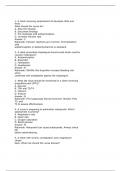
1. A client receiving amphotericin B develops chills and
fever.
What should the nurse do?
A. Stop the infusion
B. Document findings
C. Pre-medicate with acetaminophen
D. Increase infusion rate
Answer: C
Rationale: Infusion reactions are common. Premedication
with
acetaminophen or diphenhydramine is standard.
2. A client prescribed clopidogrel should avoid which overthe
counter medication?
A. Acetaminophen
B. Ibuprofen
C. Famotidine
D. Guaifenesin
Answer: B
Rationale: NSAIDs like ibuprofen increase bleeding risk
when
combined with antiplatelet agents like clopidogrel.
3. What lab value should be monitored in a client receiving
propylthiouracil (PTU)?
A. Glucose
B. TSH and T3/T4
C. Calcium
D. Sodium
Answer: B
Rationale: PTU suppresses thyroid hormone. Monitor TSH,
T3, and
T4 to assess effectiveness.
4. A nurse is preparing to administer metoprolol. Which
assessment is priority?
A. Respiratory rate
B. Heart rate
C. Oxygen saturation
D. Blood glucose
Answer: B
Rationale: Metoprolol can cause bradycardia. Always check
HR
before administering.
5. A client with chronic constipation uses magnesium
citrate
daily. What risk should the nurse discuss?
, A. Hypertension
B. Hypernatremia
C. Electrolyte imbalance
D. Dehydration
Answer: C
Rationale: Chronic laxative use, especially osmotic types
like
magnesium citrate, causes fluid and electrolyte imbalances.
6. A client taking isoniazid (INH) for tuberculosis develops
numbness and tingling in their hands and feet. What should
the
nurse anticipate?
A. The need for increased calcium
B. Administration of pyridoxine (vitamin B6)
C. Discontinuation of therapy
D. Addition of prednisone
Answer: B
Rationale: Isoniazid can cause peripheral neuropathy, often
prevented or treated with vitamin B6.
7. A nurse monitors a client taking lamotrigine. What
adverse
effect should prompt discontinuation?
A. Rash
B. Constipation
C. Nausea
D. Drowsiness
Answer: A
Rationale: Lamotrigine can cause a life-threatening rash
(e.g.,
Stevens-Johnson syndrome). Report immediately.
8. A client taking furosemide reports muscle cramps.
Which lab
value correlates with this symptom?
A. Sodium 142
B. Potassium 2.9
C. Chloride 101
D. Magnesium 2.0
Answer: B
Rationale: Furosemide can cause hypokalemia, which leads
to
muscle cramps. Normal potassium: 3.5–5.0.
9. A client is prescribed loratadine for seasonal allergies.
What is
A. key difference from diphenhydramine?
A. Loratadine causes more drowsiness
B. Loratadine causes GI upset
fever.
What should the nurse do?
A. Stop the infusion
B. Document findings
C. Pre-medicate with acetaminophen
D. Increase infusion rate
Answer: C
Rationale: Infusion reactions are common. Premedication
with
acetaminophen or diphenhydramine is standard.
2. A client prescribed clopidogrel should avoid which overthe
counter medication?
A. Acetaminophen
B. Ibuprofen
C. Famotidine
D. Guaifenesin
Answer: B
Rationale: NSAIDs like ibuprofen increase bleeding risk
when
combined with antiplatelet agents like clopidogrel.
3. What lab value should be monitored in a client receiving
propylthiouracil (PTU)?
A. Glucose
B. TSH and T3/T4
C. Calcium
D. Sodium
Answer: B
Rationale: PTU suppresses thyroid hormone. Monitor TSH,
T3, and
T4 to assess effectiveness.
4. A nurse is preparing to administer metoprolol. Which
assessment is priority?
A. Respiratory rate
B. Heart rate
C. Oxygen saturation
D. Blood glucose
Answer: B
Rationale: Metoprolol can cause bradycardia. Always check
HR
before administering.
5. A client with chronic constipation uses magnesium
citrate
daily. What risk should the nurse discuss?
, A. Hypertension
B. Hypernatremia
C. Electrolyte imbalance
D. Dehydration
Answer: C
Rationale: Chronic laxative use, especially osmotic types
like
magnesium citrate, causes fluid and electrolyte imbalances.
6. A client taking isoniazid (INH) for tuberculosis develops
numbness and tingling in their hands and feet. What should
the
nurse anticipate?
A. The need for increased calcium
B. Administration of pyridoxine (vitamin B6)
C. Discontinuation of therapy
D. Addition of prednisone
Answer: B
Rationale: Isoniazid can cause peripheral neuropathy, often
prevented or treated with vitamin B6.
7. A nurse monitors a client taking lamotrigine. What
adverse
effect should prompt discontinuation?
A. Rash
B. Constipation
C. Nausea
D. Drowsiness
Answer: A
Rationale: Lamotrigine can cause a life-threatening rash
(e.g.,
Stevens-Johnson syndrome). Report immediately.
8. A client taking furosemide reports muscle cramps.
Which lab
value correlates with this symptom?
A. Sodium 142
B. Potassium 2.9
C. Chloride 101
D. Magnesium 2.0
Answer: B
Rationale: Furosemide can cause hypokalemia, which leads
to
muscle cramps. Normal potassium: 3.5–5.0.
9. A client is prescribed loratadine for seasonal allergies.
What is
A. key difference from diphenhydramine?
A. Loratadine causes more drowsiness
B. Loratadine causes GI upset

