
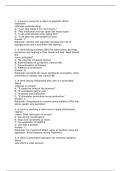
1. A nurse is caring for a client on glipizide. Which
statement
indicates understanding?
A. “I can skip meals if I’m not hungry.”
B. “This medication will not cause low blood sugar.”
C. “I will avoid alcohol while taking this.”
D. “I can take this with grapefruit juice.”
Answer: C
Rationale: Alcohol with glipizide increases the risk of
hypoglycemia and a disulfiram-like reaction.
2. A client taking isoniazid (INH) for tuberculosis develops
numbness and tingling in their hands and feet. What should
the
nurse anticipate?
A. The need for increased calcium
B. Administration of pyridoxine (vitamin B6)
C. Discontinuation of therapy
D. Addition of prednisone
Answer: B
Rationale: Isoniazid can cause peripheral neuropathy, often
prevented or treated with vitamin B6.
3. A client taking omeprazole asks why it is prescribed.
Which
response is correct?
A. "It coats the lining of the stomach."
B. "It neutralizes gastric acid."
C. "It blocks acid production."
D. "It stimulates protective mucus production."
Answer: C
Rationale: Omeprazole is a proton pump inhibitor (PPI) that
blocks gastric acid secretion.
4. A nurse is teaching a client how to apply clotrimazole
vaginal
cream. What instruction is correct?
A. Use during menstruation
B. Stop once symptoms go away
C. Use applicator at bedtime
D. Use with a tampon
Answer: C
Rationale: For maximum effect, apply at bedtime using the
applicator. Avoid tampons during treatment.
5. A client is prescribed bupropion for smoking cessation.
Which
side effect is most serious?
, A. Dry mouth
B. Insomnia
C. Seizures
D. Weight loss
Answer: C
Rationale: Bupropion lowers seizure threshold. Clients at
risk (e.g.,
with eating disorders) need close monitoring.
6. A client is taking diphenhydramine. Which side effect is
most
likely?
A. Hypertension
B. Drowsiness
C. Diarrhea
D. Insomnia
Answer: B
Rationale: First-generation antihistamines like
diphenhydramine
cause sedation and drowsiness.
7. Which statement indicates proper understanding of
enoxaparin (Lovenox) administration?
A. “I will inject it into my thigh muscle.”
B. “I will rub the site after injection.”
C. “I will inject it into my belly fat.”
D. “I must monitor my INR daily.”
Answer: C
Rationale: Enoxaparin is given subcutaneously, preferably
in the
abdomen, and INR monitoring is not required.
8. A client is receiving morphine IV post-op. Which finding
is the
priority?
A. Nausea
B. Respiratory rate of 8/min
C. Itching
D. Sedation score of 2
Answer: B
Rationale: Respiratory depression (<12/min) is the most life
threatening side effect of opioids.
9. A client uses sublingual nitroglycerin. Which instruction
is
correct?
A. Swallow the pill with water
B. Take up to 3 doses, 5 minutes apart
C. Store it in a warm area
D. Use it once weekly
statement
indicates understanding?
A. “I can skip meals if I’m not hungry.”
B. “This medication will not cause low blood sugar.”
C. “I will avoid alcohol while taking this.”
D. “I can take this with grapefruit juice.”
Answer: C
Rationale: Alcohol with glipizide increases the risk of
hypoglycemia and a disulfiram-like reaction.
2. A client taking isoniazid (INH) for tuberculosis develops
numbness and tingling in their hands and feet. What should
the
nurse anticipate?
A. The need for increased calcium
B. Administration of pyridoxine (vitamin B6)
C. Discontinuation of therapy
D. Addition of prednisone
Answer: B
Rationale: Isoniazid can cause peripheral neuropathy, often
prevented or treated with vitamin B6.
3. A client taking omeprazole asks why it is prescribed.
Which
response is correct?
A. "It coats the lining of the stomach."
B. "It neutralizes gastric acid."
C. "It blocks acid production."
D. "It stimulates protective mucus production."
Answer: C
Rationale: Omeprazole is a proton pump inhibitor (PPI) that
blocks gastric acid secretion.
4. A nurse is teaching a client how to apply clotrimazole
vaginal
cream. What instruction is correct?
A. Use during menstruation
B. Stop once symptoms go away
C. Use applicator at bedtime
D. Use with a tampon
Answer: C
Rationale: For maximum effect, apply at bedtime using the
applicator. Avoid tampons during treatment.
5. A client is prescribed bupropion for smoking cessation.
Which
side effect is most serious?
, A. Dry mouth
B. Insomnia
C. Seizures
D. Weight loss
Answer: C
Rationale: Bupropion lowers seizure threshold. Clients at
risk (e.g.,
with eating disorders) need close monitoring.
6. A client is taking diphenhydramine. Which side effect is
most
likely?
A. Hypertension
B. Drowsiness
C. Diarrhea
D. Insomnia
Answer: B
Rationale: First-generation antihistamines like
diphenhydramine
cause sedation and drowsiness.
7. Which statement indicates proper understanding of
enoxaparin (Lovenox) administration?
A. “I will inject it into my thigh muscle.”
B. “I will rub the site after injection.”
C. “I will inject it into my belly fat.”
D. “I must monitor my INR daily.”
Answer: C
Rationale: Enoxaparin is given subcutaneously, preferably
in the
abdomen, and INR monitoring is not required.
8. A client is receiving morphine IV post-op. Which finding
is the
priority?
A. Nausea
B. Respiratory rate of 8/min
C. Itching
D. Sedation score of 2
Answer: B
Rationale: Respiratory depression (<12/min) is the most life
threatening side effect of opioids.
9. A client uses sublingual nitroglycerin. Which instruction
is
correct?
A. Swallow the pill with water
B. Take up to 3 doses, 5 minutes apart
C. Store it in a warm area
D. Use it once weekly

