
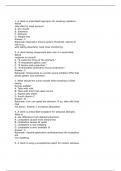
1. A client is prescribed bupropion for smoking cessation.
Which
side effect is most serious?
A. Dry mouth
B. Insomnia
C. Seizures
D. Weight loss
Answer: C
Rationale: Bupropion lowers seizure threshold. Clients at
risk (e.g.,
with eating disorders) need close monitoring.
2. A client taking omeprazole asks why it is prescribed.
Which
response is correct?
A. "It coats the lining of the stomach."
B. "It neutralizes gastric acid."
C. "It blocks acid production."
D. "It stimulates protective mucus production."
Answer: C
Rationale: Omeprazole is a proton pump inhibitor (PPI) that
blocks gastric acid secretion.
3. What should the nurse include when teaching a client
taking
ferrous sulfate?
A. Take with milk
B. Take with food if GI upset occurs
C. Expect pale stools
D. Avoid vitamin C
Answer: B
Rationale: Iron can upset the stomach. If so, take with food
(but
not dairy). Vitamin C increases absorption.
4. A client is prescribed loratadine for seasonal allergies.
What is
A. key difference from diphenhydramine?
A. Loratadine causes more drowsiness
B. Loratadine causes GI upset
C. Loratadine is non-sedating
D. Loratadine is only available IV
Answer: C
Rationale: Second-generation antihistamines like loratadine
are
non-sedating.
5. A client is using a scopolamine patch for motion sickness.
, What side effect should the nurse monitor?
A. Diarrhea
B. Blurred vision and dry mouth
C. Rash
D. Hearing loss
Answer: B
Rationale: Scopolamine has anticholinergic effects like dry
mouth,
blurred vision, and urinary retention.
6. A nurse is administering digoxin to a client. Which finding
requires immediate action?
A. HR 62 bpm
B. Blurred vision with yellow halos
C. BP 140/88 mmHg
D. Urine output 400 mL in 8 hours
Answer: B
Rationale: Visual disturbances and halos are signs of
digoxin
toxicity, especially when paired with bradycardia.
7. A client is receiving morphine IV post-op. Which finding
is the
priority?
A. Nausea
B. Respiratory rate of 8/min
C. Itching
D. Sedation score of 2
Answer: B
Rationale: Respiratory depression (<12/min) is the most life
threatening side effect of opioids.
8. A nurse is teaching a client about hydroxychloroquine
for
lupus. What adverse effect should be reported immediately?
A. Dizziness
B. Blurred vision
C. Dry mouth
D. Rash
Answer: B
Rationale: Retinal damage is a serious side effect. Clients
need
regular eye exams.
9. A client is prescribed loperamide. Which condition is a
contraindication?
A. IBS
B. Infectious diarrhea
C. Traveler’s diarrhea
D. Post-antibiotic diarrhea
Which
side effect is most serious?
A. Dry mouth
B. Insomnia
C. Seizures
D. Weight loss
Answer: C
Rationale: Bupropion lowers seizure threshold. Clients at
risk (e.g.,
with eating disorders) need close monitoring.
2. A client taking omeprazole asks why it is prescribed.
Which
response is correct?
A. "It coats the lining of the stomach."
B. "It neutralizes gastric acid."
C. "It blocks acid production."
D. "It stimulates protective mucus production."
Answer: C
Rationale: Omeprazole is a proton pump inhibitor (PPI) that
blocks gastric acid secretion.
3. What should the nurse include when teaching a client
taking
ferrous sulfate?
A. Take with milk
B. Take with food if GI upset occurs
C. Expect pale stools
D. Avoid vitamin C
Answer: B
Rationale: Iron can upset the stomach. If so, take with food
(but
not dairy). Vitamin C increases absorption.
4. A client is prescribed loratadine for seasonal allergies.
What is
A. key difference from diphenhydramine?
A. Loratadine causes more drowsiness
B. Loratadine causes GI upset
C. Loratadine is non-sedating
D. Loratadine is only available IV
Answer: C
Rationale: Second-generation antihistamines like loratadine
are
non-sedating.
5. A client is using a scopolamine patch for motion sickness.
, What side effect should the nurse monitor?
A. Diarrhea
B. Blurred vision and dry mouth
C. Rash
D. Hearing loss
Answer: B
Rationale: Scopolamine has anticholinergic effects like dry
mouth,
blurred vision, and urinary retention.
6. A nurse is administering digoxin to a client. Which finding
requires immediate action?
A. HR 62 bpm
B. Blurred vision with yellow halos
C. BP 140/88 mmHg
D. Urine output 400 mL in 8 hours
Answer: B
Rationale: Visual disturbances and halos are signs of
digoxin
toxicity, especially when paired with bradycardia.
7. A client is receiving morphine IV post-op. Which finding
is the
priority?
A. Nausea
B. Respiratory rate of 8/min
C. Itching
D. Sedation score of 2
Answer: B
Rationale: Respiratory depression (<12/min) is the most life
threatening side effect of opioids.
8. A nurse is teaching a client about hydroxychloroquine
for
lupus. What adverse effect should be reported immediately?
A. Dizziness
B. Blurred vision
C. Dry mouth
D. Rash
Answer: B
Rationale: Retinal damage is a serious side effect. Clients
need
regular eye exams.
9. A client is prescribed loperamide. Which condition is a
contraindication?
A. IBS
B. Infectious diarrhea
C. Traveler’s diarrhea
D. Post-antibiotic diarrhea

