

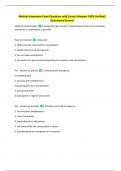
Medical Interpreter Exam Questions with Correct Answers 100% Verified|
Guaranteed Success
Mode of interpretation choosing the right mode of interpreting for the correct situation,
sometimes a combination is possible
How to intervene 1.Stay calm
2. Make sure the intervention is transparent
3. Switch from first to third person
4. Do not make assumptions
5. Go back to 1st person and interpreting, let provider solve the problem
Pre - Session w/ patient 1. Intro yourself and agency
2.Confidentiality
3. Acuracy and Completeness
4.speaking directly to the provider
5. pause frequently
6.note patient's register and accent
Pre - session w/ provider 1.Introduce yourself and agency
2. Acuracy and Completeness
3. Pause frequently
4. speak directly to the patient
5. Ask about what the conversation is about
6. Everything will be interpeted in first person
, Where do you position yourself? Close to the patient, slightly behind them as the situation
allows.
When is it ok to advocate When the patient is at risk. When there is oversight or the patient
is being treated differently from other patients.
When is advocating inapropriate when it is NOT at to the patient's benefit, when there is no
misunderstanding, when the patient needs a service not offered by the provider
CLAS Cultural and Liguistically Approproate services
etiology where it comes from
parallel utilization when a home remedy can cross react with regular medicine
acculturation harmoneous blending of two cultures
assimilation being part of a culture while disconnecting from one's original culture
Do we sight translate vital documents like a consent? NO!!
The doctor asks you to translate the consent form what do you do? You tell him you cannot
sight translate a vital document. He needs to summarize the document if he wishes and explain
to the patient what the procedure going to be about.
When does the rule of "interpret everything" not apply? If the provider is talking to
residents, as it is a teaching situation. Summaries are appropriate in this case.
Guaranteed Success
Mode of interpretation choosing the right mode of interpreting for the correct situation,
sometimes a combination is possible
How to intervene 1.Stay calm
2. Make sure the intervention is transparent
3. Switch from first to third person
4. Do not make assumptions
5. Go back to 1st person and interpreting, let provider solve the problem
Pre - Session w/ patient 1. Intro yourself and agency
2.Confidentiality
3. Acuracy and Completeness
4.speaking directly to the provider
5. pause frequently
6.note patient's register and accent
Pre - session w/ provider 1.Introduce yourself and agency
2. Acuracy and Completeness
3. Pause frequently
4. speak directly to the patient
5. Ask about what the conversation is about
6. Everything will be interpeted in first person
, Where do you position yourself? Close to the patient, slightly behind them as the situation
allows.
When is it ok to advocate When the patient is at risk. When there is oversight or the patient
is being treated differently from other patients.
When is advocating inapropriate when it is NOT at to the patient's benefit, when there is no
misunderstanding, when the patient needs a service not offered by the provider
CLAS Cultural and Liguistically Approproate services
etiology where it comes from
parallel utilization when a home remedy can cross react with regular medicine
acculturation harmoneous blending of two cultures
assimilation being part of a culture while disconnecting from one's original culture
Do we sight translate vital documents like a consent? NO!!
The doctor asks you to translate the consent form what do you do? You tell him you cannot
sight translate a vital document. He needs to summarize the document if he wishes and explain
to the patient what the procedure going to be about.
When does the rule of "interpret everything" not apply? If the provider is talking to
residents, as it is a teaching situation. Summaries are appropriate in this case.

