
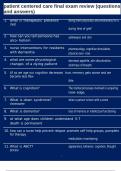
patient centered care final exam review (questions
and answers)
1. what is therapeutic presence being there physically and emotionally for a
client
during time of grief
2. how can you tell someone has yelloweyes and skin
alco- holism
3. nurse interventions for residents pharmacology, cognitive stimulation,
with dementia physical exer- cise
4. what are some physiological decrease appetite, akin discoloration,
changes of a dying patient shortness of breath
5. t/f as we age our cognition decreases true, memory gets worse and we
become less flex-
ible
6. What is cognition? The mental processes involved in acquiring
knowl- edge.
7. What is down syndrome? when a person is born with a extra
chromosome
8. What is dementia? loss of memory or intellectual functioning
9. at what age does children understand 5-7
death is permanent
10. how can a nurse help prevent relapse promote self help groups, pamplets
for therapy
medications monitoring
11. What is ABCT? appearance, behavior, cognition, thought
process
1/
9
, patient centered care final exam review (questions
and answers)
12. What is intoxication? when a persons mental and physical is
impaired by alcohol or drugs
13. What is tolerance? when a person no longer has a response to a
drug
2/
9
and answers)
1. what is therapeutic presence being there physically and emotionally for a
client
during time of grief
2. how can you tell someone has yelloweyes and skin
alco- holism
3. nurse interventions for residents pharmacology, cognitive stimulation,
with dementia physical exer- cise
4. what are some physiological decrease appetite, akin discoloration,
changes of a dying patient shortness of breath
5. t/f as we age our cognition decreases true, memory gets worse and we
become less flex-
ible
6. What is cognition? The mental processes involved in acquiring
knowl- edge.
7. What is down syndrome? when a person is born with a extra
chromosome
8. What is dementia? loss of memory or intellectual functioning
9. at what age does children understand 5-7
death is permanent
10. how can a nurse help prevent relapse promote self help groups, pamplets
for therapy
medications monitoring
11. What is ABCT? appearance, behavior, cognition, thought
process
1/
9
, patient centered care final exam review (questions
and answers)
12. What is intoxication? when a persons mental and physical is
impaired by alcohol or drugs
13. What is tolerance? when a person no longer has a response to a
drug
2/
9

