

Hospital orientation exam questions well
answered to pass
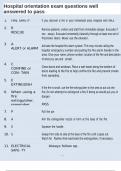
1. FIRE SAFETY If you discover a fire in your immediate area, respond with RACE
2. R Remove patients, visitors and statt from immediate danger. Evacuate if
RESCUE nec- essary. Evacuate horizontally (laterally) through at least one set of
fire/smoke doors. Never use the elevator.
3. A
Activate the hospital fire alarm system. This may include calling the
ALERT or ALARM
hospital emergency number and pulling the fire alarm handle in the
area. Give your name, phone number, location of the fire and description
of what you see and smell.
4. C
Close doors and windows. Place a wet towel along the bottom of
CONFINE or
CON- TAIN doors leading to the fire to help confine the fire and prevent smoke
from spreading.
5. E
EXTINGUISH
If the fire is small, use the fire extinguisher in the area to put out the
6. When using a fire. Do not attempt to extinguish a fire if doing so would put you in
fire danger.
extinguisher,
remember PASS
7. P Pull the pin
8. A Aim the extinguisher nozzle or horn at the base of the fire
9. S Squeeze the handle
10. S Sweep from side to side at the base of the fire until is goes out.
Watch for flashes And reactivate the extinguisher, if necessary.
11. ELECTRICAL Always follow op-
SAFE- TY
,Hospital orientation exam questions well
answered to pass
-plug does not fit properly in
outlet
-feels unusually warm to
touch
-smells hot
,Hospital orientation exam questions well
answered to pass
erating instructions - makes noise or pops when turned ott
when using some hazardous materi- als such as
equip- ment. drugs, tobacco, liquor, pesticides and
Report any in- fectious materials (they are covered
defects under other guide-
immediate- ly to
the facility. Do
not use
defective
equipment!
Exam- ples of
potential de-
fects include:
(10)
12. ELECTRICAL
SAFE- TY
Other considera-
tions: (5)
13. The Haz-
ardous
Communi-
cations Act: The
Right to Know
Law
14. It excludes
, Hospital orientation exam questions well
answered to pass
-has power cord longer than 10 inventory and label hazardous chemicals in the workplace and to
feet inform and train workers about chemical hazards they encounter on
-gives inconsistent readings the job.
-knob or switch is loose or worn
-tingles when you touch it
-missing the third or -Read labels
grounding pin on the plug -Study the Material Safety Data Sheets (MSDS)
-cord is frayed -Use proper protective equipment
-Follow safety precautions
-Patient's may be prohibited
from being electrical devices
from home, or may be
required to have personal
electronic devices inspected
before use.
-Certain electrical outlets are
connected to the hospital's
emergency genera- tors.
Essential equipment should be
kept plugged into emergency
outlets.
-Avoid extension cords.
-Pull on the plug to remove
equipment from on outlet;
never pull on the cord.
-Turn equipment ott before
unplugging or plugging in.
This federal regulatory
standard requires employers to
answered to pass
1. FIRE SAFETY If you discover a fire in your immediate area, respond with RACE
2. R Remove patients, visitors and statt from immediate danger. Evacuate if
RESCUE nec- essary. Evacuate horizontally (laterally) through at least one set of
fire/smoke doors. Never use the elevator.
3. A
Activate the hospital fire alarm system. This may include calling the
ALERT or ALARM
hospital emergency number and pulling the fire alarm handle in the
area. Give your name, phone number, location of the fire and description
of what you see and smell.
4. C
Close doors and windows. Place a wet towel along the bottom of
CONFINE or
CON- TAIN doors leading to the fire to help confine the fire and prevent smoke
from spreading.
5. E
EXTINGUISH
If the fire is small, use the fire extinguisher in the area to put out the
6. When using a fire. Do not attempt to extinguish a fire if doing so would put you in
fire danger.
extinguisher,
remember PASS
7. P Pull the pin
8. A Aim the extinguisher nozzle or horn at the base of the fire
9. S Squeeze the handle
10. S Sweep from side to side at the base of the fire until is goes out.
Watch for flashes And reactivate the extinguisher, if necessary.
11. ELECTRICAL Always follow op-
SAFE- TY
,Hospital orientation exam questions well
answered to pass
-plug does not fit properly in
outlet
-feels unusually warm to
touch
-smells hot
,Hospital orientation exam questions well
answered to pass
erating instructions - makes noise or pops when turned ott
when using some hazardous materi- als such as
equip- ment. drugs, tobacco, liquor, pesticides and
Report any in- fectious materials (they are covered
defects under other guide-
immediate- ly to
the facility. Do
not use
defective
equipment!
Exam- ples of
potential de-
fects include:
(10)
12. ELECTRICAL
SAFE- TY
Other considera-
tions: (5)
13. The Haz-
ardous
Communi-
cations Act: The
Right to Know
Law
14. It excludes
, Hospital orientation exam questions well
answered to pass
-has power cord longer than 10 inventory and label hazardous chemicals in the workplace and to
feet inform and train workers about chemical hazards they encounter on
-gives inconsistent readings the job.
-knob or switch is loose or worn
-tingles when you touch it
-missing the third or -Read labels
grounding pin on the plug -Study the Material Safety Data Sheets (MSDS)
-cord is frayed -Use proper protective equipment
-Follow safety precautions
-Patient's may be prohibited
from being electrical devices
from home, or may be
required to have personal
electronic devices inspected
before use.
-Certain electrical outlets are
connected to the hospital's
emergency genera- tors.
Essential equipment should be
kept plugged into emergency
outlets.
-Avoid extension cords.
-Pull on the plug to remove
equipment from on outlet;
never pull on the cord.
-Turn equipment ott before
unplugging or plugging in.
This federal regulatory
standard requires employers to

