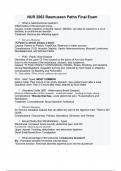
NUR 2063 Rasmussen Patho Final Exam
What is Gastritis/Acute Gastritis? Inflammation of the stomach lining. Causes include ingestion of alcohol, aspirin, NSAIDs; can also be caused by a virus, bacteria, an autoimmune disorder Treatment: Remove the offending agent! Chronic Gastritis *H.Pylori is almost always a factor Causes: Person-to-Person, Fecal/Oral, Reservoir in water sources Complications: PUD, Atrophic Gastritis, Gastric Adenocarcinoma, Mucosal Lymphoma, Decreased Acid, and Intrinsic Factor PUD - Peptic Ulcer Disease Disorders of the upper GI Tract caused by the action of Acid and Pepsin. Injury to the mucosa of the esophagus, stomach, and duodenum. Causes: *H.Pylori (HIGHLY CONTAGIOUS), NSAIDs, Stress, Smoking, and Genetics Clinical Manifestations: Epigastric burning pain (relieved by food intake or antacids) Complications: GI Bleeding and Perforation Tx: Sulcralfate, PPIs, Avoid caffeine and alcohol PUD - Ulcer Types: MOST COMMON Gastric Ulcer: Pain occurs on an empty stomach; may present soon after a meal Duodenal Ulcer: Pain 2-3 hours after meal; relieved by food intake Ulcerative Colitis (IBD - Inflammatory Bowel Disease) Chronic inflammation of the mucosa - rectal and colon - leading to large ulcers Complications: *Bloody Diarrhea, Lower abdominal pain; *Exacerbations and Remissions Treatment: Corticosteroids, Broad Spectrum Antibiotics Chron's Disease An immune-mediated disease that can affect any part of the digestive tract. There is NO CURE. Complications: Granulomas, Fistulas, Ulcerations, Strictures, and Fibrosis Bowel Obstruction Manifestations - Types Mechanical: Increased bowel sounds, abdominal pain, and N/V Functional: Absent bowel sounds Upper Jejunal: Vomiting, dehydration, and electrolyte depletion Distal Small Bowel/Ilium: Constipation What percentage of the pancreas is Endocrine function? 5% - Pancreas secretes hormones into the blood *Exocrine function: Pancreas secretes digestive juice into the duodenum Pancreatic Cancer About 2% of all CA; Ranks 4th among malignant deaths. Risks: Smoking, Obesity Manifestations: Jaundice, Malabsorption, weight loss, abdominal pain, nausea Tx: Surgery, Chemo Gastroesophageal Varices Management Varicies are a result of Portal Hypertension d/t Cirrhosis of the liver; Alcoholism and Viral Hepatitis Dx: Endoscopy, Abdominal CT Scan, Upper GI Barrium Tx: Fluids (NaCl), Administer Blood Products, Vasopressin IV, H2 Blockers, PPIs; Surgical Banding and Balloon Therapy Diverticulosis Syndrome of "Outpouchings"/Herniations through the muscular layer of the colon. *HIGH FIBER DIET Diverticulitis Inflammation of the "Outpouchings" *LOW FIBER DIET Assessment of Kidney Disease Palpation of the CVA for pain/tenderness *CVA = Costalvertebral Angle Kidney Cancer S/S Is typically asymptomatic until advanced. Most common is CVA tenderness, hematuria, palpable abdominal mass, dyspnea, cough, bone pain secondary to metastasis Dialysis Benefits and Risks Used for pts with ATN/CKD in stage 5 in order to remove metabolic waste and correct fluid and electrolyte imbalances. Pts are at risk for Hypotension after treatment because they Hypertensive prior to treatment. TYPES of Acute Kidney Injury (AKI) PRERENAL: Conditions that diminish perfusion of the kidney - Hypovolemia, Hypotension, Heart Failure, Renal Artery Obstruction, Fever, Burns, Edema, Ascites, ACE Inhibitors, NSAIDs POSTRENAL: Obstruction of the normal outflow of urine from kidneys - Renal Pelvis, Ureters, Bladder Outlet, Urethra Causes: BPH, Kinked Catheter, Intra-abdominal Tumors, Strictures, Calculi INTRINSIC/INTRARENAL: Primary dysfunction of the nephrons and the kidney itself! The most common problem within the renal tubules results in *ATN(Acute Tubular Necrosis). Causes of ATN: Nephrotoxic insults: Contrast Media, Sepsis, Vancomycin, Chemo; Lack of O2, Alcohol, Drugs PHASES of Acute Kidney Injury (AKI) PRODROMAL: *Insult to the kidney has already occurred. Serum BUN and Creatinine is ELEVATED. OLIGURIC: Normal urine output of 50-400mL daily. Oliguria, Uremia, decreased GFR, Hypervolemia. S/S: Fluid excess, Hyperkalemia, Uremic Syndrome, Metabolic Acidosis POSTOLIGURIC: Termination of the Oliguric phase represents recovery. Urine volume increases, tubular function improves fluid volume deficit until kidneys recover. Cystitis Acute onset of frequency, Urgency and Dysuria, Suprapubic Pain, Hematuria, Cloudy Urine. LOC in elderly could present as Dementia, as well as new-onset incontinence. Toxic Causes of Intrarenal Kidney Injury Prolonged postrenal failure, blood transfusion reaction, antibiotics/antifungal, antiviral, *CONTRAST MEDIA, chemo drugs, recreational drugs, snake venom, environmental factors Renin Angiotensin-Aldosterone System (RAAS) and the relationship between the autoregulation and the kidneys Kidneys attempt to: Regulate Perfusion and Maintain GFR Glomerulus Is located in the Nephron inside the kidney. It is also the site of fluid filtration Glomerulonephritis Inflammation of the glomeruli within the kidney. Immune-mediated conditions that produce IgA Nephropathy, Berger's Disease: These are the most commonly diagnosed What will be spilling into the urine? PROTEIN! Characterized by abrupt onset of hematuria, proteinuria, oliguria, edema, and hypertension Staph infection associated with glomerulonephritis Type I Diabetes *Makes NO insulin. It is characterized by the destruction of B cells of the pancreas. It affects children and adolescents. HYPERGLYCEMIA Type II Diabetes *Insulin Resistant and is the most common type of diabetes. What is resistant to the insulin? CELLS and PERIPHERAL TISSUE. Risks include: Obesity, Aging, Sedentary Lifestyle Polys of Diabetes *Hyperglycemia: Polydipsia, Polyphasia, Polyuria Cushing's Syndrome *Hypercortisolism: Characterized by mood swings, insomnia, Moon Face, Fine hair, Hirsutism, Truncal Obesity, Thin skin Traumatic Brain Injury (TBI) A traumatic insult to the brain capable of producing physical, intellectual, emotional, social, and vocational changes. *Leading cause of death and disability in the U.S. TBI - Primary Injury Result of the initial trauma or injury on brain cells. Focal:Localized Injury Polar: Caused by acceleration/deceleration movement of brain within the the skull: Double injury Diffuse: Caused by movement of brain within the skull: Axonal injury TBI - Secondary Injury Increases ICP and pt usually dies Reperfusion Injury Secondary injury that occurs after reestablishing blood flow. Tx/Therapy: Medication, Surgery to restore blood flow to blocked arteries Increased Cranial Pressure (ICP) The pressure exerted by the contents of the cranium. 0-15 mm Hg The volume of the cranium consists of CSF, Blood and Brain Tissue The patient might be sedated. May need to raise the HOB and ensure there is no stimulation in the environment What is the most sensitive indicator of altered brain function? Change in the patient's LOC! Cerebrovascular Disease (CVA): Types of Stroke ISCHEMIC: Sudden occlusion of a cerebral artery secondary to thrombus formation or embolization. Insufficient blood flow to the brain tissue results in oxygen deprivation and rapid cerebral deterioration. Thrombotic is r/t atherosclerosis and hypercoaguability Embolic is r/t cardiac source HEMORRHAGIC: Intracerebral brain bleed Diagnosed by CT scan! Meningitis Inflammation of the meninges of the brain and spinal cord. Microbial invasion of the CNS. Streptococcus Pneumoniae is the most common bacterium. Bacteria reaches the CNS via the bloodstream, para-nasal sinuses or ears Encephalitis Inflammation of the brain usually caused by a virus. Herpes Virus is the most common viral cause. Glascow Coma Scale (GCS) A neurological scaled used to determine the level of consciousness of a patient. Mild 13-15 Moderate 9-12 Severe 8 or below Seizure Disorders: Classifications Generalized: Whole-brain surface is affected Absence (Petit-Mal): Kids, Staring spells Atypical Absence: Myoclonic Jerks Myoclonic: Single to Several Jerks Atonic: DROP attack/Fall down Tonic-Clonic (Grand-Mal): Jerking/Many Muscles Status Epilepticus Back-to-Back Seizures with no recovery in between episodes Dementia A slowly progressive decline in mental abilities, including memory, thinking, and judgment, that is often accompanied by personality changes What is NOT a clinical manifestation of HYPONATREMIA? THIRST T or F: Thirst is a clinical manifestation of HYPERnatremia True What electrolytes are affected by the kidney's inability to regulate? Potassium, Phosphorous, Magnesium Hypoventilation is a build up of what? PaCO2 What is the goal for a pt with ARDS (Acute Respiratory Distress Syndrome) Keep the pts PaO2 value 60! What is the tx for Tension Pneumothorax? Emergent needle aspiration/decompression *Chest tube placement with H2O seal
Escuela, estudio y materia
- Institución
- Rasmussen College
- Grado
- NUR 2063 (NUR2063)
Información del documento
- Subido en
- 5 de mayo de 2025
- Número de páginas
- 15
- Escrito en
- 2024/2025
- Tipo
- Examen
- Contiene
- Preguntas y respuestas
Temas
-
nur 2063
-
nur 2063 rasmussen
-
nur 2063 rasmussen patho
-
nur 2063 rasmussen patho final exam

Documento también disponible en un lote