
december
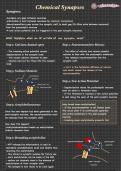
Chemical Synapses
Synapses:
-Synapses are gaps between neurones
-information is sent between neurones by chemical transmission
-Neurotransmitters pass across the synaptic cleft (a small gap 20-30nm wide between neurones)
from the presynaptic neurone
-A new action potential will be triggered in the post synaptic neurones
What happens when an AP arrives at the synaptic knob ?
Step 1: Calcium channels open Step 2: Neurotransmitter Release
- The incoming action potential causes - The influx of calcium ions causes synaptic
depolarisation in the synaptic knob vesicles to fuse with the presynaptic membrane
- this causes calcium channels to open - this releases neurotransmitter into the
- Calcium Ions (ca^2+) flood into the synaptic synaptic cleft
knob
-> So it is the facilitated diffusion of calcium
Step 3: Sodium Channels ions which causes the release of the
neurotransmitter
Ja
acetylcholine
molecule
Step 4: New Action Potential
ser
*
- Depolarisation inside the postsynaptic neurone
must be above a threshold value
- If the threshold is reached a new action potential
is sent along the axon of the post synaptic neurone
Step 5: Acetylcholinesterase (why break down acetylcholine)
- If the neurotransmitter is not broken down
Once the new impulse has been generated in the this could allow it to continuously generate
post-synaptic neurone, the neurotransmitter must new action potentials in the post-synaptic
be removed from the synaptic cleft. neurone
- breaking down acetylcholine prevents this
How does this happen?
-Acetylcholinesterase breaks up acetylcholine.
Sodium channels close
&
Step 6: Remaking acetylcholine
acetylcholinester
- ATP released by mitochondria is used to
recombine acetyl(ethanoic acid) and choline thus ⑭ Pendocytosis
·
recycling the acetylcholine
- This stored in synaptic vesicles for future use
- more acetylcholine can be made at the SER
- sodium ion channels close in the absence of Cost-synaptic
acetylcholine at their receptor sites neurone
- The synapse is now ready to be used again
Chemical Synapses
Synapses:
-Synapses are gaps between neurones
-information is sent between neurones by chemical transmission
-Neurotransmitters pass across the synaptic cleft (a small gap 20-30nm wide between neurones)
from the presynaptic neurone
-A new action potential will be triggered in the post synaptic neurones
What happens when an AP arrives at the synaptic knob ?
Step 1: Calcium channels open Step 2: Neurotransmitter Release
- The incoming action potential causes - The influx of calcium ions causes synaptic
depolarisation in the synaptic knob vesicles to fuse with the presynaptic membrane
- this causes calcium channels to open - this releases neurotransmitter into the
- Calcium Ions (ca^2+) flood into the synaptic synaptic cleft
knob
-> So it is the facilitated diffusion of calcium
Step 3: Sodium Channels ions which causes the release of the
neurotransmitter
Ja
acetylcholine
molecule
Step 4: New Action Potential
ser
*
- Depolarisation inside the postsynaptic neurone
must be above a threshold value
- If the threshold is reached a new action potential
is sent along the axon of the post synaptic neurone
Step 5: Acetylcholinesterase (why break down acetylcholine)
- If the neurotransmitter is not broken down
Once the new impulse has been generated in the this could allow it to continuously generate
post-synaptic neurone, the neurotransmitter must new action potentials in the post-synaptic
be removed from the synaptic cleft. neurone
- breaking down acetylcholine prevents this
How does this happen?
-Acetylcholinesterase breaks up acetylcholine.
Sodium channels close
&
Step 6: Remaking acetylcholine
acetylcholinester
- ATP released by mitochondria is used to
recombine acetyl(ethanoic acid) and choline thus ⑭ Pendocytosis
·
recycling the acetylcholine
- This stored in synaptic vesicles for future use
- more acetylcholine can be made at the SER
- sodium ion channels close in the absence of Cost-synaptic
acetylcholine at their receptor sites neurone
- The synapse is now ready to be used again

